On 23 September 2026 Vast opened a Lunar Programs division. Haven Demo and Haven-1 are its Earth orbit heritage. The company now proposes a lunar power station, airlock, habitat, and south pole constellation built from that same work for NASA’s Moon Base path.
This is NASA's cargo-first Moon Base: landers put hardware on the land, then crew arrives. I, II, and III are NASA names, not fly order. Griffin-1 (II) is first on the clock.
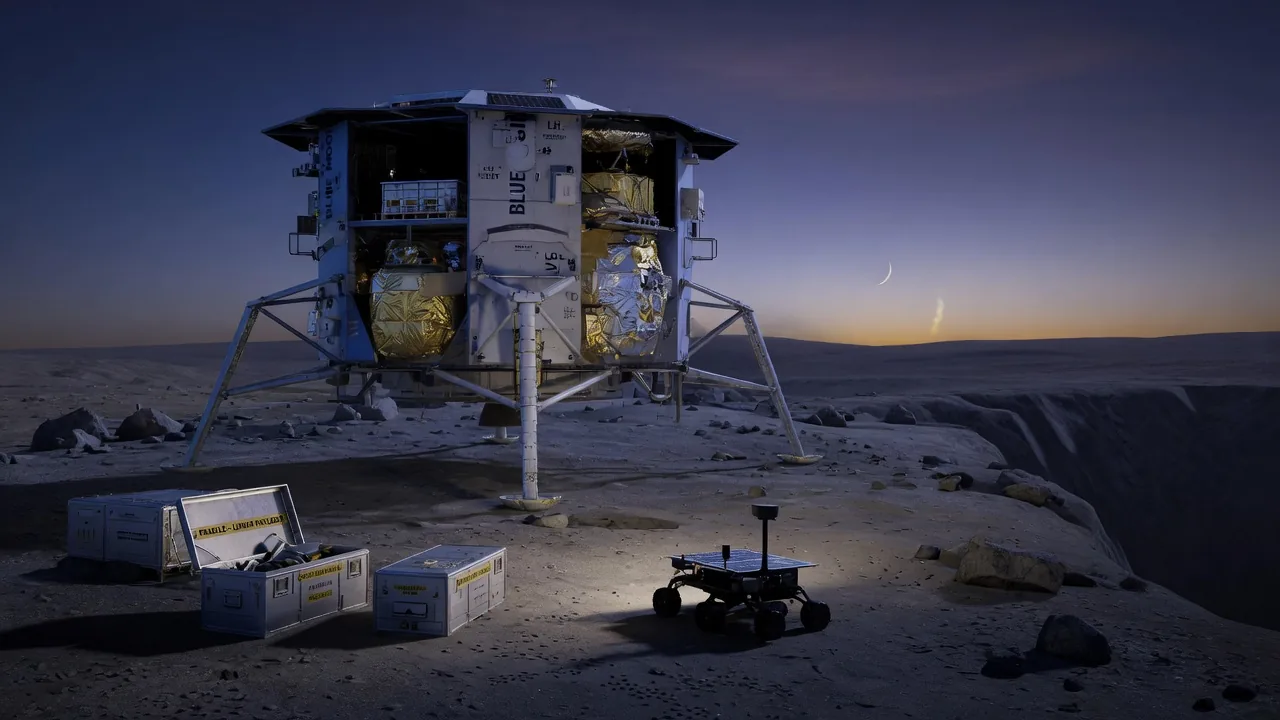
IEndurance · Blue Origin · Moon Base I cargo
IIGriffin-1 · Astrobotic · next on the clock · Nobile
IIITrinity · Intuitive Machines · south pole cargo
CrewArtemis III docks in Earth orbit. IV takes the first boots.
Each flight sits on the site it headed for: landed, tipped, hard landing,
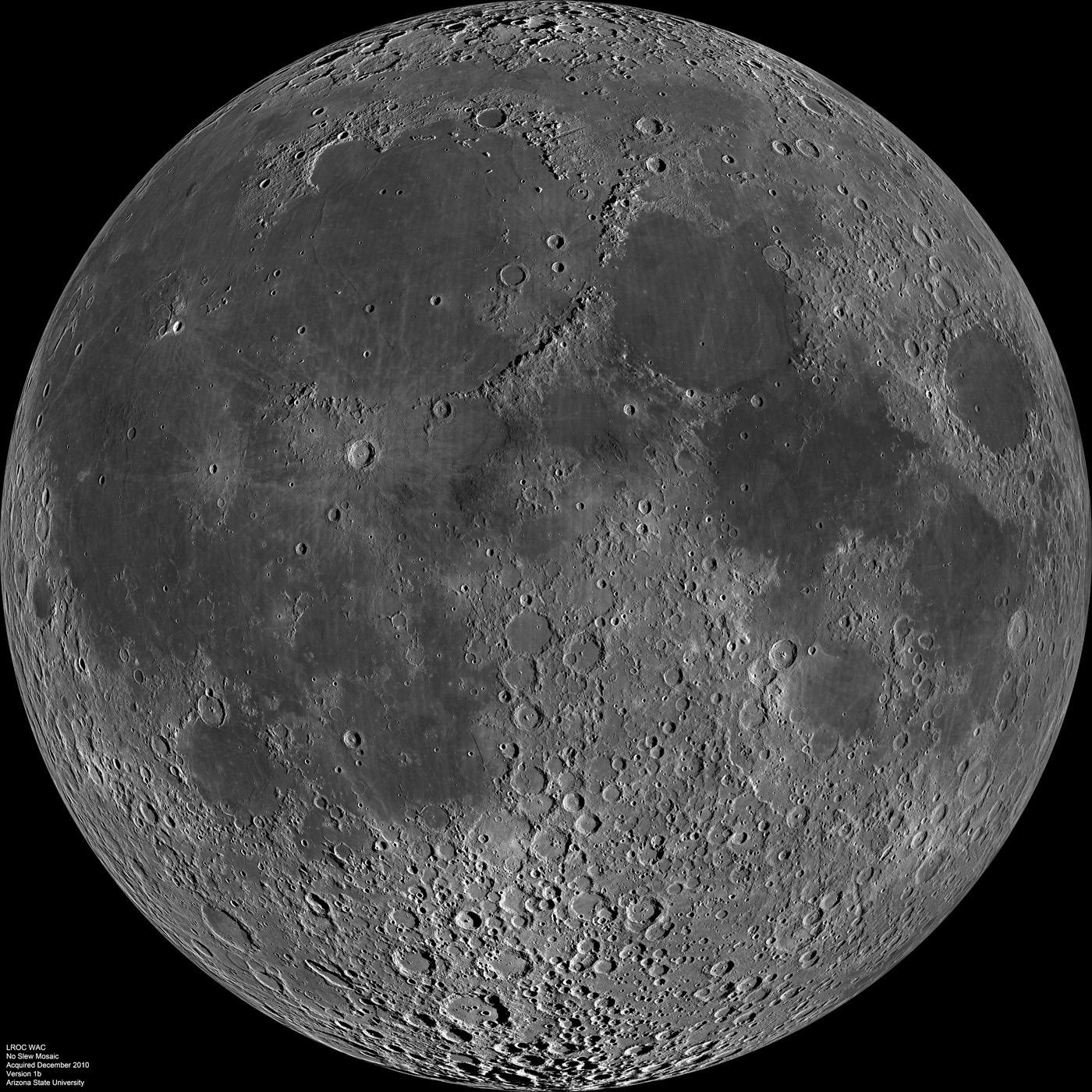
or planned. Crew and orbit flights stay off the plate. One photograph of the near side,
and a plotted chart of the south pole. Click a flight to open its Moon Imports record.
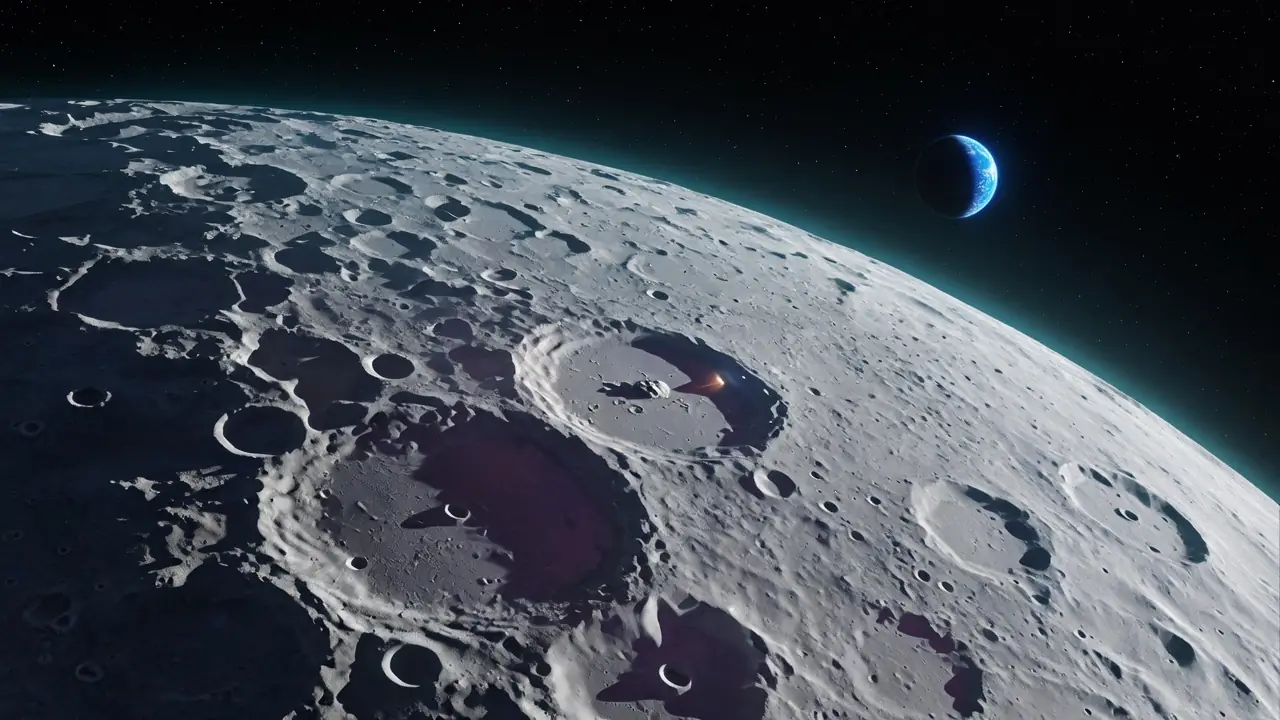
Photograph: NASA / GSFC / Arizona State University, LROC WAC nearside mosaic, public domain.
The near-side plate is that photograph, clipped to the disk, under an orthographic graticule.
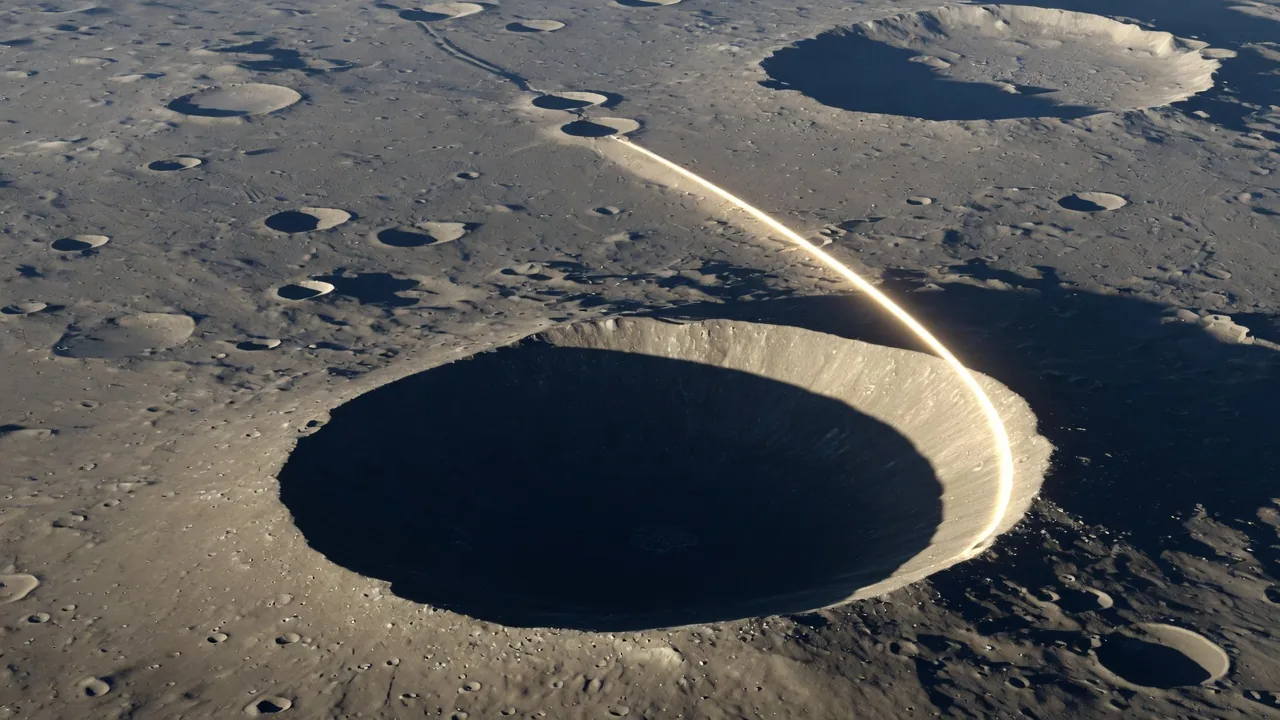
The south pole plate is drawn, not photographed. Sites are the planned or intended target.
Hard landings and flights that never arrived stay at the site they aimed for.
Program hub
Moon Base
A lasting presence at the south pole. NASA’s I, II, and III are names, not the order they fly. Cargo first. Crew in parallel.
Mission
Who
Program
Rocket
When
Status
Cargo
Public $
Need a work PDF?
Pay on this page
Public-record file
Card stays with Stripe. You do not leave Moon Imports.
Change plan
Confirm this change
One plan. Pick what you want next, then confirm the amount.
How Vast's Lunar Programs stack fits NASA's Moon Base
NASA is building toward a permanent Moon Base at the south pole: cargo first, then crew, with shared power, surface elements, and long stay. On 23 September 2026 Vast opened Lunar Programs to supply infrastructure for that path. The proposed stack is a Lunar Power Station, a Haven derived airlock, a multi module habitat, and a south pole communications constellation. Haven Demo, Haven-1, and Vast Satellite are the Earth orbit proof behind the claim.
Vast established a Lunar Programs division to apply its commercial space station and satellite work toward lunar infrastructure for NASA's vision of a permanent Moon Base. The same day, the company published a Long Beach press release naming Phase 1 through Phase 3 and the proposed product stack: power, airlock, habitat, and south pole communications.
"Vast has the manufacturing capability, flight heritage, and technical expertise needed to help build humanity's first lunar outpost," said Max Haot, CEO of Vast. "By vertically integrating the engineering, manufacturing, and testing of habitats and infrastructure, Vast can move with the speed, efficiency, and safety that this national imperative demands."
Moon Imports already tracks that NASA Moon Base path as cargo first at the south pole, then crew in parallel on Artemis, with shared power and surface elements for long stay. Cargo I, II, and III are NASA names for that build, not a claim that Vast hardware is assigned to any of those landers. Vast's published phases are the company's own alignment claim against that path: Phase 1 for reliable surface access, experiment, and foundational infrastructure including a Lunar Power Station; Phase 2 for initial Moon Base operations and permanent surface elements, including a Haven derived free standing airlock; Phase 3 for semi permanent, long duration crew in a multi module habitat; plus a south pole communications and positioning constellation meant to complement LCRNS.Vast on X: Lunar Programs division, 23 September 2026 ↗Vast: official Lunar Programs press release ↗Payload: Vast announces new Lunar Programs ↗SpaceNews: Vast expands into lunar systems ↗
Proposed · Moon Base path
Power, airlock, habitat, constellation
Roadmap products Vast ties to NASA's phased Moon Base. No named lunar flight award yet.
Walk the proposed Moon Base products first, then the Earth orbit proof that Lunar Programs says makes the stack buildable.
01 / Lunar Power Station
A lunar power station supplies solar, storage, and distribution for surface ops
Proposed · Phase 1 foundational infrastructure
Vast Lunar Programsproposes →Lunar Power Station
A south pole Moon Base needs reliable power before permanent surface elements and long stay crews can work. Shared solar generation, storage, and distribution sit under cargo ops, experiments, and later habitation. That is the job Phase 1 of Vast's published roadmap claims to serve: reliable surface access and experiment through foundational infrastructure and technology demonstrations.
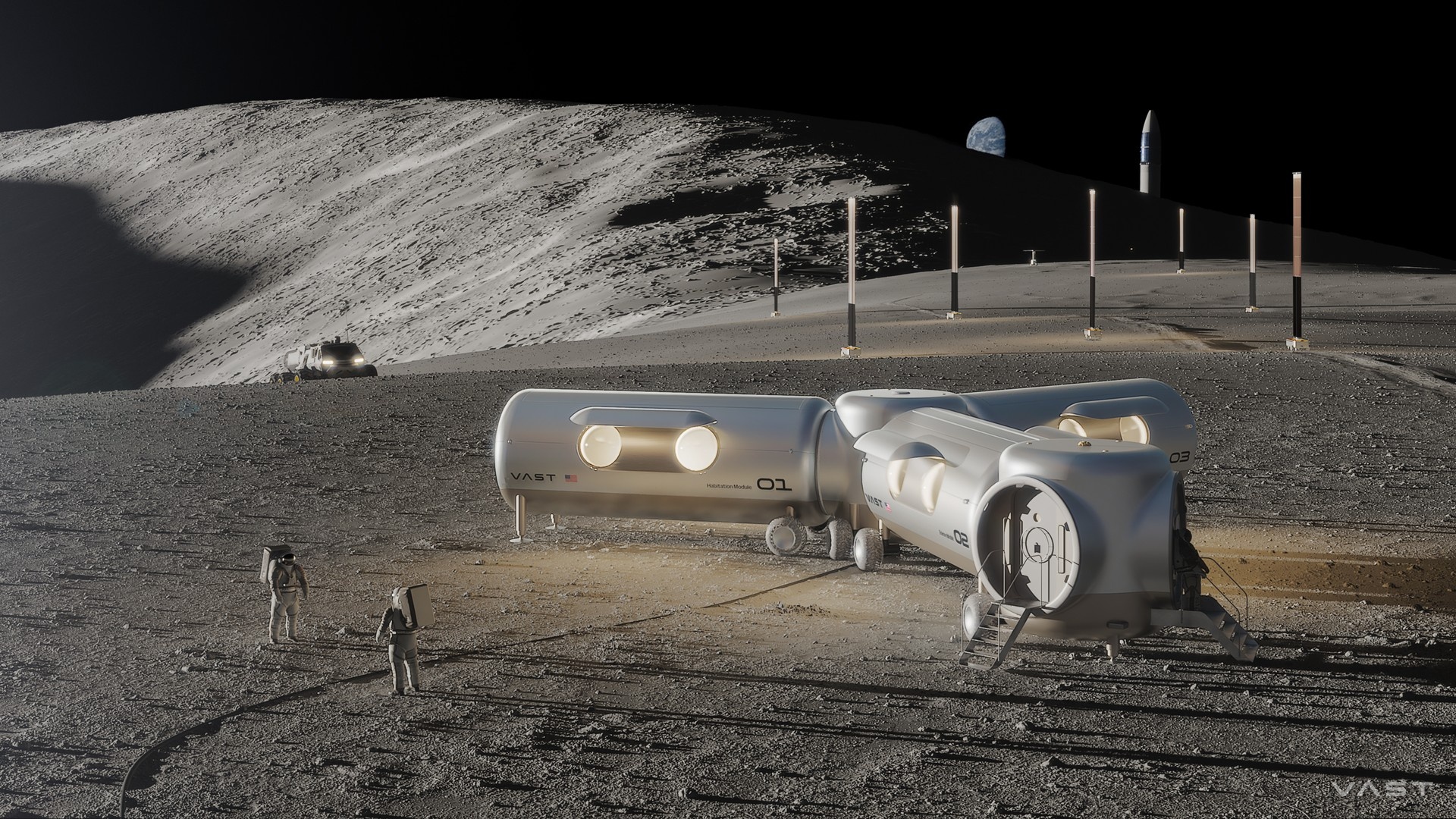
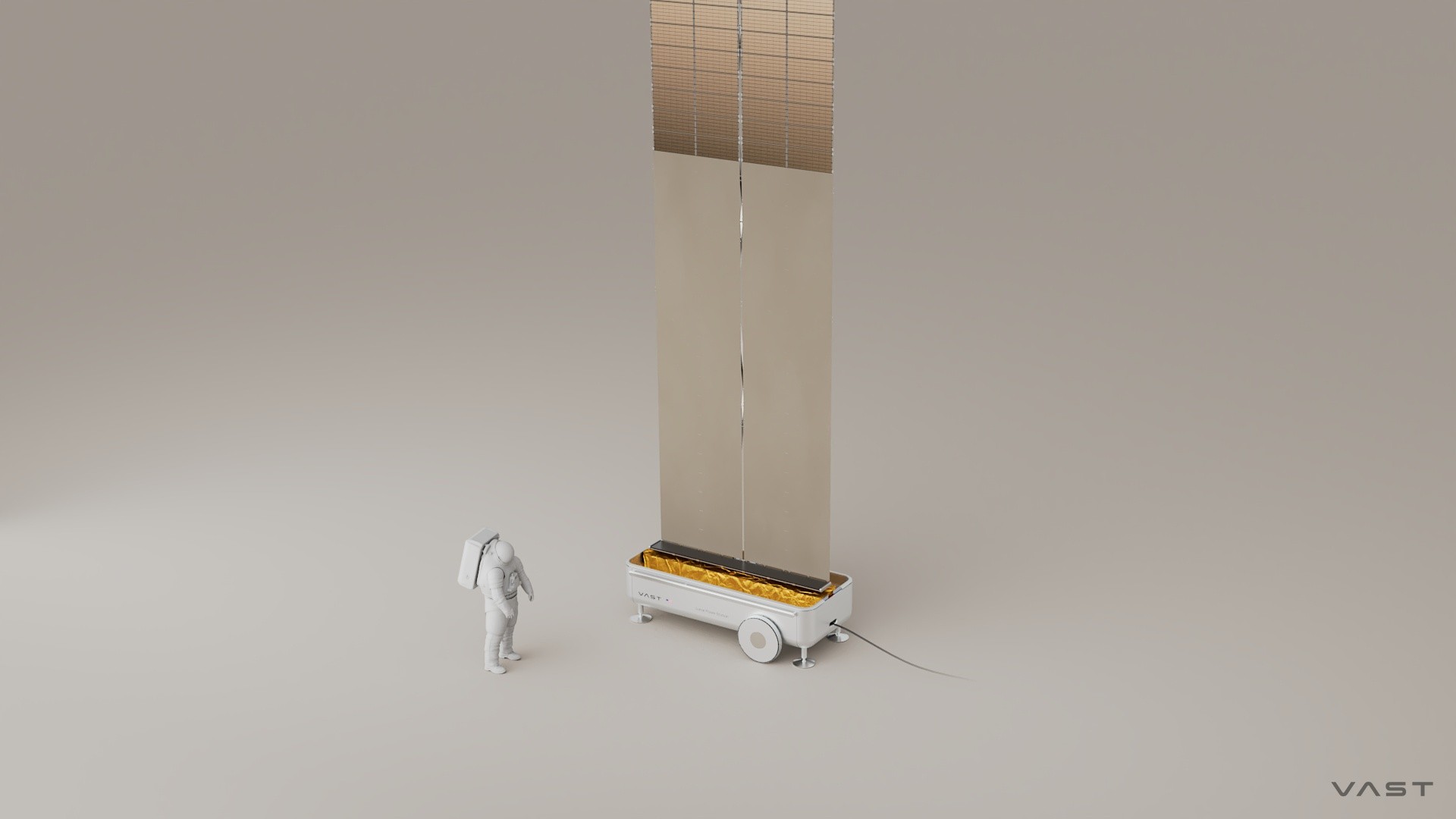
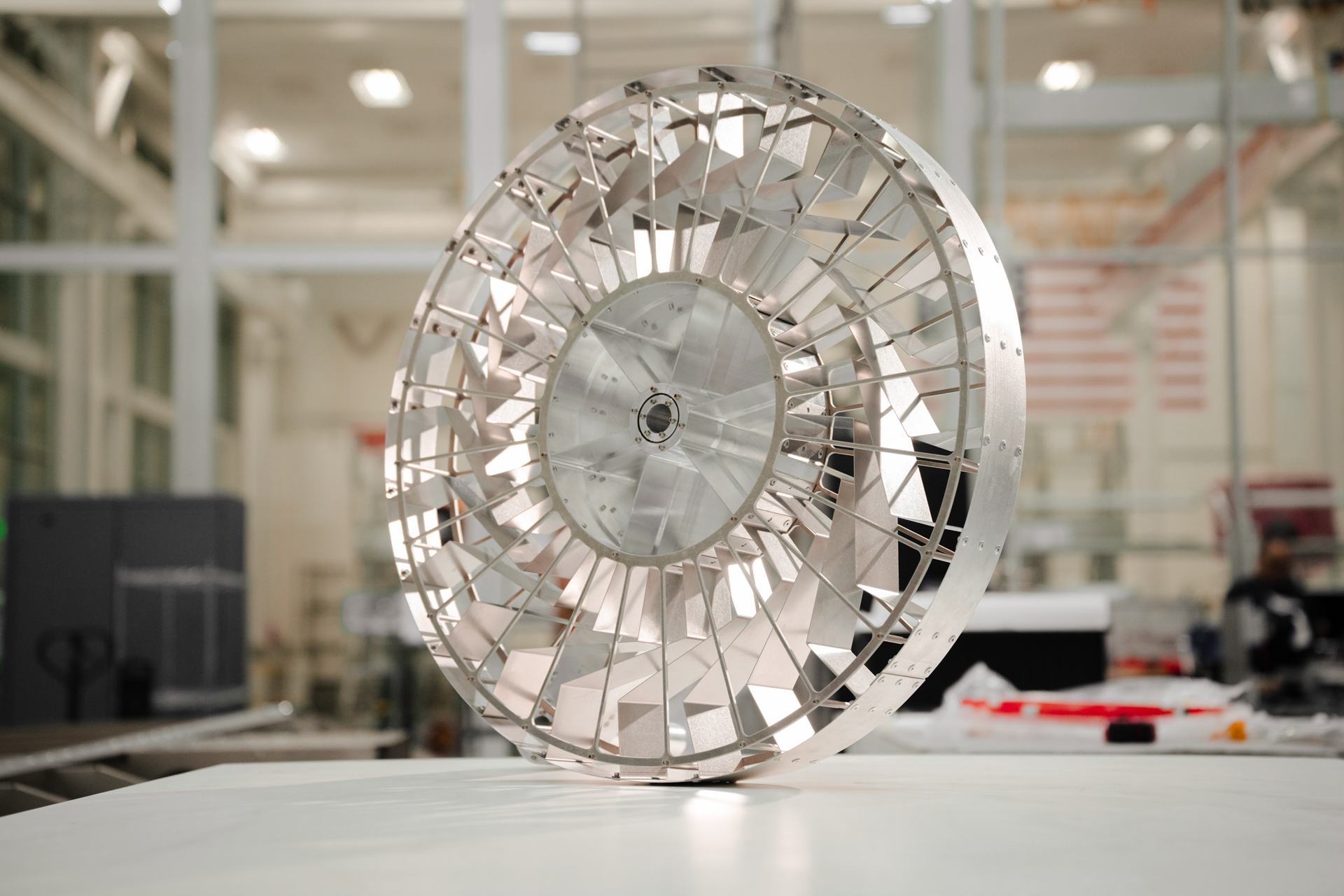
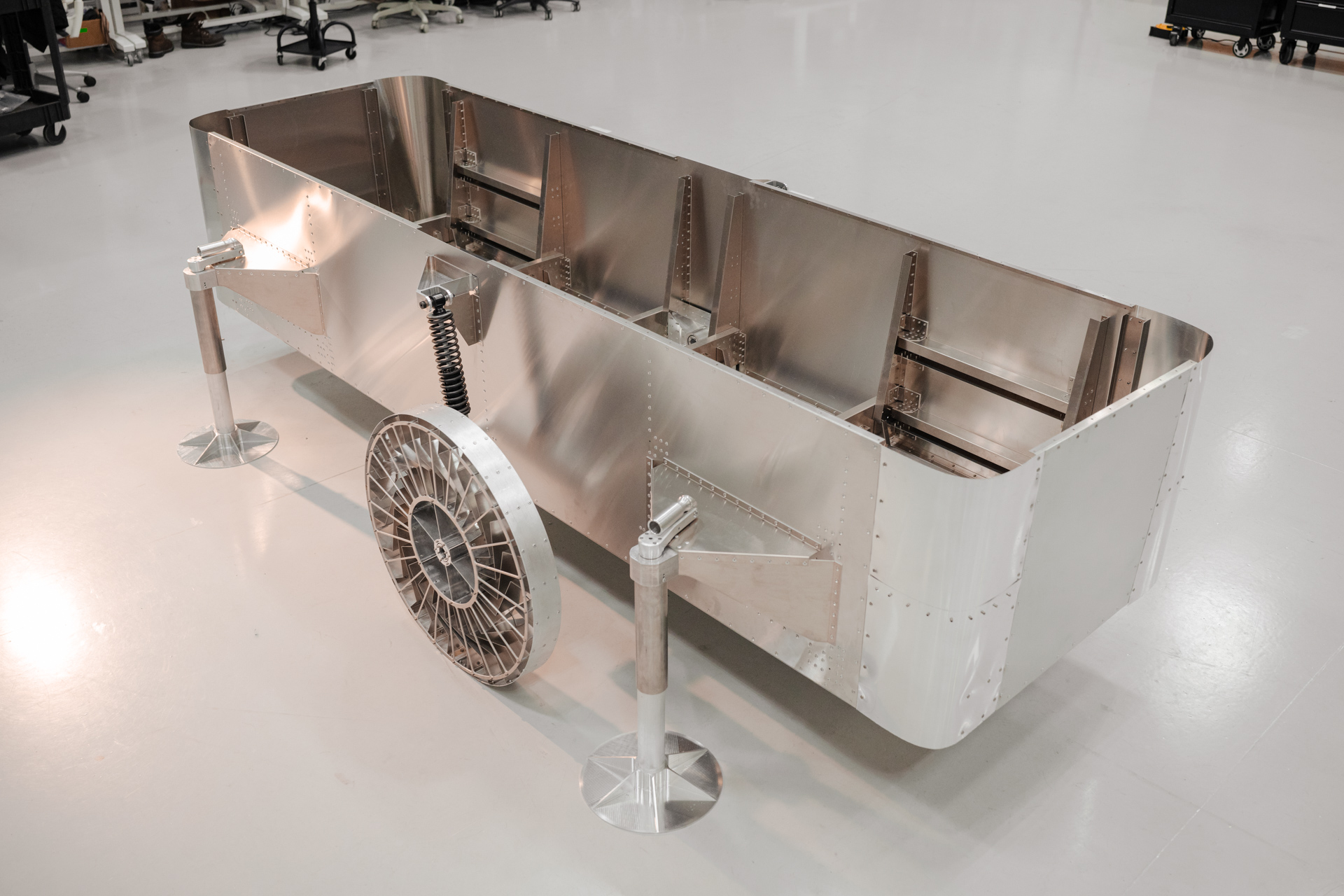
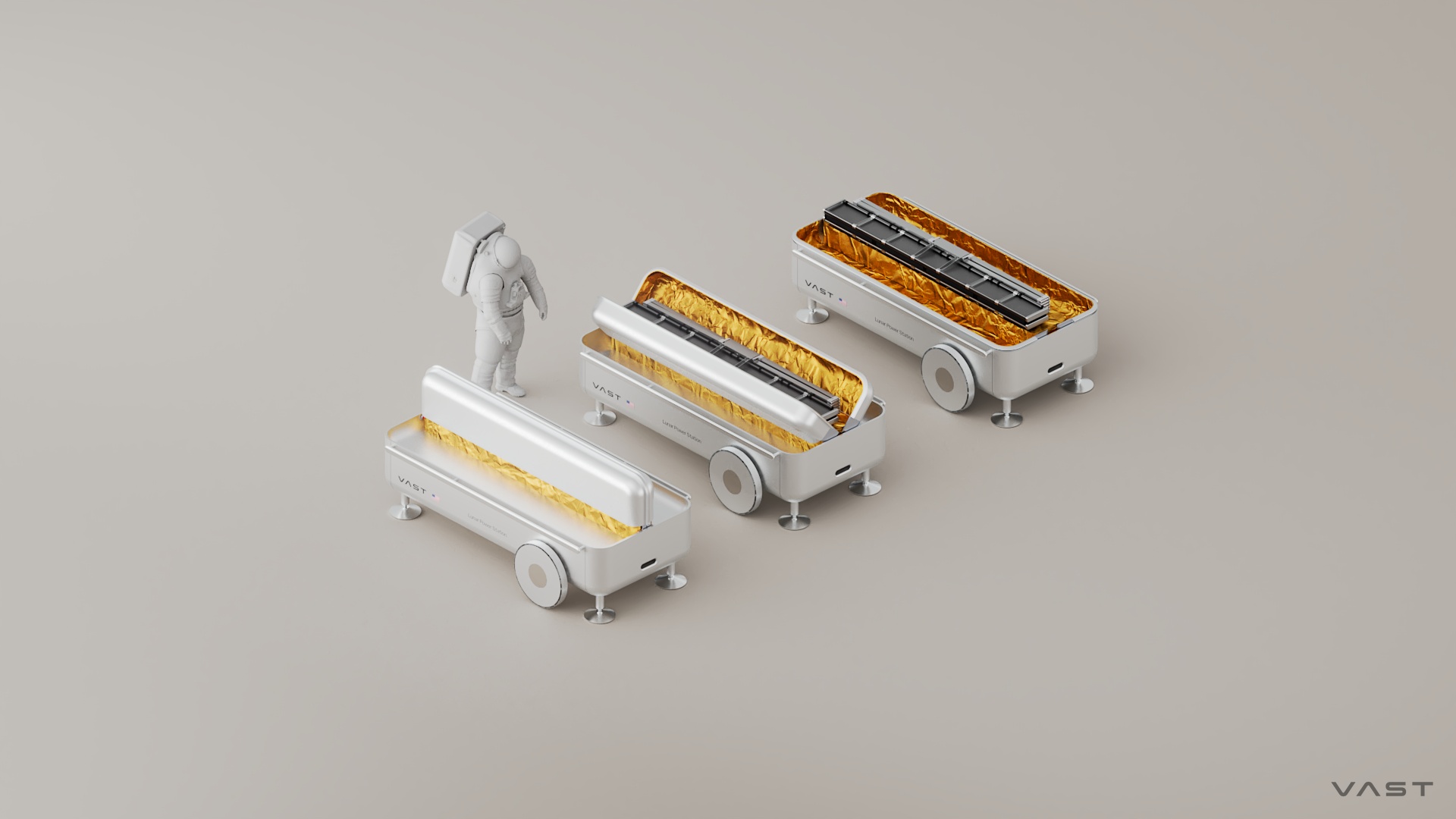
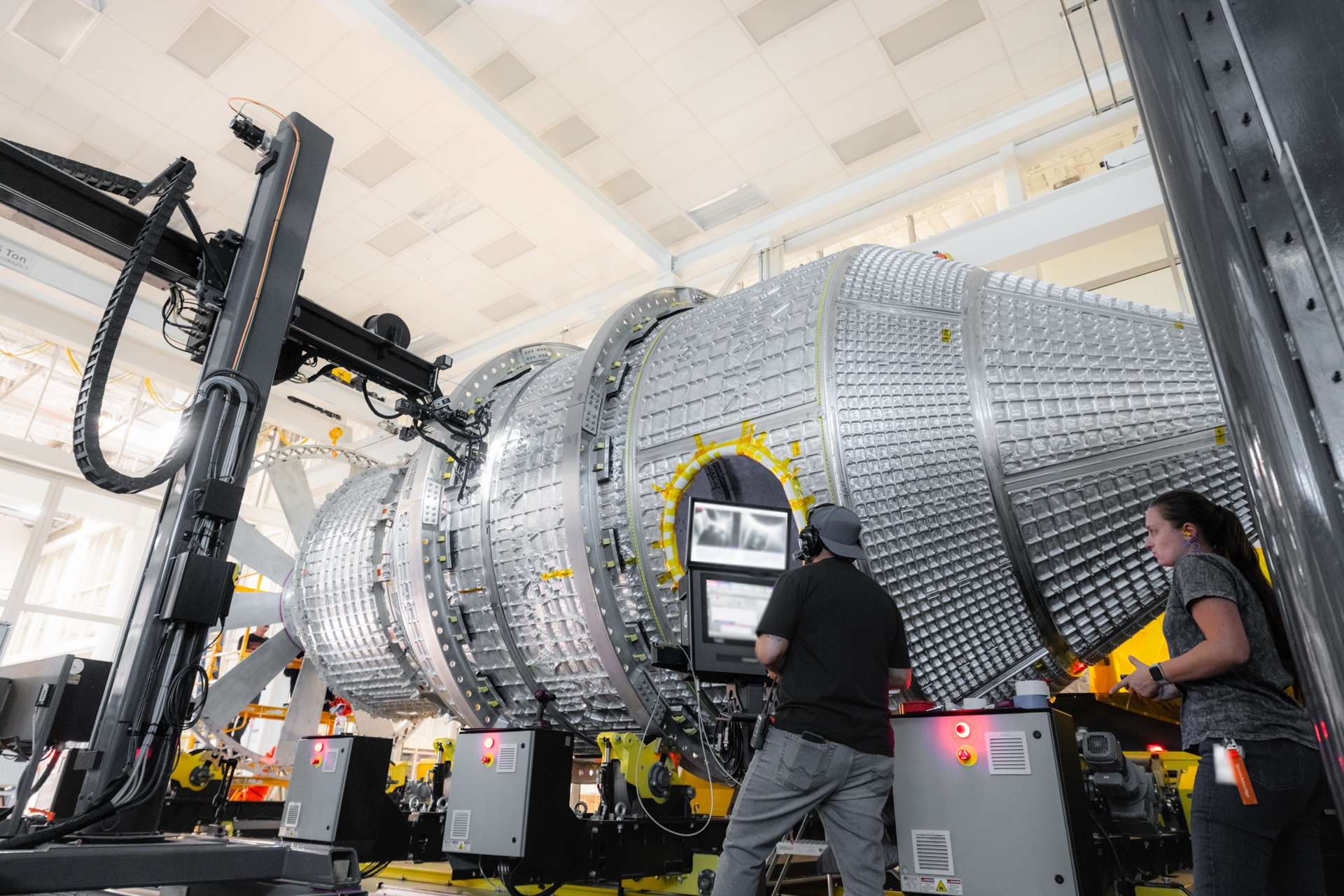
The first named product is a Lunar Power Station built around solar generation, energy storage, and power distribution. Vast has published renders with arrays deployed, plus shop photographs of a wheel prototype and a power station prototype under manufacture at Long Beach. These are proposed Moon Base products in company roadmap language.Vast: Phase 1 and Vast Power Station description ↗Payload: Vast Lunar Programs phases and power station ↗
Lunar Programs says Haven power processes and manufacturing rhythm feed this lane. That is a reuse claim from Earth built systems, not a named lunar power flight award.
02 / Haven derived lunar airlock
A free standing airlock retires dust and EVA risk for permanent surface ops
Once power is on the land, a Moon Base still needs safe crew transfer between vacuum, dust, and pressurized volumes. Ingress, dust mitigation, and EVA suit interfaces are permanent surface risks that cargo only landings do not retire. Phase 2 of Vast's roadmap is initial Moon Base operations: permanent surface elements that support ops and validate critical habitation technologies.
After power, Vast plans a free standing airlock derived from Haven work as that habitation tech path. The unit is meant to validate ingress and dust mitigation, pressure vessel reliability, extravehicular activity (EVA) suit compatibility, efficient pumping, and surface placement techniques. Retiring those risks on dedicated hardware, before a full habitat reaches the surface, is the point of the step. Once validated, Vast says the design is intended to replicate as the node that connects later habitat modules.Vast: Haven derived lunar airlock description ↗
The Haven claim here is pressure vessel and crew systems learning from the station stack applied to a surface node. It remains a proposed product on the company roadmap.
03 / Multi module lunar habitat
A multi module habitat supports long stay crew on the south pole
Proposed · Phase 3 multi module / long duration crew
Enduring presence at the south pole needs more than a single pressurized room. A Moon Base that keeps crew for long stay needs linked modules, life support, thermal control, and consumables sized for operations, not a short lander visit. Phase 3 of Vast's published roadmap targets a semi permanent crew presence: the systems and infrastructure required to sustain long duration crewed operations on the lunar surface.
"Very few companies in the world are actually building crewed space systems," said Colin Smith, Senior Vice President of Lunar Programs at Vast. "Doing it well requires excellence across engineering, manufacturing, testing, safety, mission operations, software, and a dozen other disciplines all at once." Smith is a founding Vast team member who drove Haven-1 from inception through initial flight build. Lunar Programs expects Haven pressure vessels, life support, thermal, avionics, power, and flight software to apply on this Moon Base path. That is a reuse claim for Earth built processes, not a lunar habitat flight award.Vast: Colin Smith quote in the Lunar Programs release ↗
04 / South pole comms and positioning
A south pole constellation keeps the path home and complements LCRNS
Proposed · draws on Haven Demo and Vast Satellite
Vast Lunar Programsproposes →Lunar comms and positioning constellation
Surface power stations, airlocks, and habitats need a path home, plus position and navigation for surface assets and rovers. A south pole Moon Base cannot lean only on constrained shared assets such as the Deep Space Network for every pass. Continuous coverage and reliable Earth connectivity are infrastructure jobs alongside power and habitation.
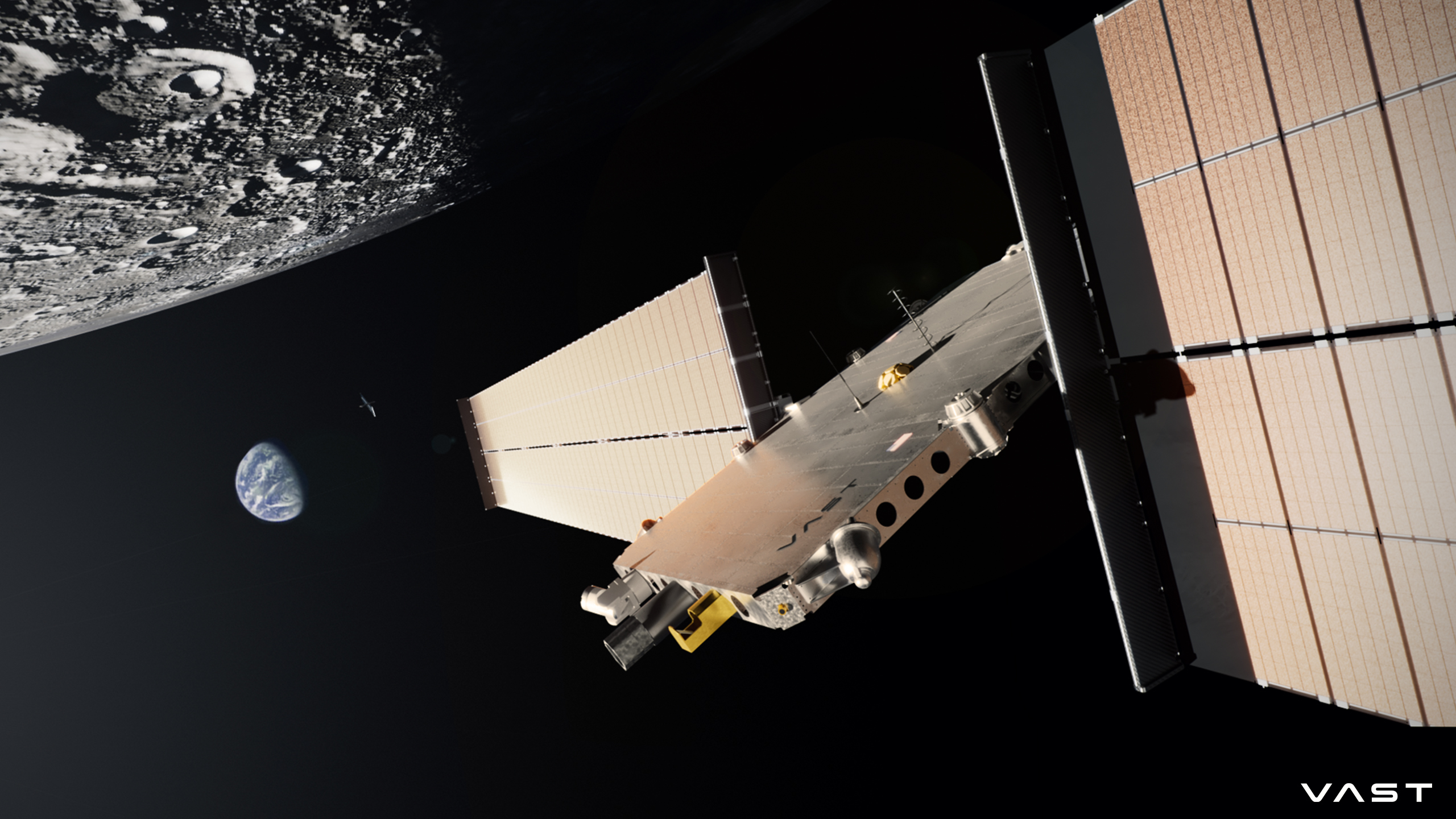
Vast's proposed communications and positioning constellation is designed for continuous lunar south pole coverage, reliable Earth connectivity, and improved situational awareness for surface and orbital operations. The architecture is intended to complement NASA's planned Lunar Communications Relay and Navigation Systems (LCRNS), reduce reliance on those shared assets, and scale by adding orbital planes later.Vast: lunar communications and positioning constellation ↗Payload: constellation complements LCRNS and eases DSN load ↗
Vast says the design draws on Haven Demo and Vast Satellite manufacturing and in space learning, including the late 2027 batch of ten 15 kW class satellites. That bus line is Earth orbit product work offered as proof behind the proposed lunar constellation.
05 / Haven Demo · Earth proof
Haven Demo flew and operated Vast's own spacecraft
Reported by Vast · LEO heritage
Vastflew and operated →Haven Demo
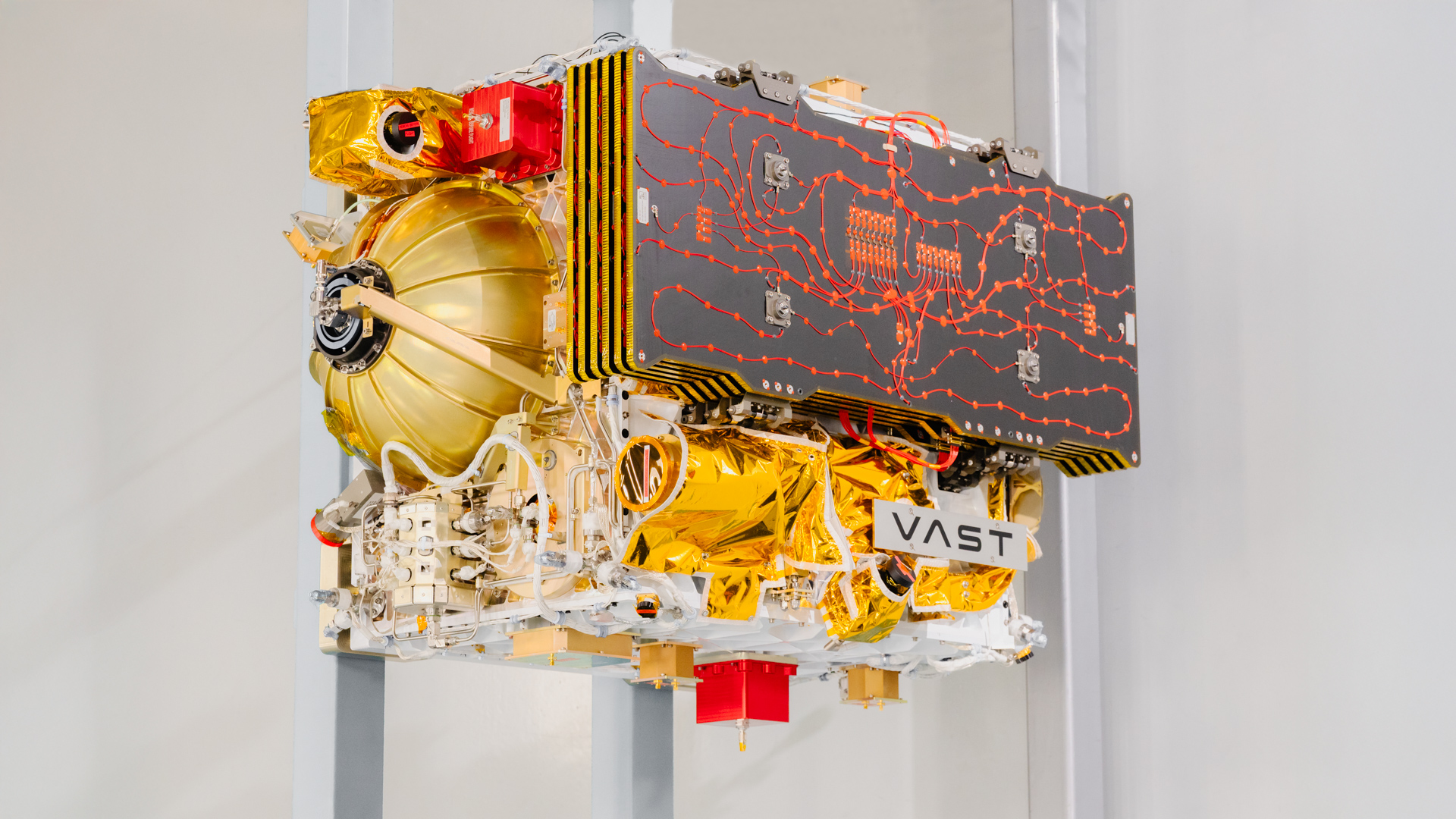
This section is Earth orbit track record, not a lunar flight. Haven Demo launched on SpaceX Bandwagon-4 on 2 November 2025. Vast reports mission success, including a 4K solar array deployment video and power positive operations, then a controlled deorbit on 4 February 2026. The flight exercised avionics, power, and flight software that now feed the Vast Satellite line.Vast: Haven Demo heritage in the Vast Satellite announcement, 19 May 2026 ↗
That flown stack is what Lunar Programs says it will reuse for Haven-1, Vast Satellite, and the proposed Moon Base products above.
06 / Haven-1 · Earth proof
Haven-1 proves crew rated station build competence on Earth
Reported by Vast · LEO station, NET 2027
Vastis integrating →Haven-1 commercial station
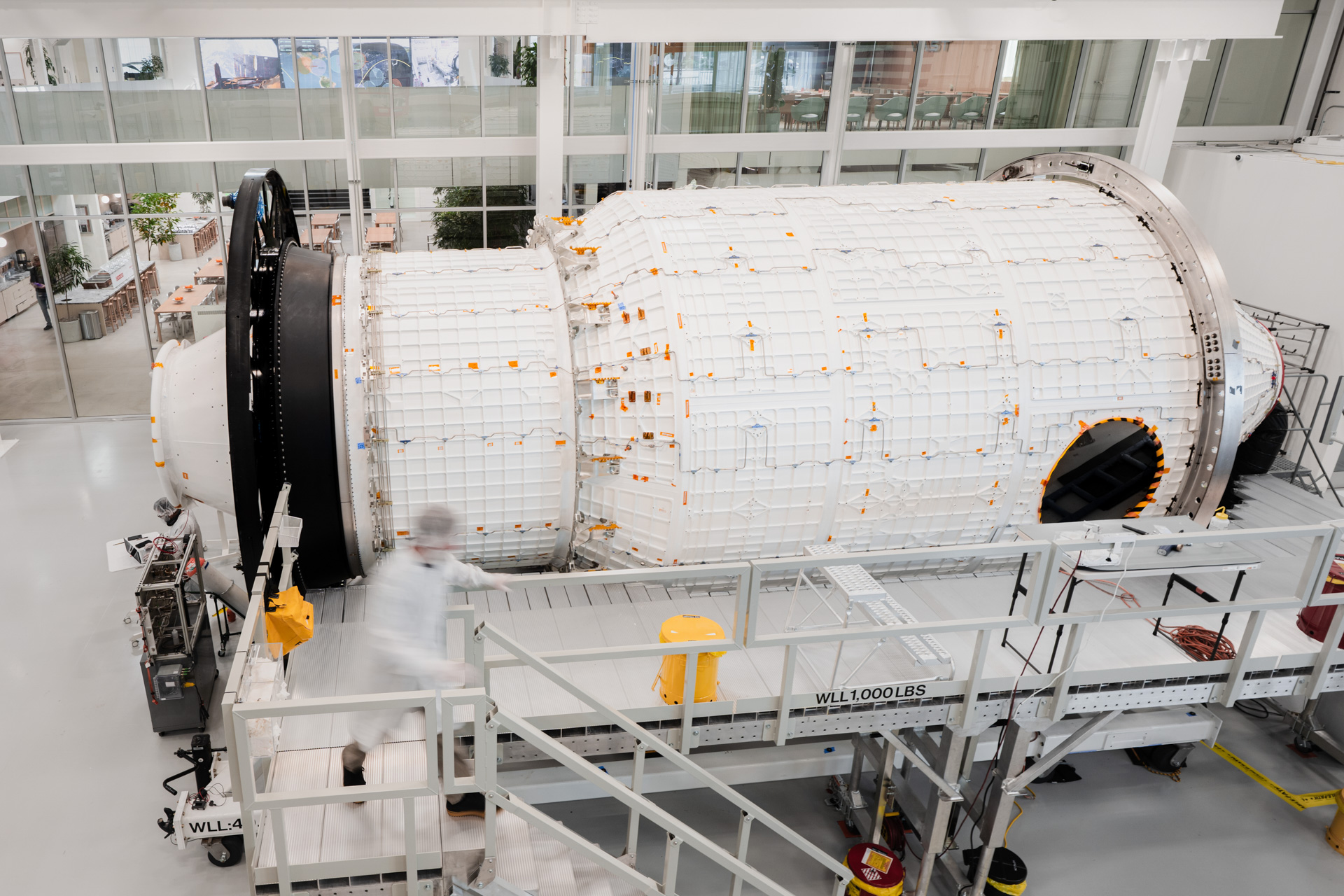
Haven-1 is Vast's first commercial space station, in final integration at Long Beach and targeted NET 2027 on Falcon 9 with Dragon crew transport. Public specs on Vast's Haven-1 page include a crew of four, 4.4 m diameter, 10.1 m height, 45 m³ habitable volume, 80 m³ pressurized volume, about 14,600 kg mass, 13.2 kW power, and a 51.6° / 425 km orbit. Haven-1 remains an Earth orbit station program. It is not a lunar flight award.Vast: Haven-1 station page ↗Vast: Haven-1 architecture leveraged for the lunar habitat ↗
Vast Satellite extends the Haven stack into a 15 kW bus line
Reported by Vast · product line, 19 May 2026
Vast Satelliteoffers →15 kW class satellite bus
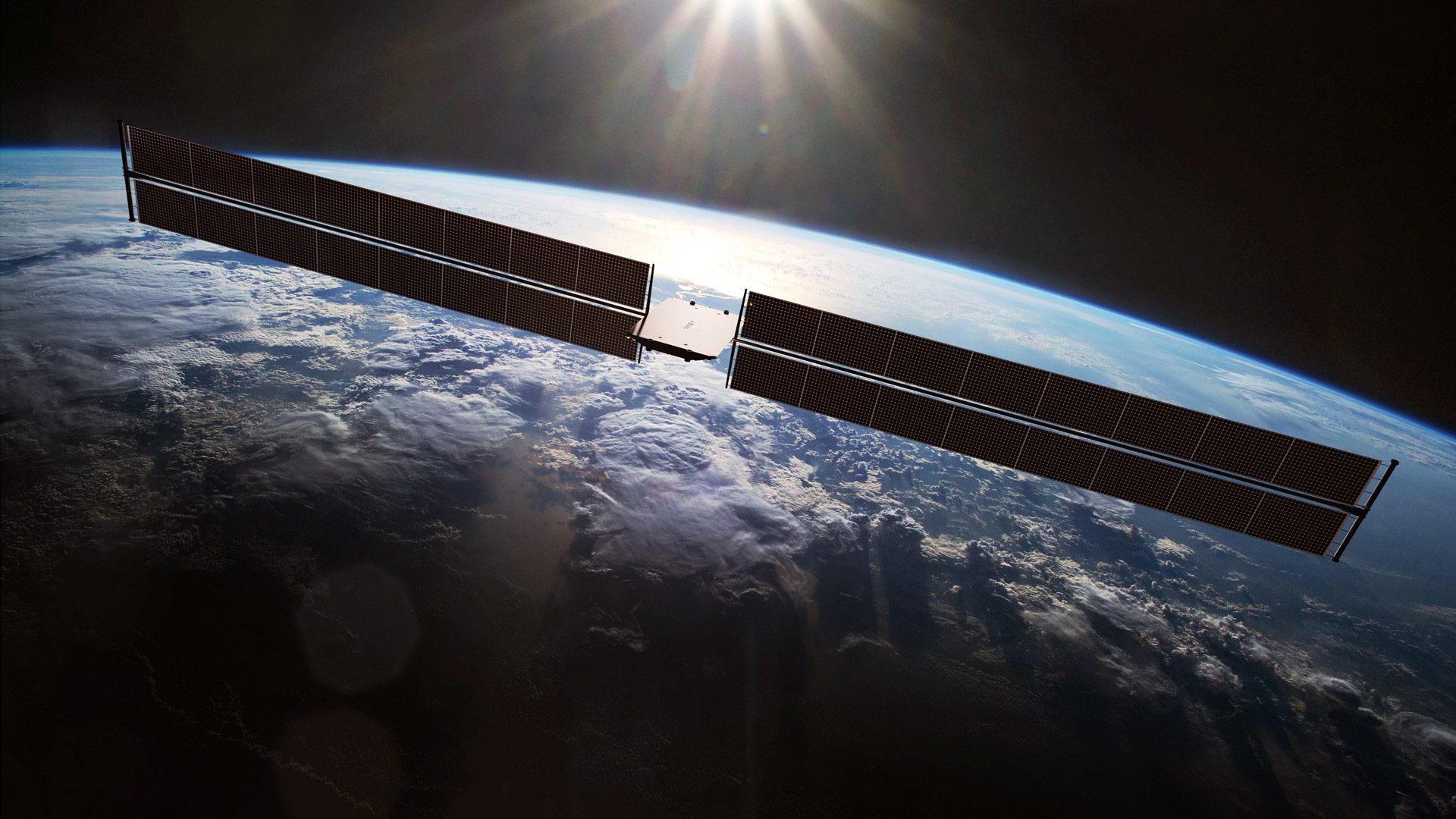
In May 2026 Vast announced Vast Satellite, a 15 kW class bus line built around common in house avionics, power, communications, propulsion, and flight software shared with Haven-1 and proven on Haven Demo. Published parameters include a five year design life, LEO altitudes from 350 to 1,200 km, future orbits that list MEO, GEO, and Lunar, 700 kg dry mass, and 350+ kg payload capacity.Vast: Vast Satellite product announcement, 19 May 2026 ↗Vast: late 2027 batch of ten 15 kW class satellites ↗
Vast reports a first confidential sale of four satellites with an option toward 200, and a late 2027 target for a batch of about ten high power buses. Lunar Programs says that manufacturing rhythm and on orbit learning feed the proposed south pole communications and positioning constellation. The bus line is Earth product work offered as proof, not a flown lunar constellation.
Follow the work
What this stack would add to the south pole Moon Base
If built as published, Vast's Lunar Programs stack would put shared surface power, a free standing airlock node, a multi module long stay habitat, and a south pole communications constellation on the same company ledger as Haven. That is a company roadmap for NASA's permanent Moon Base path, not a named lunar flight award. Haven Demo and Haven-1 stay on the Earth orbit side of the ledger as the proof Vast cites for why the stack is buildable.
Walk the south pole NASA is building toward on Moon Imports, then read other builders against the same power, surface, and long stay jobs. Walk NASA Moon Base →