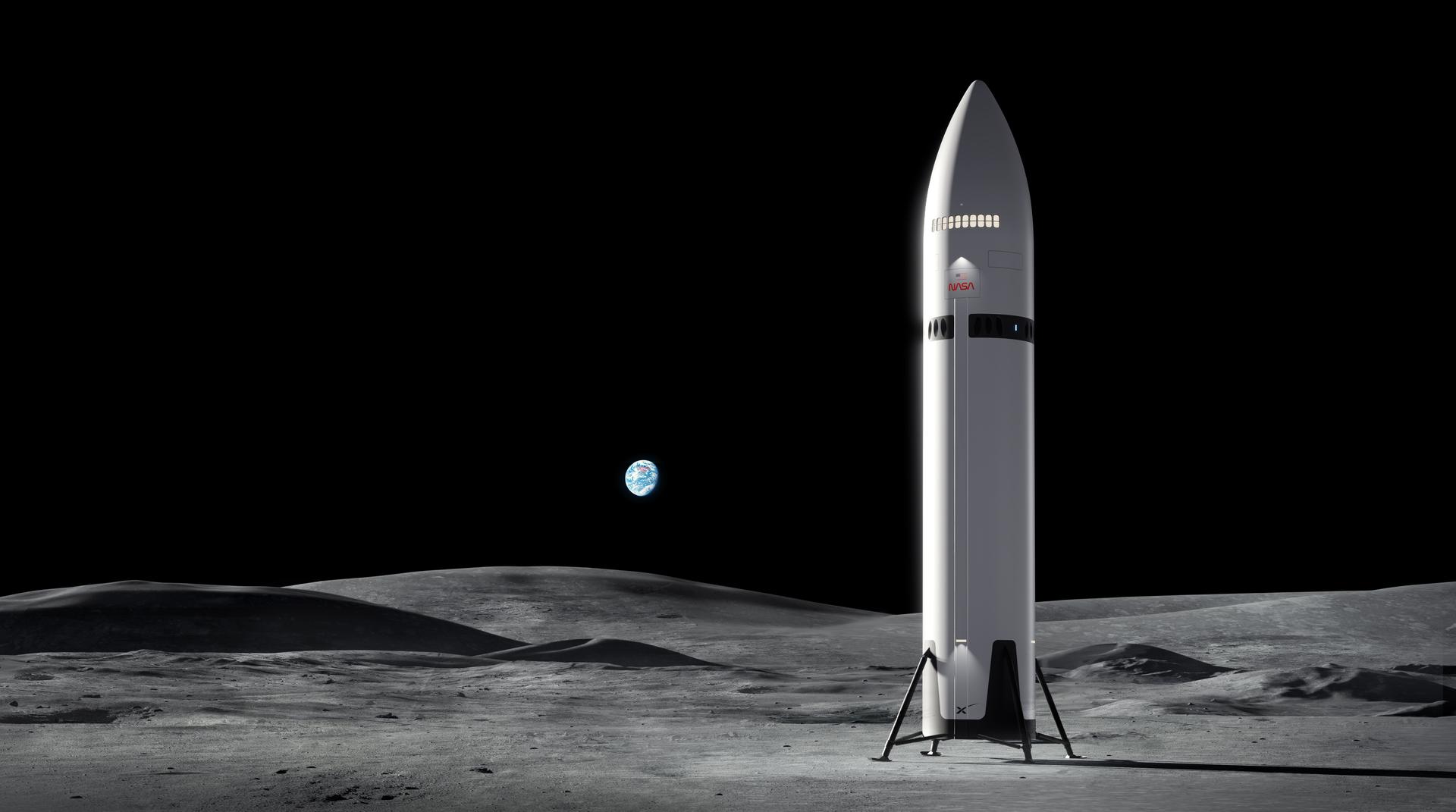
Inside the stack · 03
Who builds Starship’s road to the Moon?
Starship’s first orbital cargo flight flew September 28. Follow the path to Moon cargo through HDR, Lerch Bates, Thompson, Axiom Space, Lockheed Martin, Toyota and JAXA.
Read the storyThis page did not load.
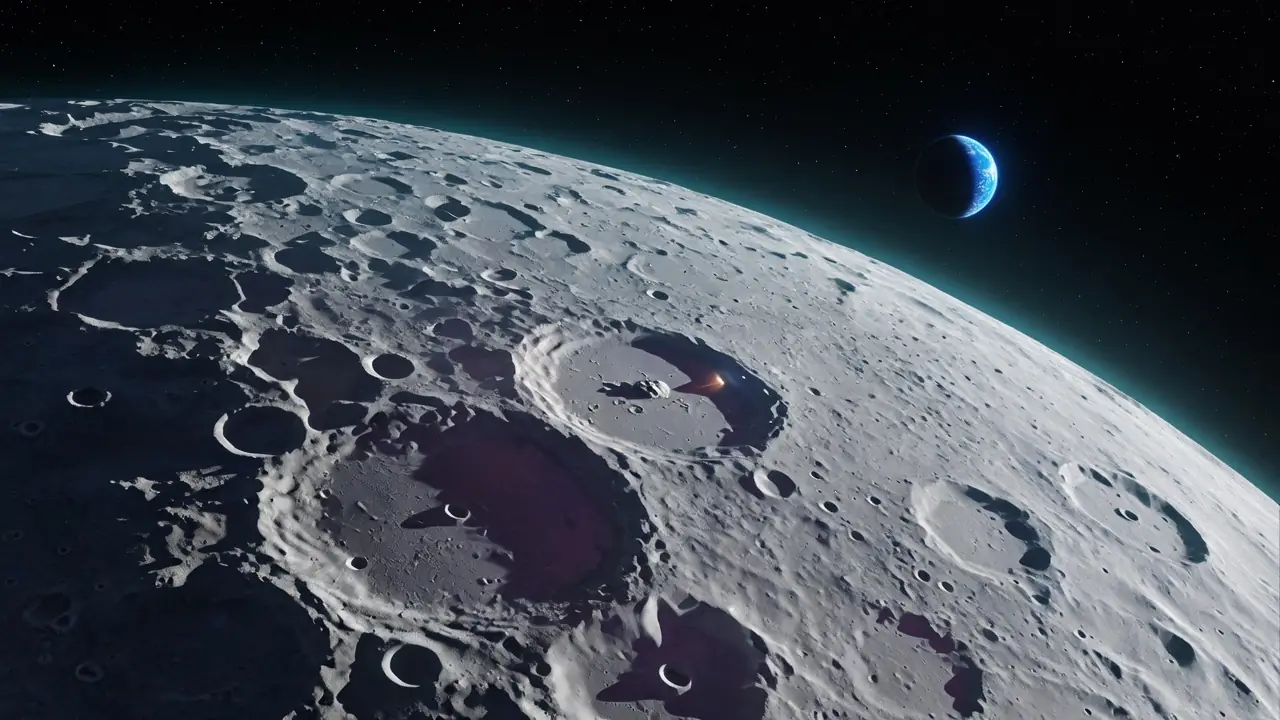
Start with a flight, a company, or the map. The record is the same in every room.
Upcoming flights. Open one for who flies it, what is on board, and the public money.
CompaniesCompanies on the next flights. Open a name for the jobs and the hardware.
NASA Moon BaseCargo I, II, III at the south pole. Crew in parallel on Artemis. A walk, not a list.
Open a flight for who flies it, what is on board, and the public money.
Open a company for the jobs, the hardware, and the flights they sit on.
Inside the stack · 03
Starship’s first orbital cargo flight flew September 28. Follow the path to Moon cargo through HDR, Lerch Bates, Thompson, Axiom Space, Lockheed Martin, Toyota and JAXA.
Read the story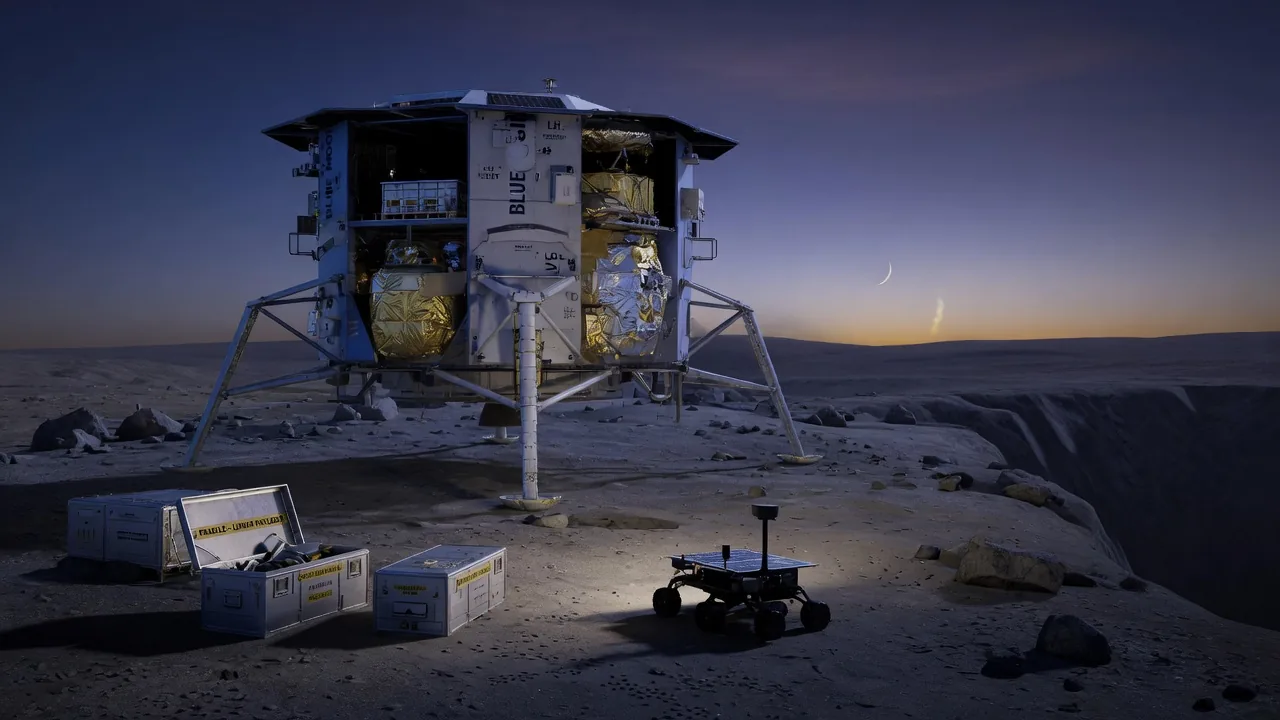
This is NASA's cargo-first Moon Base: landers put hardware on the land, then crew arrives. I, II, and III are NASA names, not fly order. Griffin-1 (II) is first on the clock.
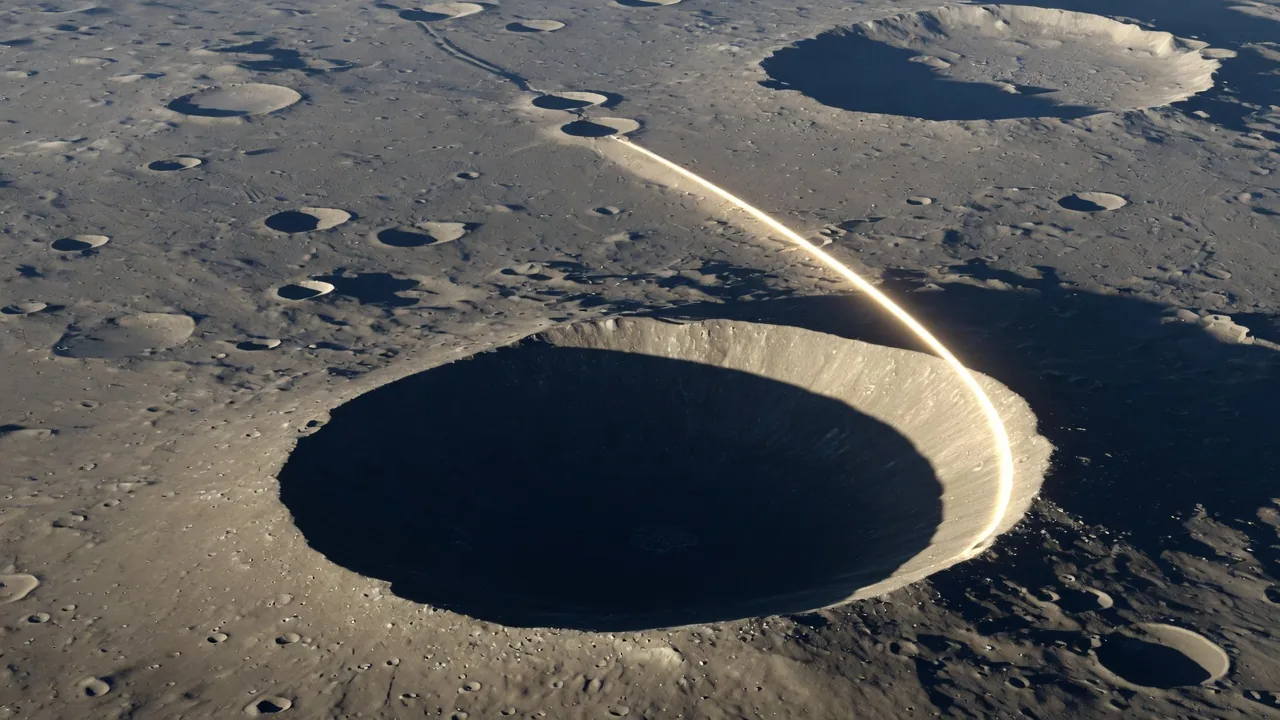 Landing map
Every public flight on the site it headed for. A globe of records, not a game map.
Open the mapLetters, flight files, and packs. Same named facts as the site. The price is for the PDF, not a ride.
Lunar site selection · modern era
Each flight sits on the site it headed for: landed, tipped, hard landing, or planned. Crew and orbit flights stay off the plate. One photograph of the near side, and a plotted chart of the south pole. Click a flight to open its Moon Imports record.
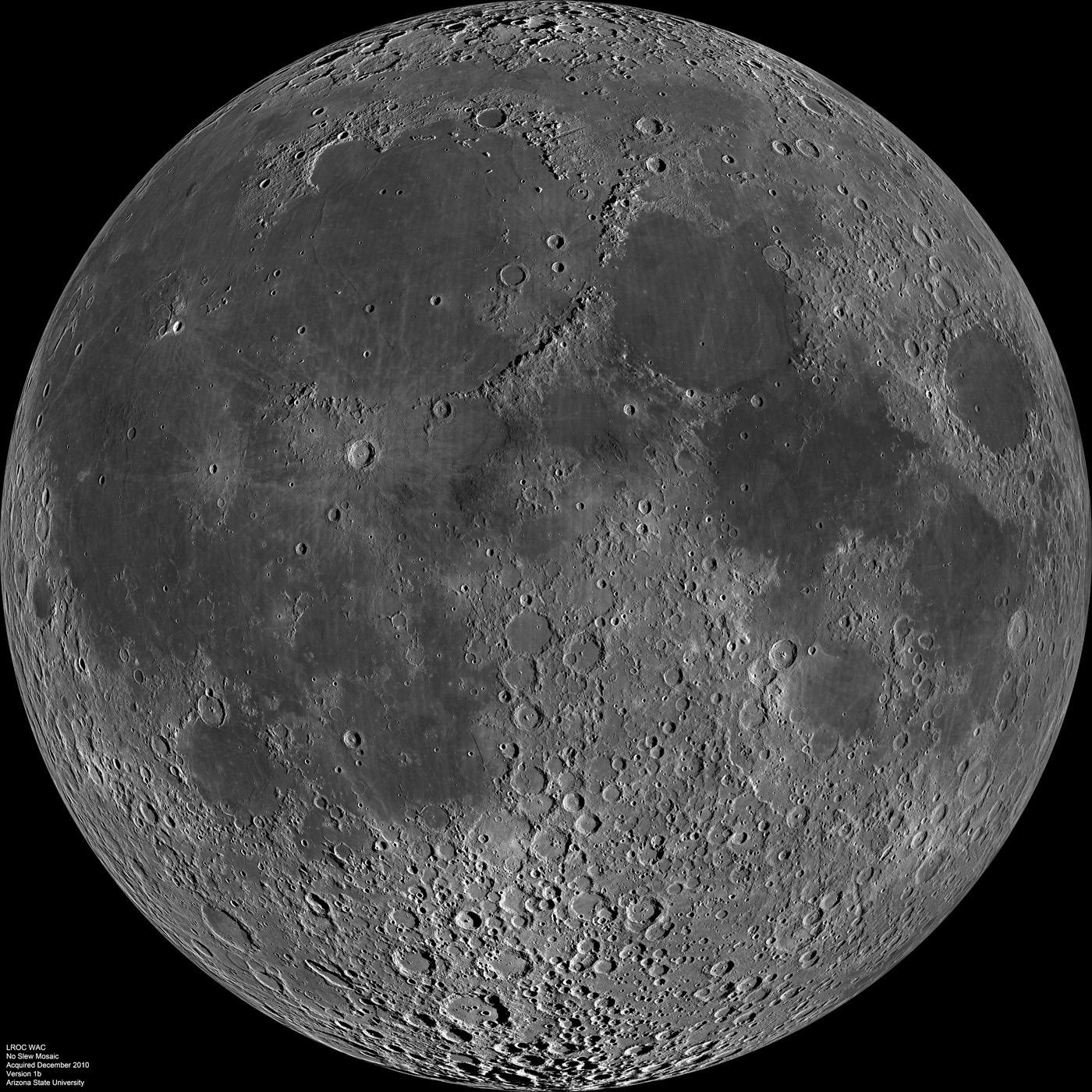
Photograph: NASA / GSFC / Arizona State University, LROC WAC nearside mosaic, public domain. The near-side plate is that photograph, clipped to the disk, under an orthographic graticule. The south pole plate is drawn, not photographed. Sites are the planned or intended target. Hard landings and flights that never arrived stay at the site they aimed for.
Program hub
A lasting presence at the south pole. NASA’s I, II, and III are names, not the order they fly. Cargo first. Crew in parallel.
| Mission | Who | Program | Rocket | When | Status | Cargo | Public $ |
|---|
Need a work PDF?
Pay on this page
Card stays with Stripe. You do not leave Moon Imports.
Change plan
One plan. Pick what you want next, then confirm the amount.
Inside the stack / 08
SpaceX holds the agreement to put AYAP-1 into Earth orbit in the first half of 2027. From there DeltaV's Hybrid Propulsion System (HIS) does the lunar transfer, the roughly 100 km polar science orbit, and the planned hard impact. TÜBİTAK UZAY built the roughly 3.5 t TstarD-100 bus for the Turkish Space Agency under AYAP; 56 of 65 mission-critical parts are domestic; four science payloads ride along.
Open the ride split ↓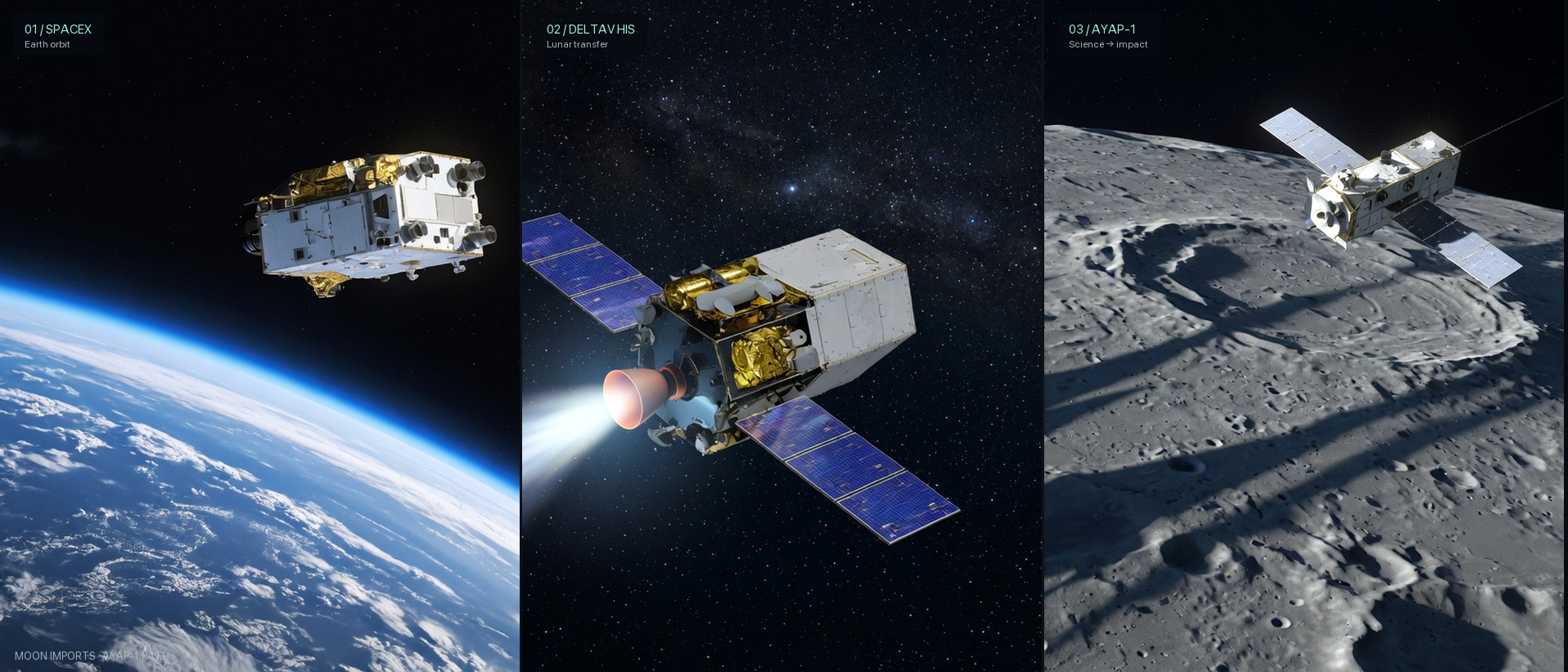
Today / September–October 2026
The news of the week is hardware on the floor. TÜBİTAK UZAY has completed manufacturing, assembly, and integration of AYAP-1 at OPMER and moved the roughly 3.5 tonne spacecraft into system level environmental testing at Turkish Aerospace's USET center. TÜBİTAK staff run the acoustic, vibration, thermal vacuum, and EMC campaign. The customer is the Turkish Space Agency under the Lunar Research Program AYAP.
56 of 65 mission-critical components are domestic on the TstarD-100 bus. After SpaceX puts the stack in Earth orbit, DeltaV HIS owns transfer through the planned hard impact. Soft landing is a later AYAP step.TÜBİTAK integration release ↗
OPMER integration done. TÜBİTAK runs the chamber at TAI.
Open the bus ↓Earth orbit agreement on record. Hybrid takes transfer through impact.
Open the ride ↓Bus and chamber first, then the ride split, science bay, path, and ownership.
01 / Spacecraft
TÜBİTAK UZAY is the spacecraft prime. TstarD-100 is the deep space member of its Tstar family: power, telecommunications, flight management, attitude and orbit control, and thermal control on one bus, with domestic S-band and X-band radios that carry İMECE and TÜRKSAT 6A flight heritage. Two modules make the vehicle, platform and propulsion. Mass is about 3.5 tonnes. At launch the diameter is about 4.1 meters; with solar panels deployed it opens to roughly 2.7 by 8.3 meters.
Turkish Aerospace hosts USET; TÜBİTAK experts run the acoustic, vibration, thermal vacuum, and EMC campaign there. Final pre-launch work returns to a TÜBİTAK cleanroom at METU, then the spacecraft ships toward Cape Canaveral / Kennedy for launch.TÜBİTAK ↗
TstarD-100 job ↗ USET env test ↗ AYAP-1 spacecraft cargo ↗ TÜBİTAK UZAY ↗ AYAP-1 spacecraft hardware ↗
02 / The ride
Turkish Space Agency chair Yusuf Kıraç told Anadolu Agency the agency has an agreement with SpaceX to launch AYAP-1 into Earth orbit in the first half of 2027. He has pointed to June as a target inside that window; the booster variant and pad are not in the public record yet.
DeltaV Space Technologies owns the lunar driving. TÜBİTAK names DeltaV as the hybrid propulsion partner. The Hybrid Propulsion System (HIS) is the stage that must transfer, hold the science orbit, and finish the mission. DeltaV's company page lists 650 N average thrust, 290 s specific impulse, and two 100 s burns on high performance solid fuel with nitrous oxide. The IAC-26 C4.11.2 paper describes a 750 N class hybrid with thermoplastic fuel and nitrous oxide, up to three ignitions, and about 300 s total firing.AA / Kıraç ↗ DeltaV AYAP page ↗
SpaceX launch job ↗ DeltaV hybrid job ↗ DeltaV on Moon Imports ↗ SpaceX ↗ TUA ↗
03 / Neutral particles
The Swedish Institute of Space Physics built the Lunar Neutrals Telescope (IRF: LNT; TÜBİTAK: Lunar Neutral Particle Telescope, LNPT). From about 100 km it images energetic neutral atoms, mapping how the solar wind hits the lunar surface, including permanently shadowed regions. The flight model left Kiruna for TÜBİTAK UZAY in June 2026.
IRF also built NILS on Chang'e-6, the first ESA instrument on the lunar surface. AYAP-1 puts that heritage into lunar orbit on a Turkish bus.IRF AYAP-1 ↗
04 / Thermal and radiation
Three more instruments share that polar science orbit. LNFR looks at the surface; the radiation pair measures the environment the stack flies through.
The Narrow-Angle Lunar Radiometer (LNFR), developed with Shenzhen University, investigates lunar albedo, temperature distribution, and related surface physical parameters. Beside it, a domestically developed Radiation Calorimeter and Radiation Dosimeter characterize the radiation environment in lunar orbit for this mission and for later Turkish lunar work. The 6 October 2026 TÜBİTAK integration release names them only as domestically developed.TÜBİTAK ↗
LNFR job ↗ radiation pair job ↗ LNFR cargo ↗ calorimeter cargo ↗ dosimeter cargo ↗ Shenzhen University ↗
05 / Path
Transit from Earth orbit to the Moon is about two months. Capture settles into a roughly 100 km polar circular lunar orbit. Nominal science runs at least three months; performance can stretch operations toward about 1.5 years. When the science window closes, the same domestic hybrid that did the transfer performs controlled maneuvers to a planned hard impact.
06 / Ownership
Turkish Space Agency is the customer for AYAP. TÜBİTAK UZAY is the spacecraft prime; DeltaV owns the hybrid motor; Turkish Aerospace hosts USET; IRF and Shenzhen University fill two of the four payload seats. On 31 August 2026, Türkiye signed the Artemis Accords at NASA Headquarters as the 71st signatory, so the Moon stack and the Accords signature sit on one national timeline.NASA: Türkiye Artemis Accords ↗
Forward look
AYAP-1 is a national deep space stack with a finished bus, a named Earth orbit launch partner, and a domestic hybrid asked to do transfer, orbit, and planned hard impact. The interesting builder move is HIS: solid fuel and nitrous oxide on one propulsion path from Earth orbit to a planned hard impact. The science bay is already filled, including IRF's neutral particle telescope with Chang'e-6 NILS heritage.
Soft landing belongs to later AYAP steps, not this flight. The next public gates are environmental test closeout, Cape shipment, and a firm SpaceX launch day inside the first half of 2027 window.
Open the News kit · flight card for AYAP-1