Inside the stack · 03
Who builds Starship’s road to the Moon?
Starship’s first orbital cargo flight is September 28. Follow the path to Moon cargo through HDR, Lerch Bates, Thompson, Axiom Space, Lockheed Martin, Toyota and JAXA.
Read the storyThis page did not load.

Start with a flight, a company, or the map. The record is the same in every room.
Upcoming flights. Open one for who flies it, what is on board, and the public money.
CompaniesCompanies on the next flights. Open a name for the jobs and the hardware.
NASA Moon BaseCargo I, II, III at the south pole. Crew in parallel on Artemis. A walk, not a list.
Open a flight for who flies it, what is on board, and the public money.
Open a company for the jobs, the hardware, and the flights they sit on.
Inside the stack · 03
Starship’s first orbital cargo flight is September 28. Follow the path to Moon cargo through HDR, Lerch Bates, Thompson, Axiom Space, Lockheed Martin, Toyota and JAXA.
Read the story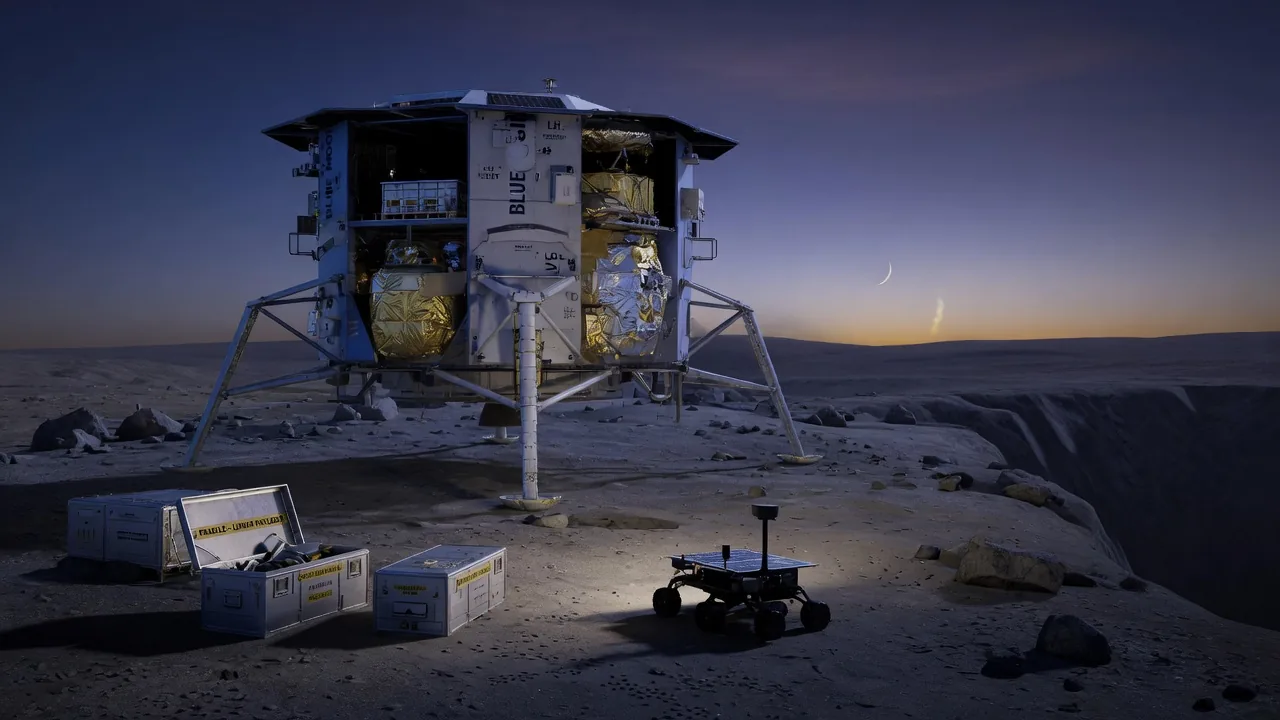
This is NASA's cargo-first Moon Base: landers put hardware on the land, then crew arrives. I, II, and III are NASA names, not fly order. Griffin-1 (II) is first on the clock.
 Landing map
Every public flight on the site it headed for. A globe of records, not a game map.
Open the mapLetters, flight files, and packs. Same named facts as the site. The price is for the PDF, not a ride.
Lunar site selection · modern era
Each flight sits on the site it headed for: landed, tipped, hard landing, or planned. Crew and orbit flights stay off the plate. One photograph of the near side, and a plotted chart of the south pole. Click a flight to open its Moon Imports record.
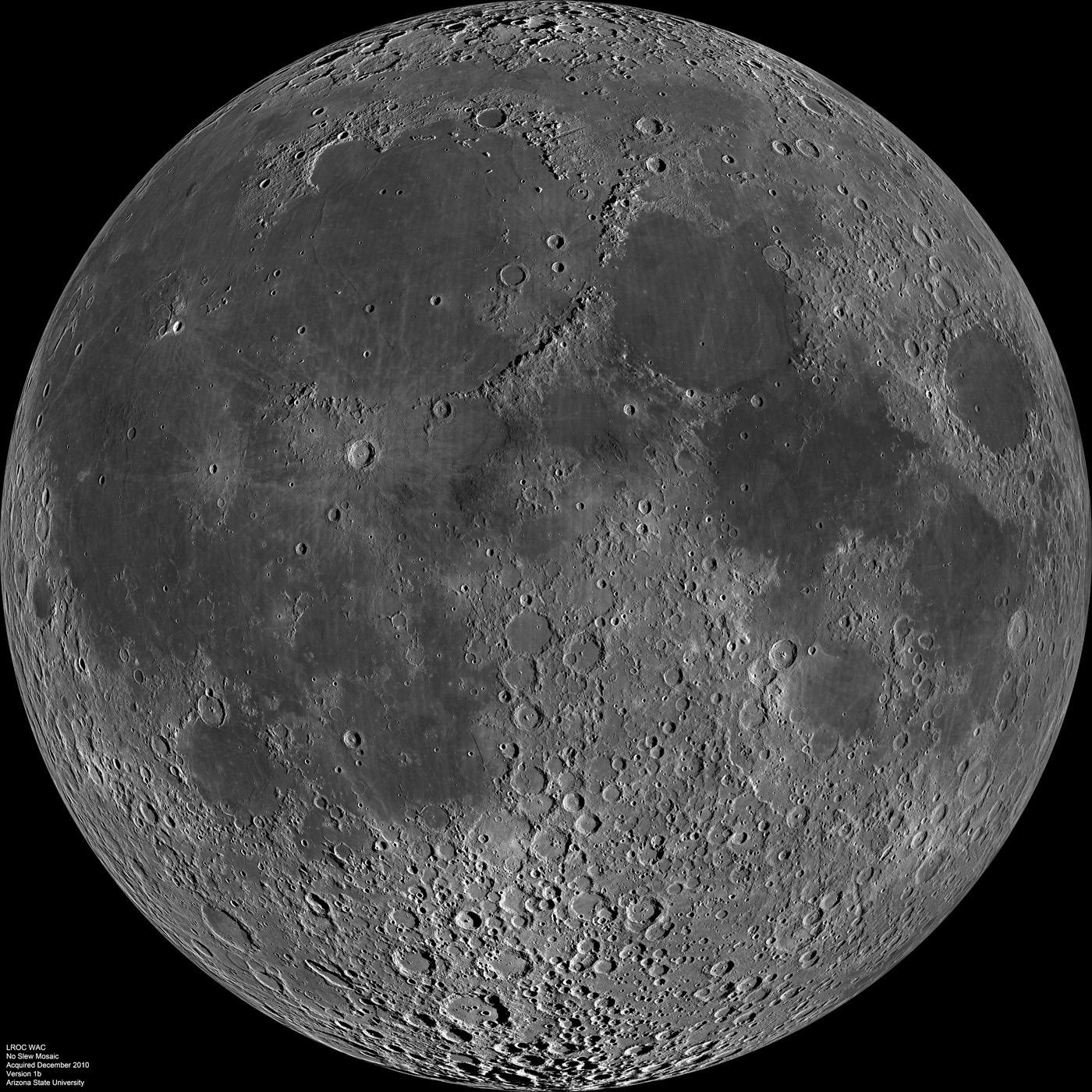
Photograph: NASA / GSFC / Arizona State University, LROC WAC nearside mosaic, public domain. The near-side plate is that photograph, clipped to the disk, under an orthographic graticule. The south pole plate is drawn, not photographed. Sites are the planned or intended target. Hard landings and flights that never arrived stay at the site they aimed for.
Program hub
A lasting presence at the south pole. NASA’s I, II, and III are names, not the order they fly. Cargo first. Crew in parallel.
| Mission | Who | Program | Rocket | When | Status | Cargo | Public $ |
|---|
Need a work PDF?
Pay on this page
Card stays with Stripe. You do not leave Moon Imports.
Change plan
One plan. Pick what you want next, then confirm the amount.
Inside the stack / 03
On September 28 Starship opens its payload door in orbit for the first time, with working satellites instead of test mass. Follow that door forward to propellant transfer, the Orion dock in 2027, and the rover NASA plans to send on a Starship lander, with the outside companies named at every step.
What happens on September 28? ↓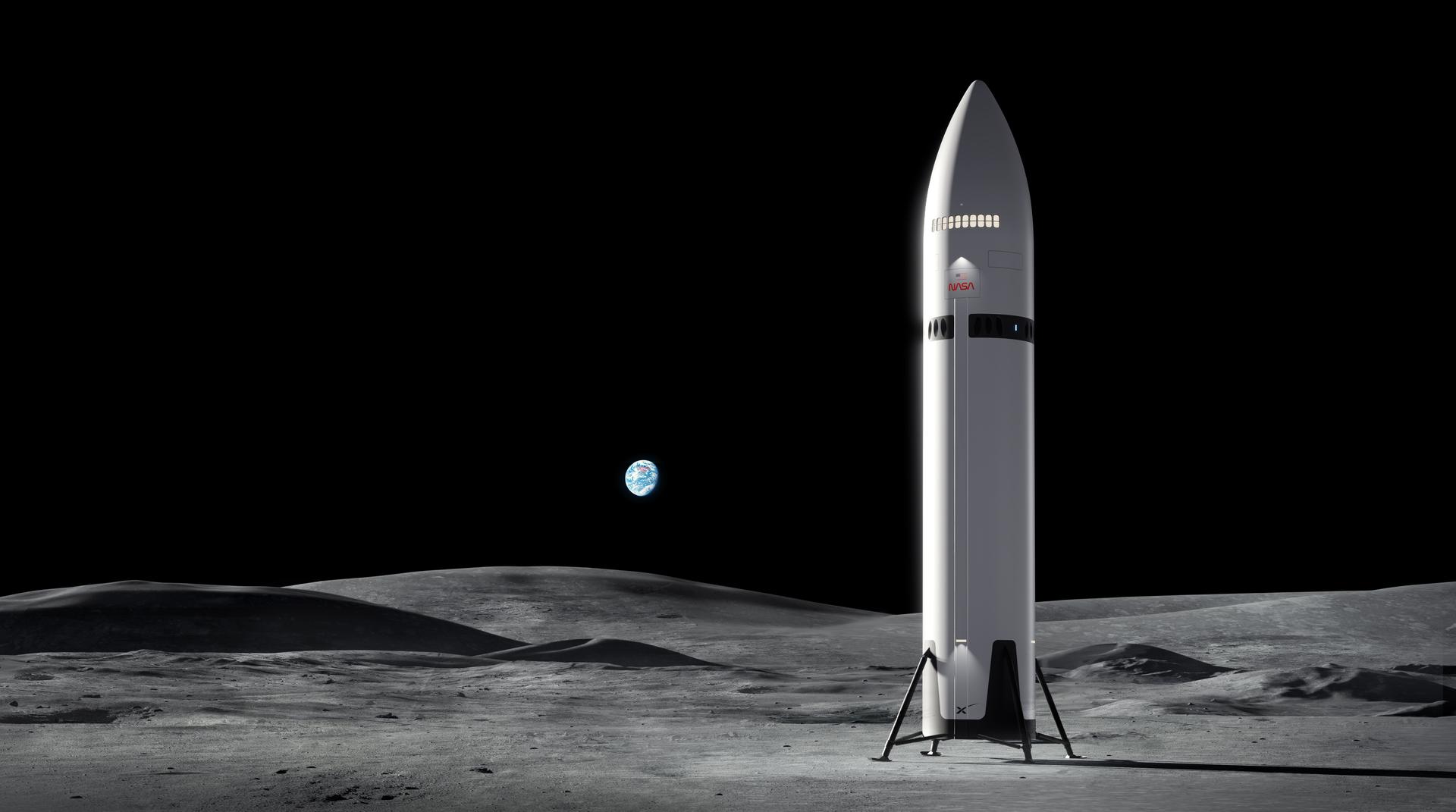
Next week / 28 September 2026
SpaceX is targeting Monday, September 28, 2026 for Starship Flight 14 from Starbase, Texas. The window is 75 minutes and opens at 8:15 a.m. Eastern. Aviation Week reports a 171 mile orbit and close to ten hours of flight. The ship splashes down in the Pacific. The booster lands offshore rather than at the tower.
What is new is the payload. Starship began carrying Starlink mass simulators on Flight 7, and Flight 10 was the first to push them out. Flight 13 in July carried 20 real Starlink V3 satellites, but on a suborbital path, so they came down with the ship. Flight 14 is the first to reach orbit and leave working satellites there. Twenty six of them stay in the constellation.
Aviation Week: SpaceX retargets Starship flight for September 28 ↗ TechCrunch: first orbital attempt, 26 Starlink V3 satellites, September 15, 2026 ↗ Interesting Engineering: Flight 13 was the first to fly real Starlink V3 rather than mass simulators, July 25, 2026 ↗SpaceX lists a long duration flight test and an in space propellant transfer test between two Starships as the next Human Landing System flight milestones.
Read the propellant gate ↓NASA’s Artemis III is a demonstration in low Earth orbit. Orion docks with a Blue Origin test lander, then with a SpaceX Starship Version 3 test article.
First mission planned to put crew on the surface is Artemis IV, 2028Flight 14 is a Starlink mission. It is also the first time Starship holds an orbit and hands over a payload that stays there, which is the motion every later lunar cargo flight is built on.
Start with the door on this flight, then take each gate between here and hardware standing on the Moon.
01 / The cargo door
Starship carries satellites in a slot along the side of the payload bay and pushes them out one at a time, which is why the mechanism is widely called the Pez dispenser. Flight 13 on July 24, 2026 put that door to work with real spacecraft. The ship survived its own splashdown in the Indian Ocean intact, so SpaceX recovered it, read the heat shield tiles, and built changes into the next vehicle.
TechCrunch: Flight 13 deployment, recovered upper stage, heat shield changes ↗Flight 14 changes the one thing that matters for cargo: the satellites stay. Reaching orbit before the door opens means the payload separates onto a trajectory of its own. It does not follow the ship down. Every lunar delivery inherits that requirement.
NASA sizes the large cargo landers it is buying from SpaceX and Blue Origin at roughly 26,000 to 33,000 pounds onto the surface. Flight 14 answers the first question, which is whether the vehicle can let go of mass in orbit and keep flying its own plan.
NASA: large cargo lander payload class, November 19, 2024 ↗02 / The Earth floor
Before a Starship can do any of that, someone has to build it. Gigabay is the next Starship production hall at Starbase, Texas. Texas Department of Licensing and Regulation project TABS2025022205 registers it at 700,000 square feet and $250 million. It names HDR as design firm of record and runs from July 1, 2025 to a December 31, 2026 target. SpaceX is the owner builder.
Two more firms name their own scope on it. Lerch Bates lists enclosure, building logistics, facade access, and vertical transportation on SpaceX Gigabays at Starbase and Cape Canaveral, with HDR as its client. Thompson Construction Group lists the foundations: about 161,000 square feet of shallow foundations, plus grading, earthwork, piles, baseplate grouting, cast in place anchors, and the finished slab.
TDLR: Gigabay project registration TABS2025022205 ↗ Lerch Bates: SpaceX Gigabays project page ↗ Thompson Construction Group: SpaceX Giga Bay foundations ↗SpaceX builds most of Starship in house and publishes very few lunar tier two suppliers. The outside record here is thickest around the buildings rather than the vehicle. Southern Steel Engineers names steel connection design, stairs, and shop drawing review on a 2024 Starbase office job of about 329,493 square feet. These four firms are on paper for the place Starship hardware is made, so they sit on the same flight record as the lander.
Southern Steel Engineers: SpaceX Starbase office ↗03 / The propellant gate
In the public Human Landing System architecture, HLS for short, Starship reaches Earth orbit with far less propellant than a Moon trip needs. Tanker Starships fill a depot. The lander loads liquid methane and liquid oxygen there, and only then leaves for the Moon. SpaceX names two flight tests as the next HLS milestones. One is a long duration flight that returns propulsion and thermal data. The other is a propellant transfer between two docked Starships. Both are targeted 2026 and paced by Starship Version 3, the generation flying on September 28.
NASA: Human Landing System reference ↗ SpaceX: Updates, HLS flight milestones ↗The tanker count and any per tanker price stay unpublished. The public money here is the program award. Option A is about $2.89 billion from 2021 and Option B about $1.15 billion from 2022, roughly $4.04 billion stacked. Those are firm fixed price development packages. They are not the price of a seat, a ton of cargo, or a tanker flight.
NASA: Option A selection of SpaceX ↗ NASA: Option B contract award ↗04 / The Orion dock
NASA published the Artemis III plan on July 15, 2026. It is a demonstration in low Earth orbit ahead of crewed landings in 2028, and it flies in a set order. Blue Origin’s Blue Moon test lander launches first and can hold in orbit up to 30 days. Then SLS launches four crew in Orion from Launch Complex 39B at Kennedy.
Blue Moon docks side on. Up to two crew go inside and test the life support system, cabin, and avionics, with an instrumented spacesuit mass simulator reading the cabin environment. A Starship Version 3 test article launches last. It docks nose to nose with Orion to test controllability and communications, and the crew stays in Orion.
NASA: how the Artemis III lander test will pave the way, July 15, 2026 ↗Jeremy Parsons, the Artemis program manager, called it “a highly choreographed dance with a demanding launch sequence across multiple launch pads.” The Starship hardware is SpaceX’s own docking adapter, based on the Dragon 2 system and able to act as either the active or the passive side. NASA and SpaceX ran it through more than 200 docking scenarios at the Johnson Space Center. Lockheed Martin holds the Orion side of that rendezvous and docking.
NASA: testing the Starship lunar lander docking system ↗ Lockheed Martin: docking Orion ↗05 / Surface access
A Starship standing on the Moon puts its crew deck tens of meters above the ground. People and cargo reach the surface by elevator. On April 30, 2024, NASA astronaut Doug Wheelock and Axiom Space astronaut Peggy Whitson spent a day on that problem at SpaceX headquarters in Hawthorne, California, working with Starship HLS development hardware. They walked from the airlock deck to a test elevator in fully pressurized AxEMU suits, the Axiom Extravehicular Mobility Unit, each carrying a full-scale model of its life support backpack.
Axiom’s part here is the suit, not the elevator. The elevator is SpaceX hardware and its manufacturer is not public. The suit is what makes the rehearsal real, because pressurizing it changes how a person fits through a hatch and how much they can carry.
NASA: astronauts practice the next giant leap for Artemis ↗This step turns a lander into a delivery. The door, the propellant, and the dock put a vehicle at the pole. The elevator puts people and hardware on the regolith, and it decides how much of a load can come off once it arrives. Artemis IV is the first mission planned to set crew down on the surface.
06 / The cargo assignment
NASA wrote on November 19, 2024 that it intends for SpaceX’s Starship cargo lander to deliver a pressurized rover to the lunar surface. The rover is in development by JAXA, the Japan Aerospace Exploration Agency. The delivery is set no earlier than fiscal year 2032, for Artemis VII and later. Blue Origin holds the other assignment on the same release, a lunar surface habitat, no earlier than fiscal year 2033.
NASA: mission assignments for two future Artemis cargo landers ↗The rover is the Lunar Cruiser, a JAXA and Toyota vehicle with a supplier list of its own. Yokogawa Electric is named on the control platform and battery measurement, Konica Minolta on dust removal, JAMSS on the crew system and habitability. NASA’s assignment covers the delivery, not the rover, and the program cost is not public. It is the most concrete Starship cargo job on the public record: a Japanese pressurized rover, built by named shops on Earth, riding an American lander to the surface.
Toyota: Lunar Cruiser ↗ JAXA: pressurized rover ↗Follow the work
September 28 is a Starlink flight with a lunar shape to it. Starship has to reach orbit and let go of a payload, hold that orbit, and take propellant from another ship. Then it docks with Orion in 2027, sets crew down with Artemis IV in 2028, and carries other people’s hardware from fiscal 2032.
Every gate carries a company list. HDR, Lerch Bates, Thompson Construction and Southern Steel Engineers are on the buildings. Axiom Space is on the suits. Lockheed Martin is across the hatch and Blue Origin is on the other lander. Toyota, JAXA, Yokogawa, Konica Minolta and JAMSS are under the first cargo assignment. Moonbase Alpha, SpaceX’s name for a permanent outpost supplied by Starship, is carried here with the money blank.
Open the News kit · flight card for Starship lunar cargo