Inside the stack · 03
Who builds Starship’s road to the Moon?
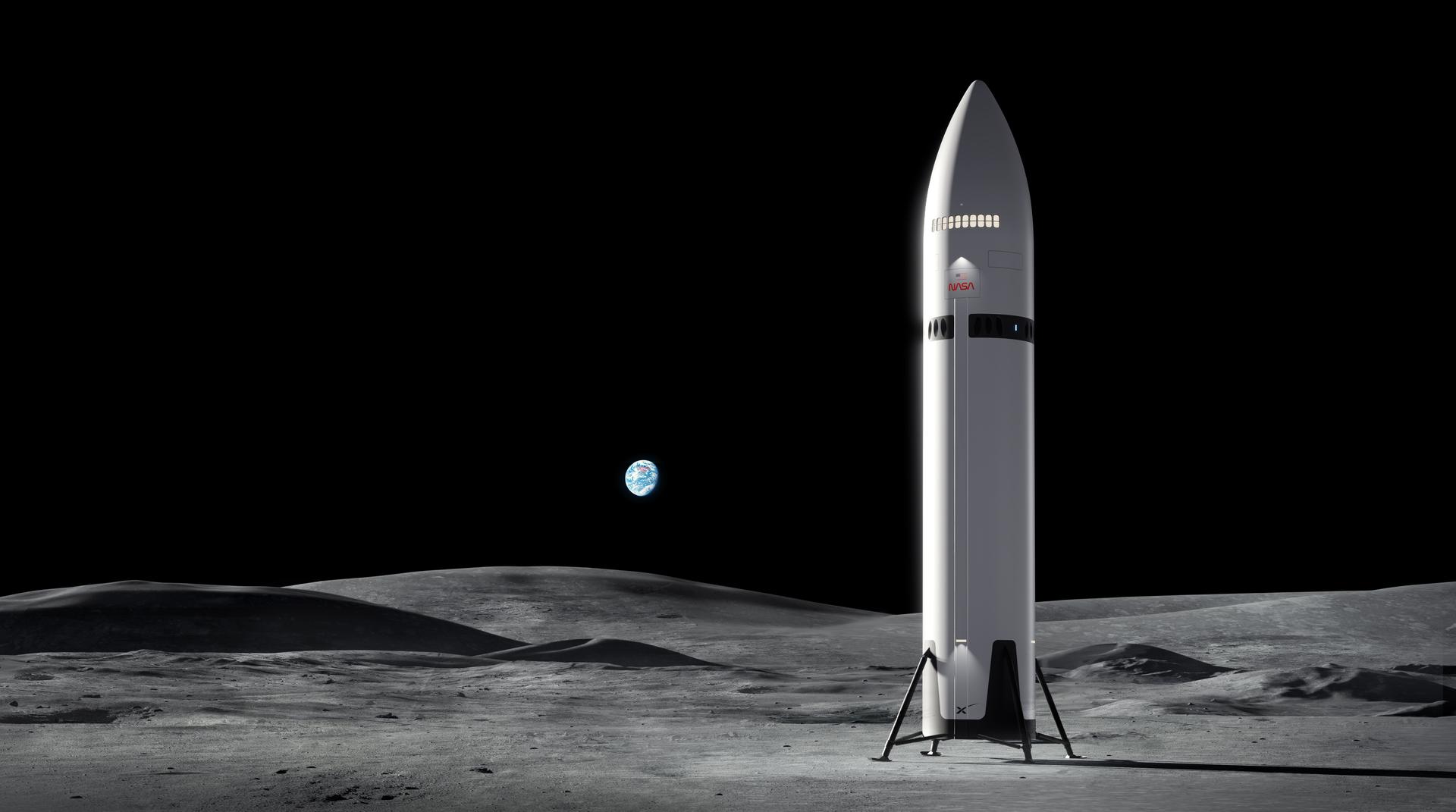
Starship’s first orbital cargo flight flew September 28. Follow the path to Moon cargo through HDR, Lerch Bates, Thompson, Axiom Space, Lockheed Martin, Toyota and JAXA.
Read the storyThis page did not load.
Start with a flight, a company, or the map. The record is the same in every room.
Upcoming flights. Open one for who flies it, what is on board, and the public money.
CompaniesCompanies on the next flights. Open a name for the jobs and the hardware.
NASA Moon BaseCargo I, II, III at the south pole. Crew in parallel on Artemis. A walk, not a list.
Open a flight for who flies it, what is on board, and the public money.
Open a company for the jobs, the hardware, and the flights they sit on.
Inside the stack · 03
Starship’s first orbital cargo flight flew September 28. Follow the path to Moon cargo through HDR, Lerch Bates, Thompson, Axiom Space, Lockheed Martin, Toyota and JAXA.
Read the story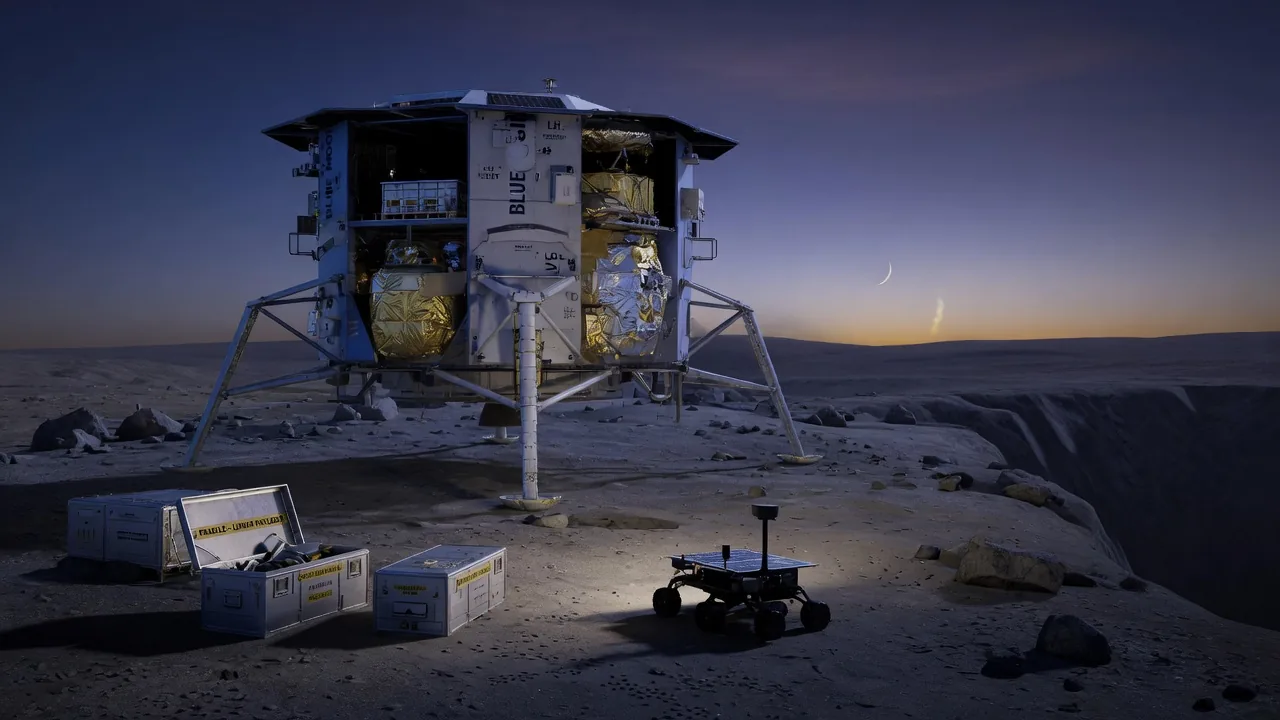
This is NASA's cargo-first Moon Base: landers put hardware on the land, then crew arrives. I, II, and III are NASA names, not fly order. Griffin-1 (II) is first on the clock.
 Landing map
Every public flight on the site it headed for. A globe of records, not a game map.
Open the mapLetters, flight files, and packs. Same named facts as the site. The price is for the PDF, not a ride.
Lunar site selection · modern era
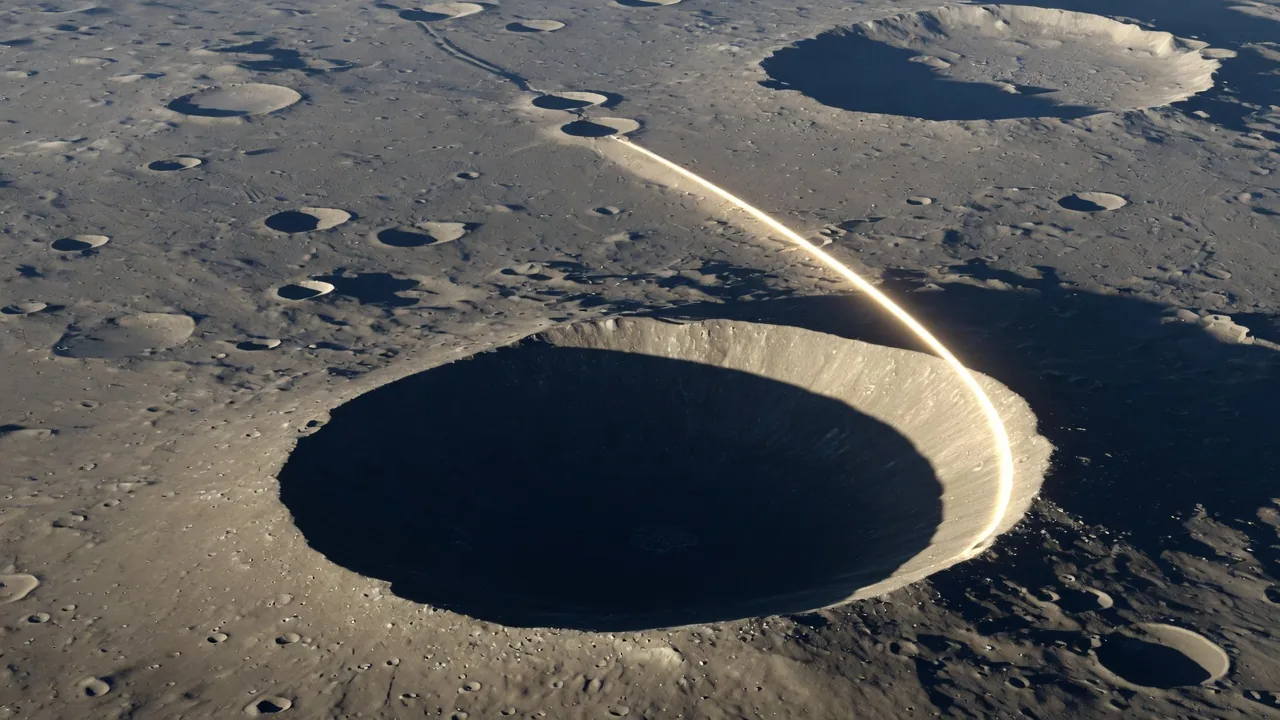
Each flight sits on the site it headed for: landed, tipped, hard landing, or planned. Crew and orbit flights stay off the plate. One photograph of the near side, and a plotted chart of the south pole. Click a flight to open its Moon Imports record.
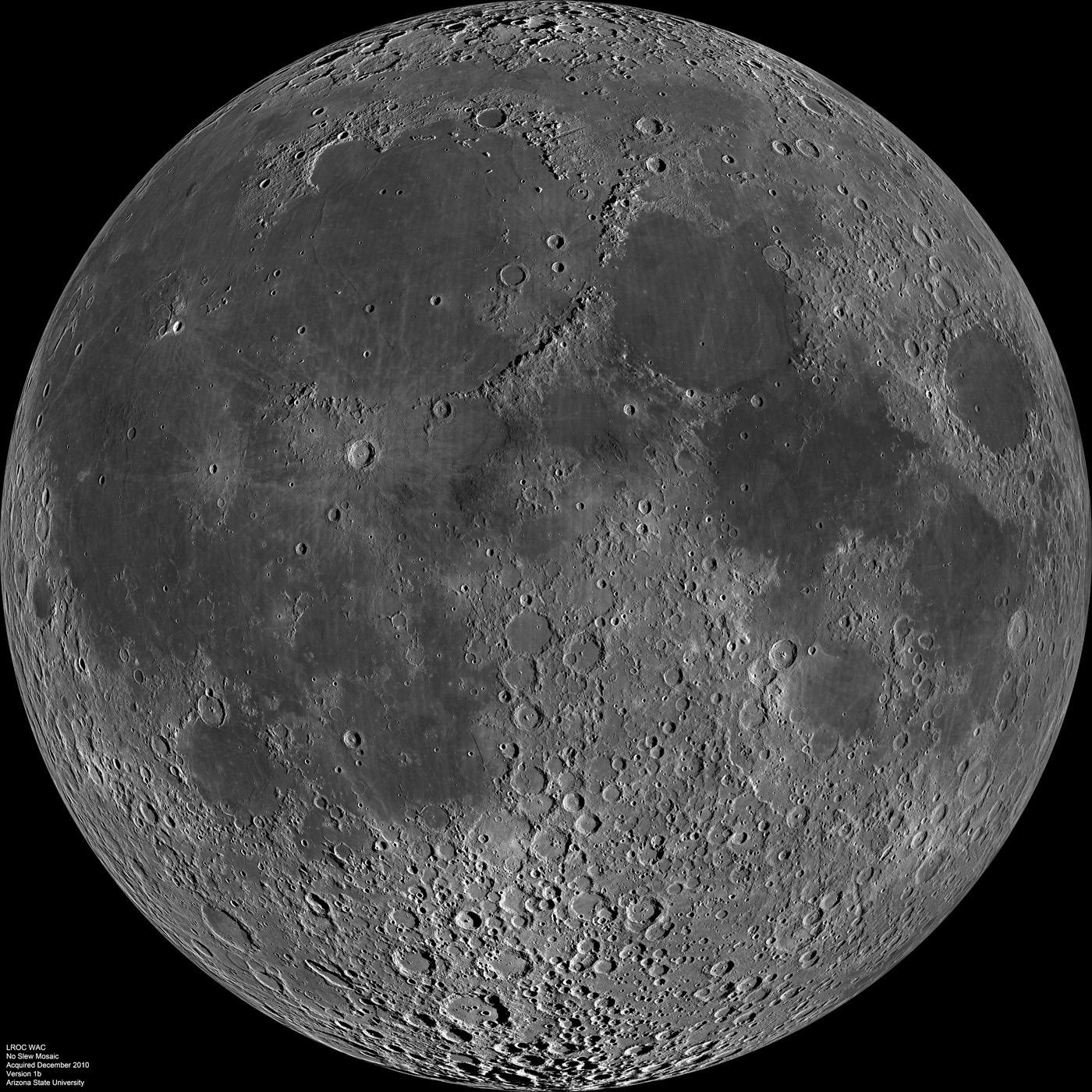
Photograph: NASA / GSFC / Arizona State University, LROC WAC nearside mosaic, public domain. The near-side plate is that photograph, clipped to the disk, under an orthographic graticule. The south pole plate is drawn, not photographed. Sites are the planned or intended target. Hard landings and flights that never arrived stay at the site they aimed for.
Program hub
A lasting presence at the south pole. NASA’s I, II, and III are names, not the order they fly. Cargo first. Crew in parallel.
| Mission | Who | Program | Rocket | When | Status | Cargo | Public $ |
|---|
Need a work PDF?
Pay on this page
Card stays with Stripe. You do not leave Moon Imports.
Change plan
One plan. Pick what you want next, then confirm the amount.
Inside the stack / 11
Eagle flew its descent on 2,756 identical NOR gate chips. The next named Moon chips ride Griffin-1, IM-3 and Blue Ghost: NVIDIA Jetson modules command Lunar Outpost's MAPP lidar on IM-3 in the first quarter of 2027, and Starcloud's SC-1L flies on Elytra no earlier than 2028.
What Moon chips do ↓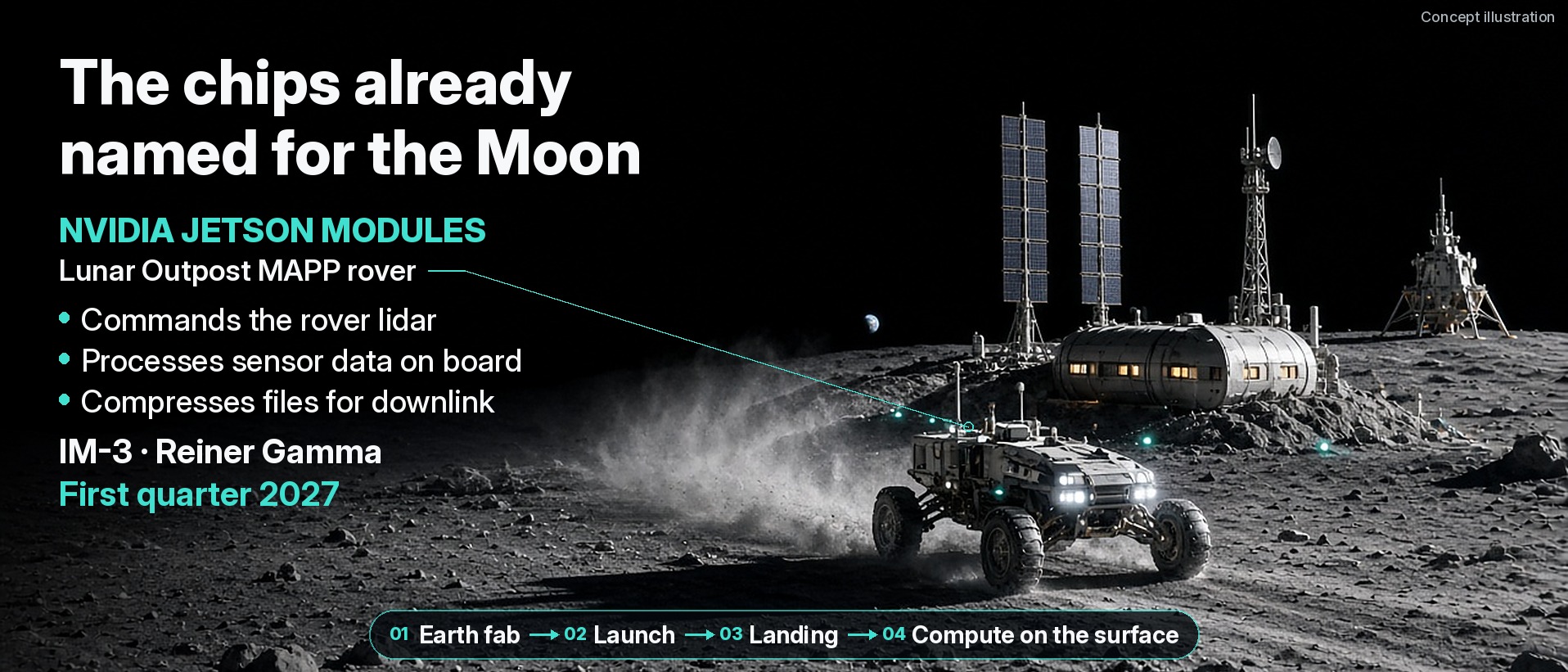
1969 to 2028
Moon chips are the processors, field programmable gate arrays (FPGAs), memory and radiation hardened circuits that fly on lunar landers and rovers. They command lidar (laser ranging used for navigation), process sensor data on board, compress files for downlink and keep working through radiation and the month long day and night cycle. On 20 July 1969, Eagle flew its descent on an Apollo Guidance Computer built from 2,756 identical flat pack chips, each a pair of three input NOR gates on six transistors. Philco-Ford made most of the 800,000 such chips for the Block II computers under license from Fairchild Semiconductor, and the computers flew nine lunar missions with zero failures. In the first quarter of 2027, Intuitive Machines' IM-3 lands Lunar Outpost's MAPP rover at Reiner Gamma with NVIDIA Jetson modules commanding its lidar, processing its sensors and compressing files for downlink, and Firefly's Elytra carries a Jetson to lunar orbit on Blue Ghost Mission 2, no earlier than 2027.Computer History Museum ↗ Lunar Outpost ↗
01 / What's coming
NASA's Moon Base Phase 2 puts about 60 tons on the south pole across 24 landings from 2029 through 2032, with solar and radioisotope thermoelectric generator (RTG) based power stations, upgraded rovers, MoonFall drones, surface to orbit communications stations and early habitation, and NASA's March 2026 plan counts seven rovers. A 2026 NASA technical paper on autonomous lunar habitats aligns its fault tolerant, radiation hardened onboard computing with NASA's Civil Space Shortfall in high performance onboard computing and proposes NASA's High Performance Spaceflight Computing (HPSC) processor for it.NASA Moon Base ↗ NASA NTRS ↗
Lunar Outpost runs its rovers on NVIDIA Jetson modules from Lunar Voyage 2 onward and names NVIDIA's Space-1 Vera Rubin Module as an option for Lunar Voyage 3 and Lunar Voyage 5. Starcloud's SC-1L processor flies on Firefly's Elytra to validate a data center around the Moon for surface and orbital infrastructure, Firefly announced on 30 September 2026.Lunar Outpost ↗ Firefly ↗
02 / Apollo
The first chips on the Moon were processors: the Apollo Guidance Computer's NOR gate logic ran every guidance and control function on the command module and the lunar module, from coast to powered descent.MIT R-700 ↗ Smithsonian ↗
Each Apollo mission carried two Apollo Guidance Computers, one in the command module and one in the lunar module, designed at the MIT Instrumentation Laboratory and built by Raytheon. The Block II computer held 2,048 words of erasable core memory and 36,864 words of fixed core rope memory, timed by a 2.048 MHz oscillator, and every logic function ran on one type of integrated NOR gate in a flat package.MIT R-700 ↗ AGC overview ↗
Eldon Hall's team chose that single chip type to simplify reliability testing, and the Block II design packed 5,530 logic gates and 16,536 transistors into its 2,756 flat packs. Philco-Ford built a dedicated production line in Lansdale, Pennsylvania, under a 1964 cross license with Fairchild, and the lunar module's Abort Guidance System ran on Signetics circuits. The two computers per mission flew nine lunar and five Earth orbit missions with zero failures.CHM ↗ Smithsonian ↗
03 / The environment
Chang'e 4's Lunar Lander Neutrons and Dosimetry instrument made the first surface radiation measurements in January and February 2019: a total absorbed dose rate in silicon of 13.2 µGy per hour and a dose equivalent of 1,369 µSv per day, about 2.6 times the galactic cosmic ray dose inside the International Space Station. Galactic cosmic rays, solar particle events and neutrons from the regolith make up that field.Science Advances ↗
For chips, total ionizing dose is the radiation a part absorbs over its life; Renesas rates that dose in krad (kilorads) of silicon. A single event upset is a bit flip from one energetic particle, the fault Montana State's RadPC was built to catch and repair.Renesas ↗ RadPC paper ↗
LRO's Diviner radiometer measures equatorial surface temperatures near 400 K at noon and below 100 K, about −173 °C, at night, across a day and night cycle of about a month. NASA puts daytime equatorial peaks above 121 °C and permanently shadowed polar craters below −246 °C, and Diviner has measured 25 K in those craters.Diviner ↗ NASA ↗
04 / Flown chips
Flown Moon chips cover a few concrete jobs: radiation hardened interface and power circuits; redundant field programmable gate array (FPGA) computers that vote out faults; chip scale atomic clocks for ranging; flight computers that run terrain classifiers; and commercial system on chip (SoC) devices and solid state memory for lunar data storage.
Radiation hardened parts. Renesas Intersil ICs handled data transmission, telemetry, analog signal conditioning and power regulation on JAXA's SLIM, which landed in January 2024: 3.3 V and 5 V RS-422 receivers and drivers, a 16 channel analog multiplexer, a 40 V operational amplifier and a 3 A low dropout regulator, tested to 300 krad in silicon.Renesas ↗
Redundancy. Montana State University's RadPC builds its fault tolerance from multiple FPGAs: the published design runs redundant processor tiles, votes on their outputs and repairs a faulted tile through partial reconfiguration. RadPC launched 15 January 2025 on Firefly's Blue Ghost Mission 1, measured radiation through the six week transit, landed at Mare Crisium on 2 March 2025 and ran about two weeks on the surface, the planned lunar day. Redwire's vision navigation processor flew on the same lander.Montana State ↗
Precision timing. Orion Space Solutions provided a Microchip chip scale atomic clock in the SA.45s class on Advanced Space's CAPSTONE, launched 28 June 2022, for one way ranging with NASA's Deep Space Network from lunar orbit. Mission Control Space Services flew MoonNet, a deep learning terrain classifier, on a Xiphos flight computer aboard ispace's Hakuto-R Mission 1, launched 11 December 2022, for Rashid rover imagery.Mission Control ↗Advanced Space ↗
Commercial parts. Lonestar Data Holdings ran Independence, a software defined data center, on Intuitive Machines' Odysseus on IM-1 in February 2024. Its next payload, Freedom, built by SpaceBilt, carried a Microchip PolarFire SoC FPGA running RISC-V Linux and an 8 TB Phison Pascari SSD on Athena, launched 26 February 2025, and ran in transit, in lunar orbit and on the surface after the March 2025 landing.DCD ↗
05 / Compute at the Moon
Lunar Outpost ties file compression on MAPP to communications limits on the Moon, so Jetson modules compress large files on the rover for downlink, and Firefly runs Ocula, Lawrence Livermore National Laboratory's ultraviolet and visible Moon imaging telescopes, through a Jetson on Elytra to process imagery on orbit and send insights to Earth.Lunar Outpost ↗ Firefly ↗
Lunar Outpost uses NVIDIA Jetson and CUDA-X, NVIDIA's GPU computing software libraries, for onboard data processing, lunar mapping and autonomous navigation, and NVIDIA's June 2026 post describes Ocula running inference directly in space. Mission Control's Spacefarer AI runs machine learning on Astrobotic's CubeRover on Griffin-1.NVIDIA ↗ Astrobotic ↗
Lonestar built Freedom for disaster recovery and data storage, and Phison pressure tested its Pascari drive for radiation, temperature swings and launch vibration.Phison ↗
06 / Booked chips
Named chips are already booked on the next Griffin, IM-3 and Blue Ghost flights: Moon Pi, Matt Parker's Stand Up Maths payload that calculates π on CubeRover; Jetson modules for MAPP lidar and for Ocula imaging on Elytra; and Starcloud's SC-1L processor on Elytra to validate a data center around the Moon.
Late 2026 · Griffin-1. Moon Pi, Matt Parker's Stand Up Maths payload, uses spare computing capacity on Astrobotic's 2U CubeRover to calculate π on the Moon, and its mission file is loaded on the rover. Griffin-1, built by Astrobotic, now Voyager Lunar Systems within Voyager Technologies, completed acceptance testing, Voyager announced on 13 October 2026, and launches on Falcon Heavy to the Nobile region in late 2026, and Next Spaceflight lists the launch no earlier than December 2026.Voyager ↗
First quarter 2027 · IM-3. Lunar Outpost's MAPP rover uses NVIDIA Jetson modules to command its lidar, process sensor data and compress files for downlink. MAPP rides Intuitive Machines' IM-3 to Reiner Gamma on Falcon 9, in a January through March 2027 launch window.Intuitive Machines ↗
No earlier than 2027 · Blue Ghost Mission 2. Lawrence Livermore National Laboratory embedded an NVIDIA Jetson module in its Ocula telescopes, fit checked on Elytra on 6 April 2026, and Firefly's SciTec AI software runs on it to process ultraviolet and visible Moon imagery on orbit. Blue Ghost Mission 2 lands on the far side near Nassau crater, Blue Ghost powers off before lunar nightfall, and Elytra stays in lunar orbit for about five years.Firefly ↗
No earlier than 2028 · Blue Ghost Mission 3. Starcloud's SC-1L processor flies on the second Elytra, takes data from Firefly's Solux vision system, runs AI computing on orbit and sends the results to Earth. Blue Ghost lands at the Gruithuisen Domes, and Elytra then hosts SC-1L for five years in lunar orbit, building on Starcloud's AI computing demonstration in low Earth orbit.Firefly ↗
07 / Next processors
Two next generation processors are named for Moon and deep space vehicles: NASA's High Performance Spaceflight Computing chip with Microchip, a radiation hardened RISC-V computer for landers, rovers and habitats, and NVIDIA's Space-1 Vera Rubin Module for space AI inferencing on later orbital flights.NASA HPSC ↗ NVIDIA ↗
Microchip's PIC64-HPSC packs ten 64-bit SiFive RISC-V cores (RISC-V is an open instruction set architecture) with vector and AI processing, Ethernet time sensitive networking (TSN, deterministic Ethernet for vehicle networks) and post quantum cryptography. The radiation hardened PIC64-HPSC1000 is rated to 100 krad total ionizing dose, tested to 200 krad, and the radiation tolerant PIC64-HPSC1100 to 50 krad, and Microchip lists Moon and Mars landers and rovers among its applications.Microchip ↗
NASA rates HPSC, developed with Microchip, at over 100 times the computing capability of current space processors; it reached tape out (the finished chip design handed to manufacturing) in mid 2025, sent its first "Hello Universe" email in February 2026 and early JPL test results indicate 500 times the performance of the radiation hardened chips in use today.NASA HPSC ↗ NASA JPL ↗
NVIDIA's Space-1 Vera Rubin Module delivers up to 25 times the AI compute of an H100 GPU for space inferencing, with Jetson Orin and IGX Thor available now for edge AI (machine learning inference run on the spacecraft) on orbit. Firefly plans newer NVIDIA platforms such as Space-1 for later Ocula flights.NVIDIA ↗
Summary
Fairchild and Philco-Ford built Apollo's NOR gates. Renesas, Microchip, Phison and NVIDIA make the chips on the recent and next flights; Montana State, Lonestar, Lunar Outpost, Lawrence Livermore and Starcloud build the computers and payloads that carry them.
Chip makers. Fairchild Semiconductor designed the Micrologic NOR gate and Philco-Ford built most of Apollo's; Signetics supplied the Abort Guidance System. Renesas Electronics makes the Intersil radiation hardened ICs on SLIM. Microchip Technology makes the SA.45s clock on CAPSTONE, the PolarFire system on chip on Freedom and the PIC64-HPSC. Phison Electronics makes Freedom's Pascari SSD. NVIDIA makes the Jetson modules on MAPP and Elytra and the Space-1 Vera Rubin Module.
Computer and payload builders. MIT Instrumentation Laboratory and Raytheon built the Apollo Guidance Computer. Montana State University built RadPC. Orion Space Solutions provided CAPSTONE's clock. Lonestar Data Holdings and SpaceBilt built Freedom. Lawrence Livermore National Laboratory built the Ocula telescopes with the Jetson, and Firefly's SciTec writes the AI software. Lunar Outpost builds MAPP, Starcloud builds SC-1L, Stand Up Maths runs Moon Pi, and Mission Control Space Services builds Spacefarer AI.
Landers, orbiters and agencies. Firefly Aerospace flies Blue Ghost and Elytra on Blue Ghost Mission 2, no earlier than 2027, and Blue Ghost Mission 3, no earlier than 2028. Intuitive Machines flew Odysseus and Athena and flies IM-3 in the first quarter of 2027. Astrobotic, now Voyager Lunar Systems, flies Griffin-1 and CubeRover in late 2026. ispace flew Hakuto-R, and JAXA flew SLIM. NASA runs Commercial Lunar Payload Services (CLPS), Moon Base and HPSC with JPL.