Who builds what goes to the Moon.

Who builds what
goes to the Moon.

Every upcoming Moon flight, the companies building it, and what it carries, each with a public source.

Featured companies

Builders on the next flights

Open a company for the jobs, the hardware, and the flights they sit on.

All companies
ArticlesAll articles
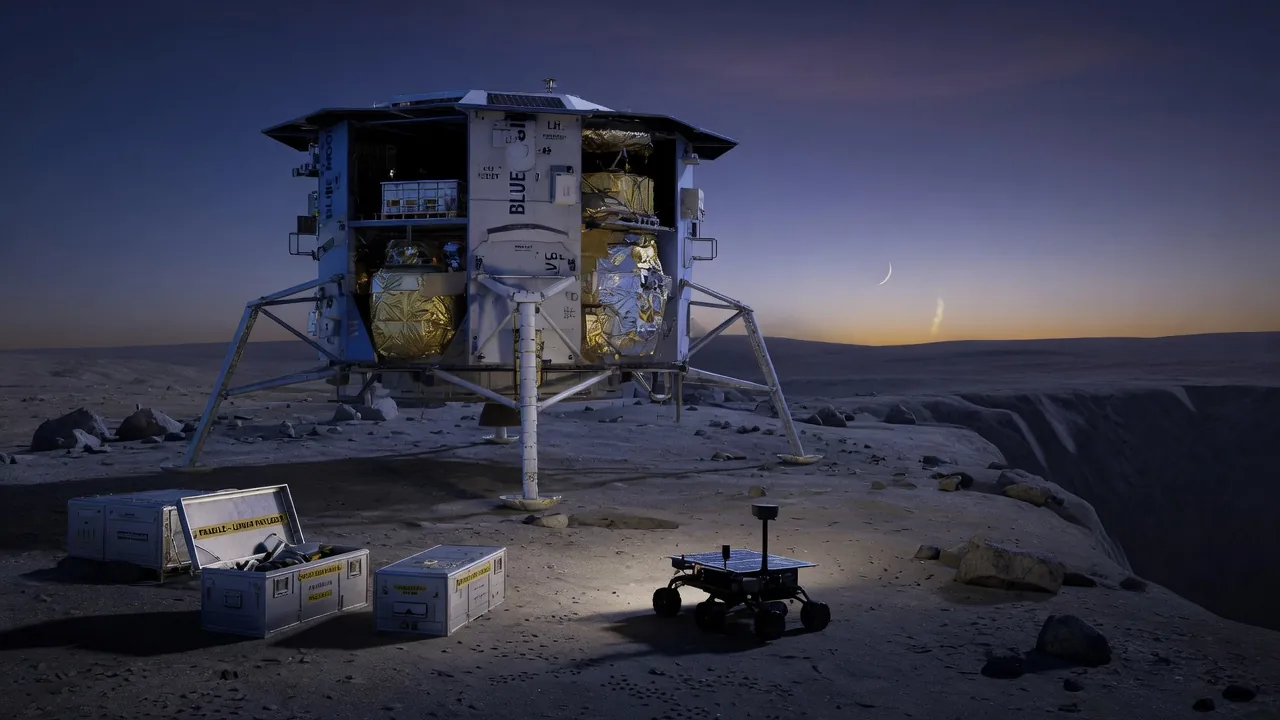
Blue Moon MK1 cargo lander on a south pole ridge at dusk.
NASA Moon Base program

The south pole base NASA is building toward

NASA's first three Moon Base landings: Moon Base II, Griffin-1, targets late 2026 or January 2027; Moon Base I, Endurance, and Moon Base III, Trinity, target early 2027.

  1. IEndurance · Blue Origin · Shackleton Connecting Ridge · early 2027
  2. IIGriffin-1 · Voyager Technologies · Nobile Crater, near Mons Mouton · Late 2026 or January 2027
  3. IIITrinity · Intuitive Machines · Reiner Gamma science landing · early 2027
  4. CrewArtemis III docks in Earth orbit, Q3 2027. Artemis IV, early 2028, is the first planned crewed landing.
See the Moon Base rollout
Lunar crater field from orbit. Landing map

Landing sites

Every public flight on the site it headed for. Each dot is a sourced record.

Open the map
PDF Briefs

Take the files with you

Letters, flight files, and packs. Same named facts as the site. The price covers the PDF.

Lunar site selection · modern era

Landing sites

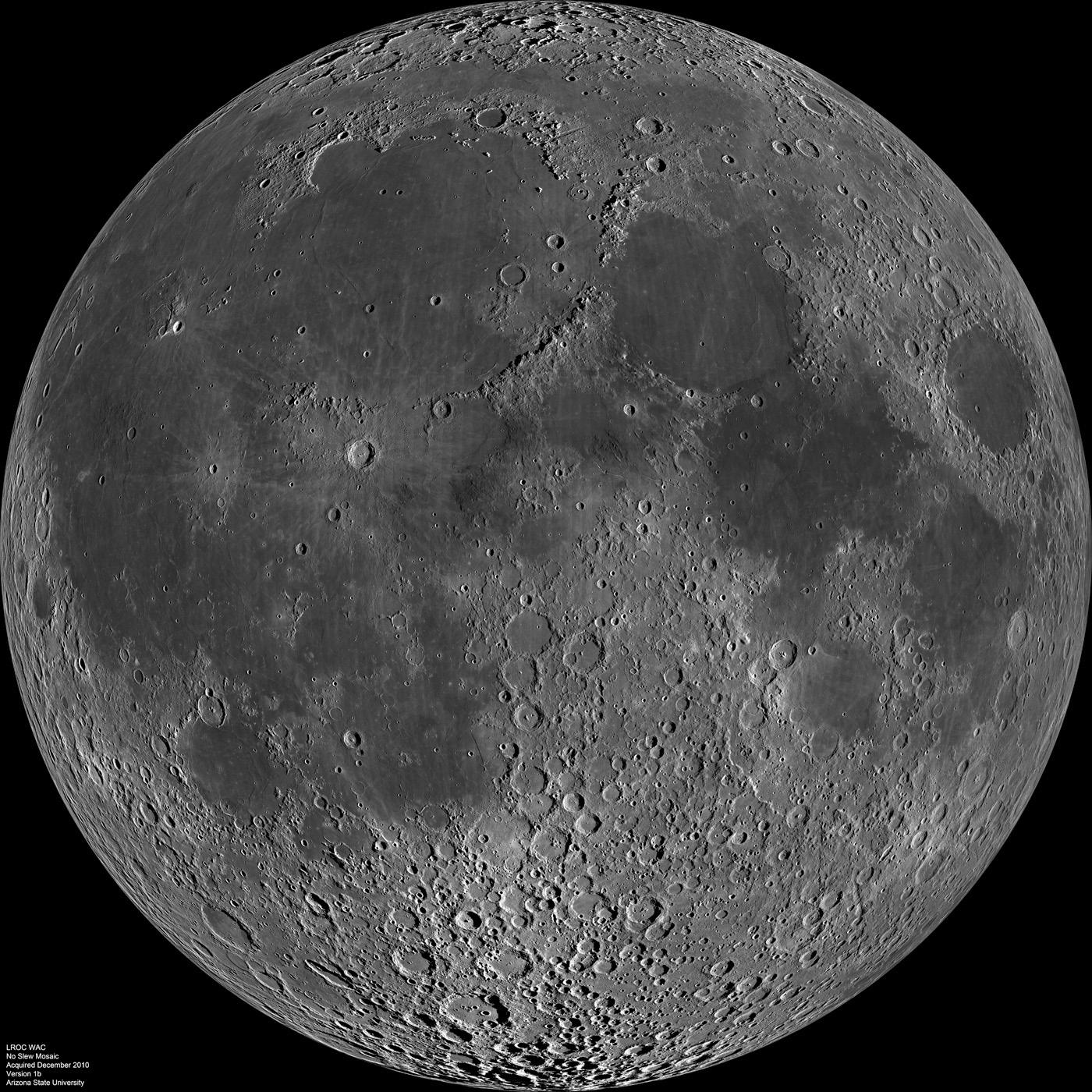
Each flight sits on the site it headed for: landed, tipped, hard landing, or planned. Crew and orbit flights stay off the plate. One photograph of the near side, and a plotted chart of the south pole. Click a flight to open its Moon Imports record.

Near side of the Moon, LROC WAC mosaic, NASA / GSFC / Arizona State University

Photograph: NASA / GSFC / Arizona State University, LROC WAC nearside mosaic, public domain. The near-side plate is that photograph, clipped to the disk, under an orthographic graticule. The south pole plate is a drawing. Sites are the planned or intended target. Hard landings and flights that never arrived stay at the site they aimed for.

Program hub

Moon Base

A lasting presence near the south pole. NASA’s first three Moon Base landings: Griffin-1 targets late 2026 or January 2027; Endurance and Trinity target early 2027. Artemis III docks in low Earth orbit, targeted for Q3 2027.

MissionWhoProgramRocket WhenStatusCargoPublic $

Need a work PDF?

Workbench

404

Page not found

We couldn’t find a flight or company at that URL.

The public record is flights and the companies named on them.

Home · Companies · Flights

Inside the stack / 14

Oracle-M moves to Falcon Heavy as the Space Force lines up cislunar contracts

AFRL’s first cislunar mission, Oracle-M, now rides USSF-63 on Falcon Heavy as AFRL readies a $30 million small-business program and the Space Force plans two requests to industry for tracking, communications and navigation around the Moon.

Moon Imports · 30 October 2026 · Cislunar operations

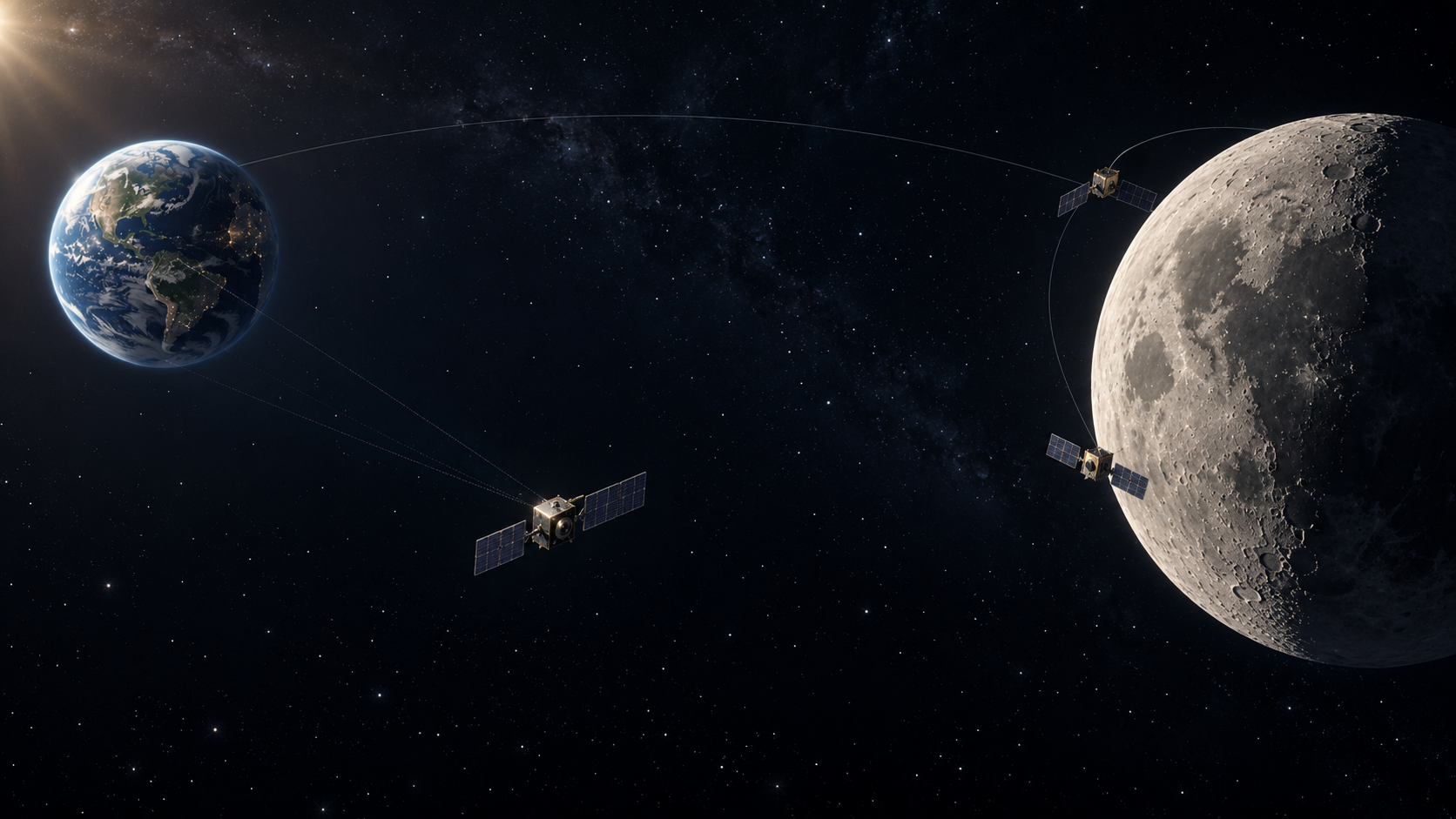
Moon Imports concept illustration of Earth, the Moon and generic spacecraft in cislunar space, with distances compressed for clarity.
Moon Imports concept illustration of Earth, the Moon and generic spacecraft in cislunar space. Distances, orbits and vehicle sizes are compressed for clarity.View the full-resolution illustration ↗

The Air Force Research Laboratory (AFRL) has a new ride for Oracle-Mobility (Oracle-M), its first cislunar mission: the U.S. Space Force moved it from a Vulcan launch to USSF-63 on SpaceX’s Falcon Heavy, with launch planned for December. Cislunar space, as the Space Force defines it, runs from beyond geosynchronous orbit (GEO) to the Moon and beyond. AFRL says rising traffic to the Moon will need monitoring for safety of flight and collision avoidance. SpaceNews, 24 October 2026 · Air & Space Forces, 28 October 2026 · Air & Space Forces, 29 October 2026 · AFRL Oracle family fact sheet

AFRL is also preparing Cislunar Prime, a planned $30 million commercial technology program, and the Space Force’s Cislunar Coordination Office, established in May, is preparing two requests for information (RFIs) for industry. NASA, which Maj. Gen. Stephen Purdy, the Space Force’s portfolio acquisition executive for advanced programs, says is coordinating with the Space Force, is building CAPSTONE 02, the second Cislunar Autonomous Positioning System Technology Operations and Navigation Experiment (CAPSTONE), to practice rendezvous in lunar orbit. Advanced Space and Terran Orbital work on both CAPSTONE 02 and the second satellite in the Oracle family, Oracle-Prime (Oracle-P). Breaking Defense, 22 October 2026 · NASA, 24 July 2026 · Advanced Space, 20 April 2026

Oracle-M moves to USSF-63

SpaceNews reported on 24 October that the Space Force moved a payload stack for an experimental cislunar surveillance mission from Vulcan to Falcon Heavy, part of a broader reshuffle of military launches prompted by Vulcan delays. On 28 October, Air & Space Forces reported, citing Space Systems Command, that the stack includes Oracle-M and moved from the USSF-112 mission to USSF-63, scheduled to launch on Falcon Heavy this year. The Space Force will move a later SpaceX mission to United Launch Alliance in return. SpaceNews, 24 October 2026 · Air & Space Forces, 28 October 2026

Blue Canyon Technologies built Oracle-M for AFRL under a $14.6 million contract awarded in November 2021. AFRL built it to demonstrate mobility in cislunar space and to experiment with tracking known objects there. The mission will demonstrate tracking and trajectory estimation for cislunar objects, cloud-based ground operations shared by government and contractor teams, and navigation and communications through commercial ground systems. Its propulsion module uses Hall-effect thrusters, which use electric and magnetic fields to accelerate ionized xenon gas, with propellant management and power-processing units. AFRL and Space Systems Command fired the complete module for the first time as an integrated unit at Edwards Air Force Base, California, on 16–21 March 2025. Space Systems Command and AFRL, 6 May 2025 · Blue Canyon Technologies, 8 April 2024 · AFRL Oracle family fact sheet

Oracle-P is the dedicated tracker

Oracle-P is a dedicated space domain awareness (SDA) experiment to detect and track both known and unknown objects in cislunar space. Oracle-P has a different team: Advanced Space is prime, Terran Orbital provides the spacecraft and Quantum Space the payload. The team completed the preliminary design review in December 2025, and Advanced Space says the system is on track for delivery in 2027. AFRL awarded Advanced Space $72 million for the Oracle program in November 2022; the 2023 team listed General Atomics Electromagnetic Systems and Leidos. Advanced Space, 20 April 2026 · AFRL, 10 November 2022 · General Atomics, 5 January 2023

Oracle-P will operate near Earth-Moon Lagrange Point 1, a point of gravitational balance between Earth and the Moon. It will use a wide-field sensor and a more sensitive narrow-field sensor to find objects and keep track of them, and process images on board to reduce the volume of data sent to Earth. Its on-orbit experiments are planned to last two years. Data from both Oracle satellites will be available through the Unified Data Library. AFRL Oracle family fact sheet · Advanced Space, 20 April 2026

Cislunar Prime and two requests to industry

SpaceWERX is leading Cislunar Prime for AFRL. The program seeks commercial capabilities in three areas: space domain awareness, cislunar communications, and positioning, navigation and timing (PNT). An AFRL spokesperson gave Air & Space Forces a tentative plan: formally announce the effort in December, solicit proposals in January and begin awarding contracts next spring. The program has $30 million to fund 15 direct-to-Phase-II Small Business Innovation Research (SBIR) contracts worth $2 million each. Air & Space Forces, 29 October 2026

Alongside Cislunar Prime, the Space Force plans two RFIs. The first will seek existing commercial or near-commercial hardware and software that could fly within two to three years, for SDA and PNT, with ground systems as part of an integrated network. The second will ask industry about AI and autonomous operations, so spacecraft can detect and manage hardware failures, process sensor data and adjust their missions as conditions change. Purdy said the service wants capabilities it can field by the end of fiscal 2029. The Cislunar Coordination Office is also refining a cislunar roadmap with mission-area strategies for lunar time, SDA and communications, he said. Breaking Defense, 22 October 2026 · Air & Space Forces, 29 October 2026

NASA’s CAPSTONE 02 practices rendezvous at the Moon

Purdy said the Space Force is working with NASA toward a unified architecture across the government, looking at where NASA is investing to decide which gaps the Space Force funds. NASA’s CAPSTONE 02 will demonstrate rendezvous and proximity operations, autonomous navigation and cislunar communications in lunar orbit. Breaking Defense, 22 October 2026 · NASA, 24 July 2026

NASA’s Human Spaceflight Mission Directorate funds CAPSTONE 02, and NASA targets 2027 for launch. Advanced Space is the prime contractor. Terran Orbital is building two identical spacecraft of about 400 kilograms each. Each can switch between “chaser” and “target” roles, and the mission will use ground tracking, optical sensors and celestial bodies to help one spacecraft locate and rendezvous with the other. Lawrence Livermore National Laboratory supplies an optical imaging payload. NASA, 24 July 2026

Advanced Space completed CAPSTONE 02’s critical design review (CDR) in August, moving the mission into development, integration and testing. NASA says the mission applies navigation strategies similar to those planned for Orion’s approach to a lunar lander. It will test three NASA-developed navigation software suites during its low-energy transfer from Earth to lunar orbit, and further mature the Cislunar Autonomous Positioning System software, which determines a spacecraft’s position relative to other spacecraft. Advanced Space, 25 August 2026 · NASA, 24 July 2026

What is known and what remains open
AreaKnown nowStill to be specified
Oracle-MBlue Canyon Technologies spacecraft; AFRL pathfinder; Hall-effect propulsion module fired as an integrated unit in March 2025; moved from USSF-112 on Vulcan to USSF-63 on Falcon Heavy; December 2026 launch plan reportedExact launch date, final trajectory and orbit, on-orbit test sequence and results
Oracle-PAFRL dedicated SDA experiment near Earth-Moon Lagrange Point 1; Advanced Space prime, Terran Orbital spacecraft, Quantum Space payload; preliminary design review completed December 2025; delivery targeted for 2027Launch vehicle and date, final configuration and on-orbit results
Cislunar PrimeSpaceWERX-led AFRL program; $30 million for 15 direct-to-Phase-II SBIR contracts of $2 million each; focus on SDA, communications and PNT; tentative announcement December, proposals January, awards from springFormal solicitation, technical topics, eligibility details and selected companies
Space Force RFIsTwo forthcoming requests: commercial cislunar hardware, software and ground systems; spacecraft AI and autonomy; fielding goal by end of fiscal 2029Release dates, detailed requirements, funding and selected platforms
CAPSTONE 02NASA mission with Advanced Space as prime; two Terran Orbital spacecraft; 2027 launch target; CDR completed August 2026; Lawrence Livermore National Laboratory optical payloadExact launch date, final test sequence and demonstration results