Inside the stack · 01
Who supplied Blue Ghost Mission 1?
Six companies, one lunar landing. Follow the hardware and the work behind Firefly’s 2025 mission.
Read the storyThis page did not load.
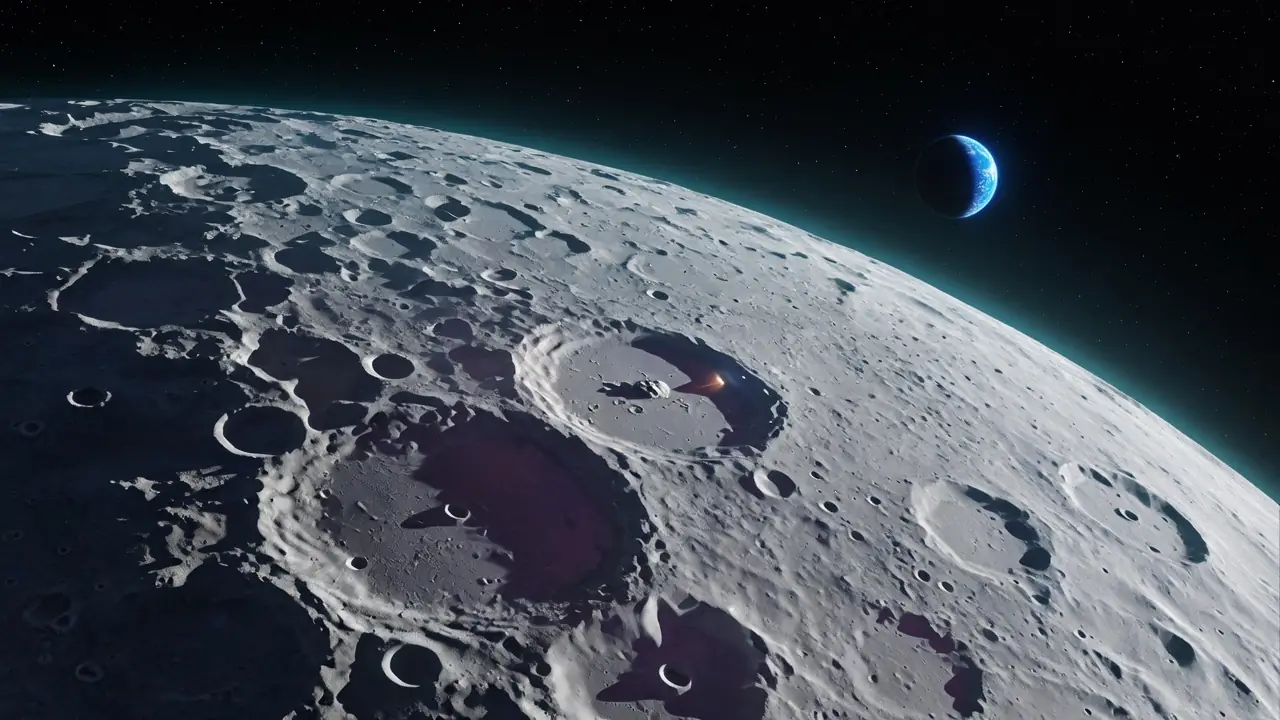
Start with a flight, a company, or the map. The record is the same in every room.
Upcoming flights. Open one for who flies it, what is on board, and the public money.
CompaniesCompanies on the next flights. Open a name for the jobs and the hardware.
NASA Moon BaseCargo I, II, III at the south pole. Crew in parallel on Artemis. A walk, not a list.
Open a flight for who flies it, what is on board, and the public money.
Open a company for the jobs, the hardware, and the flights they sit on.
Inside the stack · 01
Six companies, one lunar landing. Follow the hardware and the work behind Firefly’s 2025 mission.
Read the story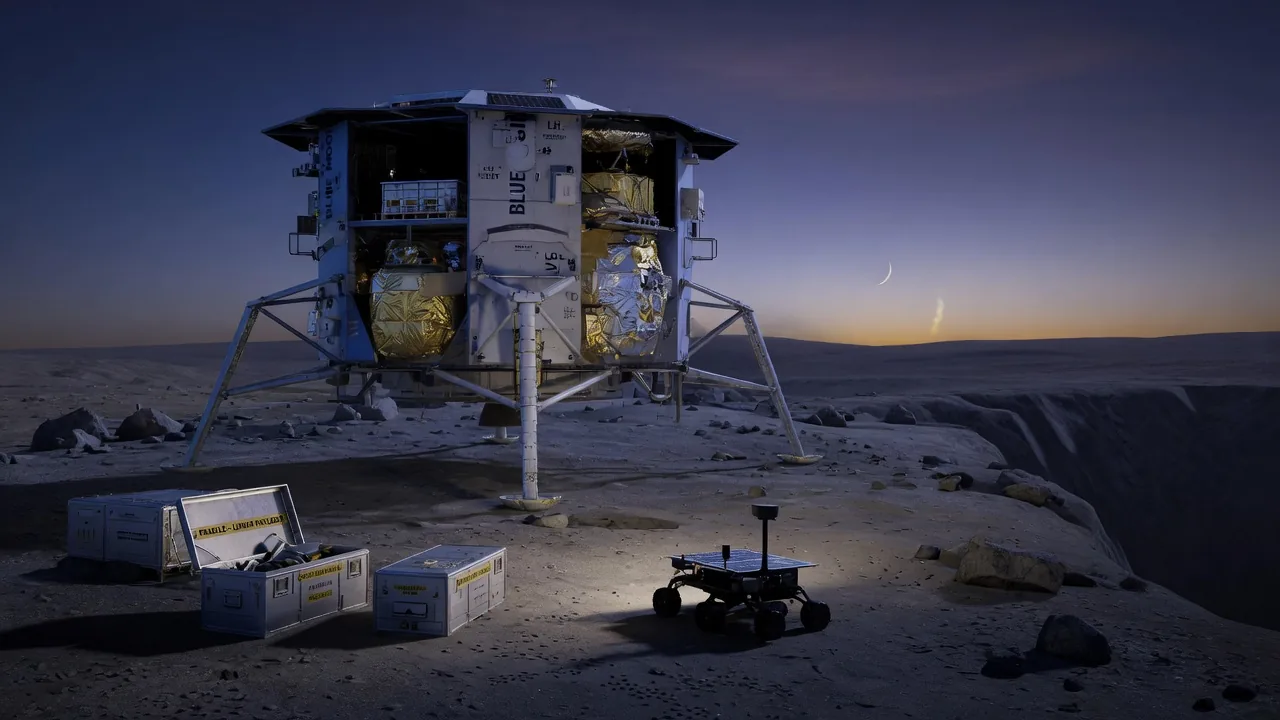
This is NASA's cargo-first Moon Base: landers put hardware on the land, then crew arrives. I, II, and III are NASA names, not fly order. Griffin-1 (II) is first on the clock.
 Landing map
Every public flight on the site it headed for. A globe of records, not a game map.
Open the mapLetters, flight files, and packs. Same named facts as the site. The price is for the PDF, not a ride.
Lunar site selection · modern era
Each flight sits on the site it headed for: landed, tipped, hard landing, or planned. Crew and orbit flights stay off the plate. One photograph of the near side, and a plotted chart of the south pole. Click a flight to open its Moon Imports record.
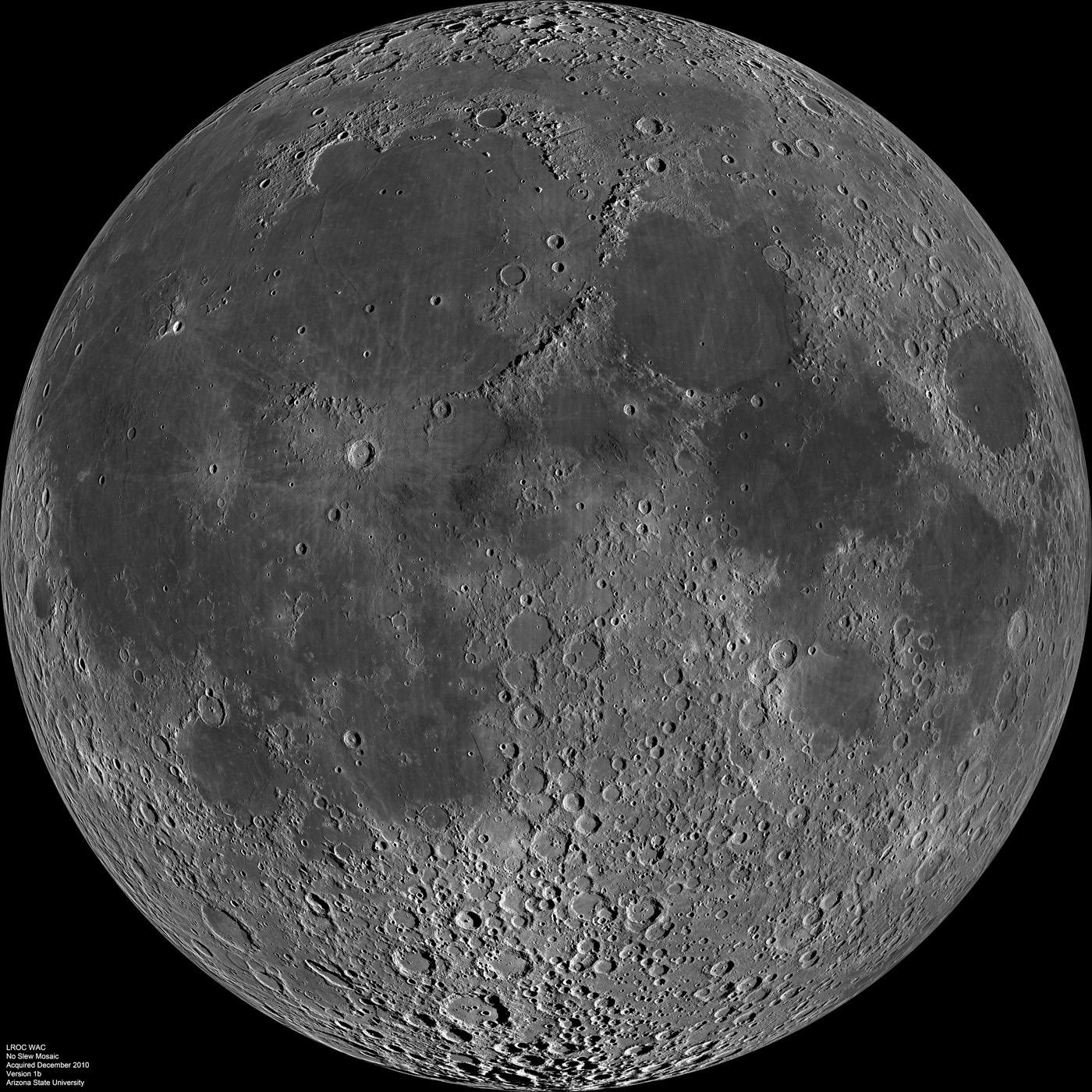
Photograph: NASA / GSFC / Arizona State University, LROC WAC nearside mosaic, public domain. The near-side plate is that photograph, clipped to the disk, under an orthographic graticule. The south pole plate is drawn, not photographed. Sites are the planned or intended target. Hard landings and flights that never arrived stay at the site they aimed for.
Program hub
A lasting presence at the south pole. NASA’s I, II, and III are names, not the order they fly. Cargo first. Crew in parallel.
| Mission | Who | Program | Rocket | When | Status | Cargo | Public $ |
|---|
Need a work PDF?
Pay on this page
Card stays with Stripe. You do not leave Moon Imports.
Change plan
One plan. Pick what you want next, then confirm the amount.
Inside the stack / 01
Meet six companies behind Firefly’s 2025 lunar landing, see what the mission made possible, and follow two of those companies into a new launch agreement this month.
Why revisit this flight now? ↓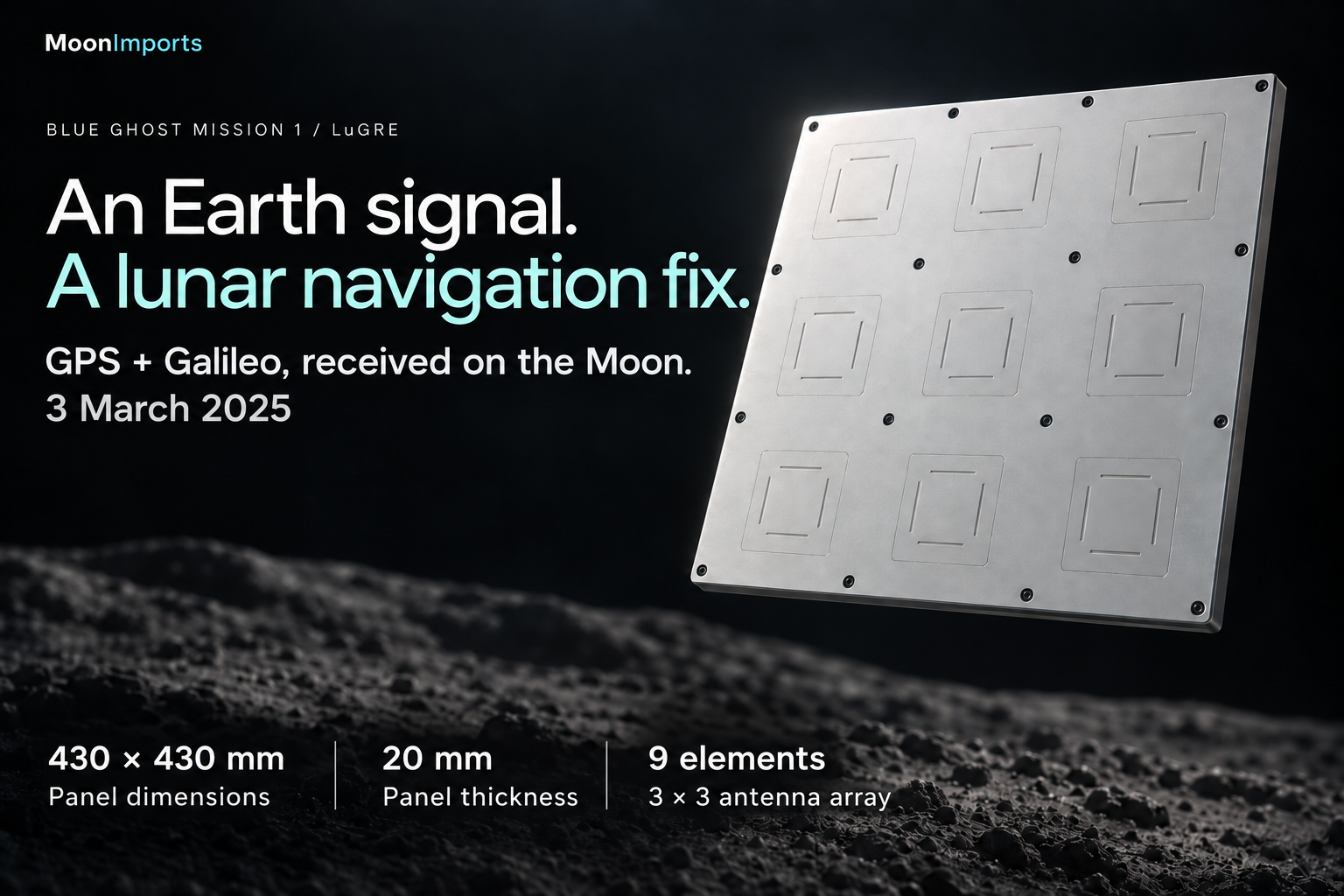
What the mission demonstrated / Navigation
The day after landing, on March 3, 2025, an instrument aboard Blue Ghost used GPS and Galileo satellite signals to work out its position on the Moon. Called LuGRE, short for Lunar GNSS Receiver Experiment, it was the first demonstration to acquire and track these navigation signals on the lunar surface.
NASA describes this as a step toward spacecraft finding their own way with less help from operators on Earth. It was an experiment, rather than a navigation service ready for everyday use. LuGRE brought together NASA Goddard, the Italian Space Agency, Qascom and Politecnico di Torino; Firefly delivered it to the surface.
NASA: LuGRE’s results and participating organizations, March 4, 2025 ↗This month / 9 September 2026
On September 9, Firefly and SSC Space announced an agreement for two Alpha rocket launches from SSC’s Esrange Space Center in Sweden. The flights are planned for no earlier than 2028. SSC has reserved all the space for cargo on both launches and will offer it to government and commercial customers.
Firefly: two Alpha launches with SSC, September 9, 2026 ↗ SSC: Esrange launch agreement, September 9, 2026 ↗SSC provided the ground communications network for Firefly’s lunar mission.
Read about the ground stations ↓SSC has booked two Firefly launches from its own space center.
Planned for 2028 or later · Flights to Earth orbitThe companies are familiar, but their roles have changed. In the lunar mission, SSC supplied a service to Firefly. Under the new agreement, SSC is buying launch services from Firefly. These are separate projects; the announcements do not say that Blue Ghost led to the new contract.
To see how the earlier mission came together, start with Firefly’s lander and follow the contributions below.
01 / The lander
Firefly’s Blue Ghost launched aboard a SpaceX Falcon 9 on January 15, 2025, and landed on the Moon on March 2. Firefly reported more than 14 days of work on the surface, continuing just over five hours into the lunar night.Firefly: launch and commissioning, January 15, 2025 ↗ Firefly: mission completion update, March 17, 2025 ↗
Firefly built and operated the lander. Other companies supplied parts of the spacecraft and services that supported the flight. Following those contributions shows how the mission came together, from the engine used during descent to the stations that received its signals on Earth.Explore Firefly on Moon Imports →
02 / The engine
Nammo supplied the LEROS 4-ET main engine. The company describes developing it for Firefly, with manufacturing and testing at Westcott and Dublin.Nammo: LEROS 4-ET on Blue Ghost ↗
During descent, the main engine slowed the lander before switching off near the surface. Firefly’s smaller engines completed the landing, according to Nammo’s account. The two sets of engines handled different stages of the same approach.Explore Nammo UK on Moon Imports →
03 / Power + software
Rocket Lab supplied three solar panel assemblies for the lander’s sides and top deck, along with its MAX Flight and MAX Ground Data software. The company described these contributions before launch and later reported that its software supported the landing.Rocket Lab: solar assemblies and software, January 23, 2025 ↗ Rocket Lab: software supports lunar landing ↗
Rocket Lab’s part in this flight was inside the spacecraft and its supporting systems. SpaceX provided the launch. Seeing both names on one mission becomes more useful when each is connected to the work it actually did.Explore Rocket Lab on Moon Imports →
04 / Cameras
Before launch, Redwire reported delivering 12 cameras, a navigation processor and two floodlights. The company said the equipment would take pictures, help the lander navigate using surface features, and detect objects on the ground.Redwire: delivered cameras, processor and floodlights, January 9, 2025 ↗
This adds another piece to the descent story: engines control the approach, while cameras provide a view of the terrain. Redwire’s source describes the equipment delivered and its intended uses; it does not report how each item performed during the mission.Explore Redwire on Moon Imports →
05 / Communications
The spacecraft also needed a connection to people on the ground. Swedish Space Corporation, or SSC, said it supplied the mission’s ground-station network, using stations in Santiago, Hawaii and Australia, plus two partner stations. Firefly confirmed the network’s role in the same announcement.SSC: ground network and Firefly confirmation, January 15, 2025 ↗
After the landing, SSC reported a link between Blue Ghost and its Hawaii station. Its contribution continued from Earth while the spacecraft worked on the Moon. This is the earlier Firefly and SSC relationship behind this month’s comparison.SSC: communications following the landing ↗Explore SSC on Moon Imports →
06 / The launch
Before any of the work on the Moon could begin, Blue Ghost needed a launch from Earth. Firefly’s January 15 announcement confirms that a SpaceX Falcon 9 carried the lander into space.Firefly: launch and commissioning, January 15, 2025 ↗Explore SpaceX on Moon Imports →
The launch connects the rest of the story: a Firefly lander, an engine from Nammo, solar hardware and software from Rocket Lab, camera equipment from Redwire, and communications from SSC. Each company contributed a different part of the mission.
Follow the work
Blue Ghost gives us a practical way to explore the companies behind a lunar mission. Start with the lander, follow a component to its supplier, then look at that company’s other flights and hardware. The Firefly and SSC agreement shows why those connections are worth revisiting: the same organizations can take on different roles as their work develops.
Use the Moon Imports mission and company pages to continue that research. The original sources linked throughout this article explain where each connection comes from.