Inside the stack · 13
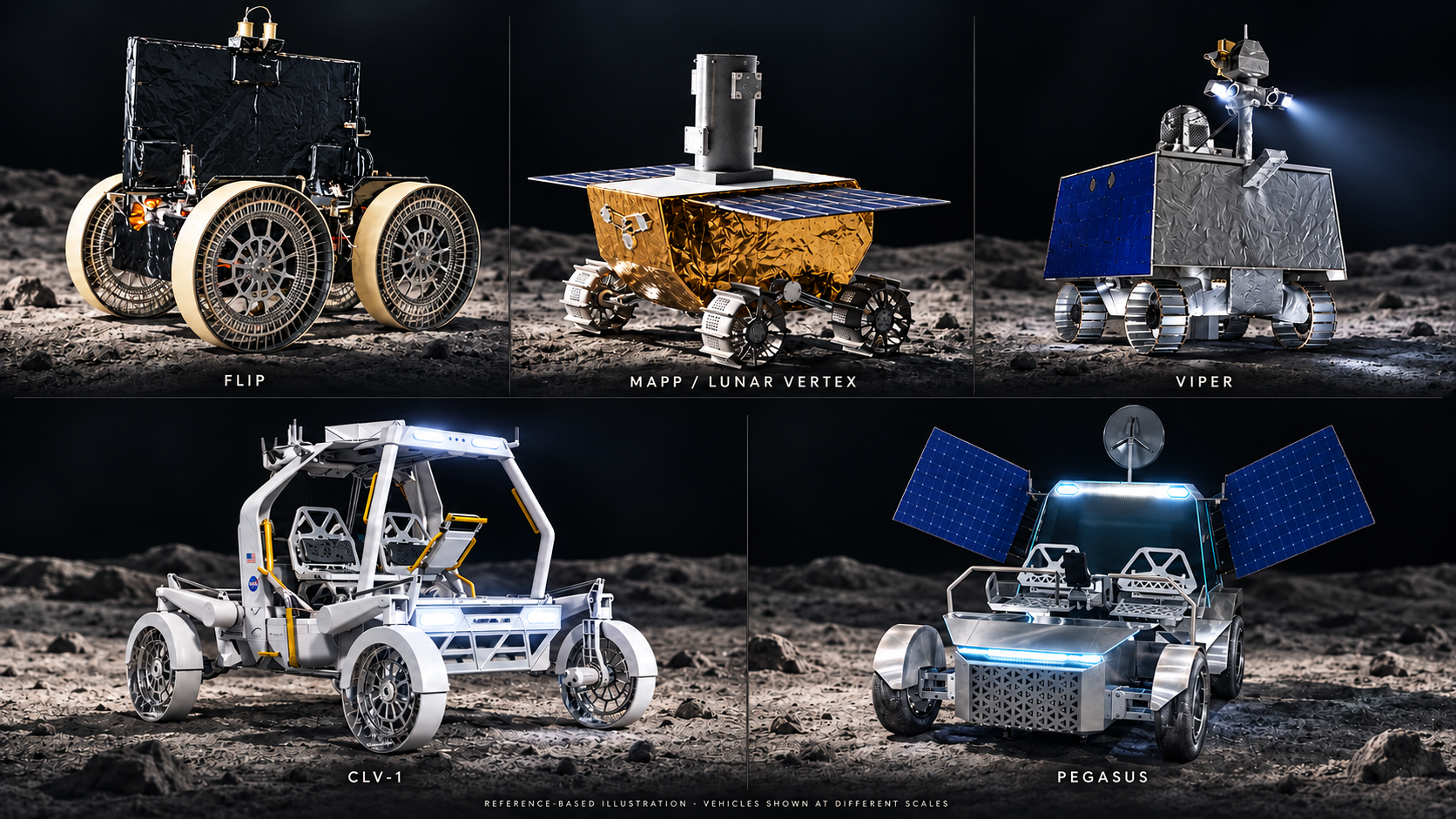
The rovers preparing for a Moon Base
Follow FLIP, MAPP and VIPER from their builders to their mission objectives, and see how robotic exploration can prepare the ground for Artemis astronauts.
Read the storyThis page did not load.
Start with a flight, a company, or the map. The record is the same in every room.
Upcoming flights. Open one for who flies it, what is on board, and the public money.
CompaniesCompanies on the next flights. Open a name for the jobs and the hardware.
NASA Moon BaseGriffin-1 targets November 2026, then Endurance and Trinity in early 2027. Artemis III docks in Earth orbit, targeted for Q3 2027.
Open a flight for who flies it, what is on board, and the public money.
Open a company for the jobs, the hardware, and the flights they sit on.
Inside the stack · 13
Follow FLIP, MAPP and VIPER from their builders to their mission objectives, and see how robotic exploration can prepare the ground for Artemis astronauts.
Read the storyInside the stack · 12
October’s power and surface mating calls set the next development steps toward NASA’s Moon Base. Follow the 2027 ground test target, relevant builders and mission records.
Read the story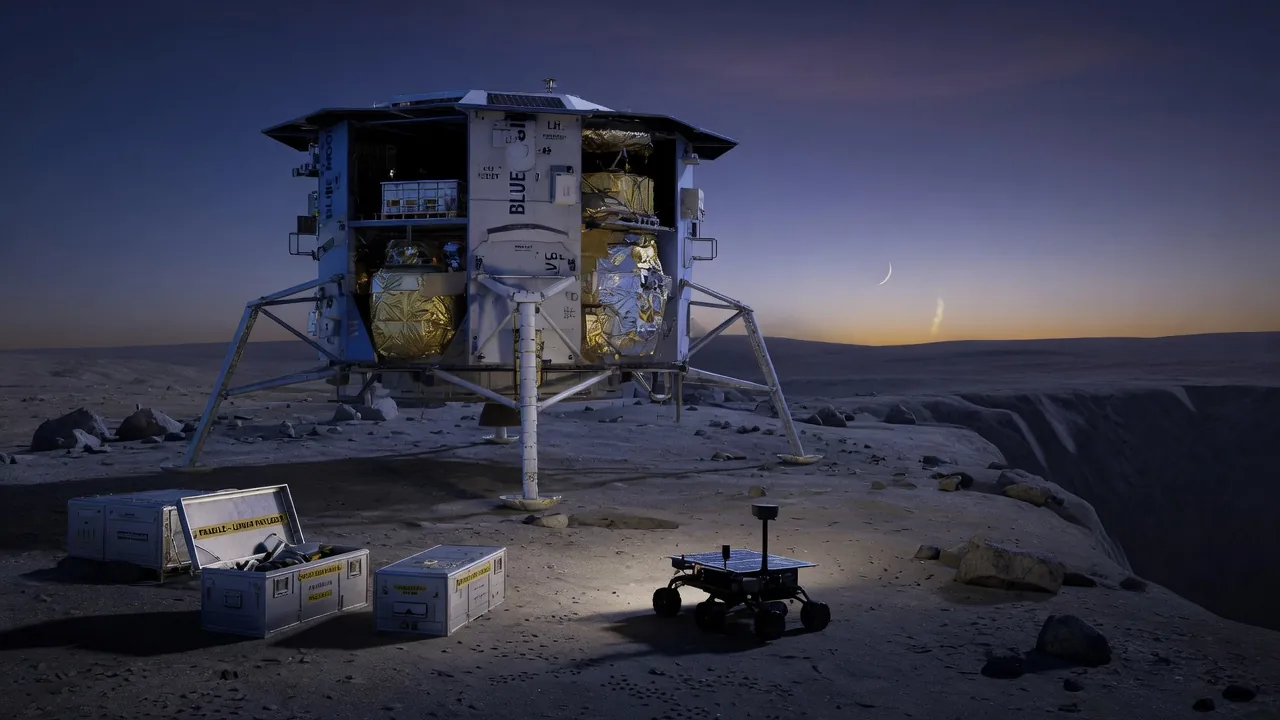
NASA's first three Moon Base landings: Moon Base II, Griffin-1, launches first, NET November 2026; Moon Base I, Endurance, and Moon Base III, Trinity, follow in early 2027.
 Landing map
Every public flight on the site it headed for. Each dot is a sourced record.
Open the mapLetters, flight files, and packs. Same named facts as the site. The price covers the PDF.
Lunar site selection · modern era
Each flight sits on the site it headed for: landed, tipped, hard landing, or planned. Crew and orbit flights stay off the plate. One photograph of the near side, and a plotted chart of the south pole. Click a flight to open its Moon Imports record.
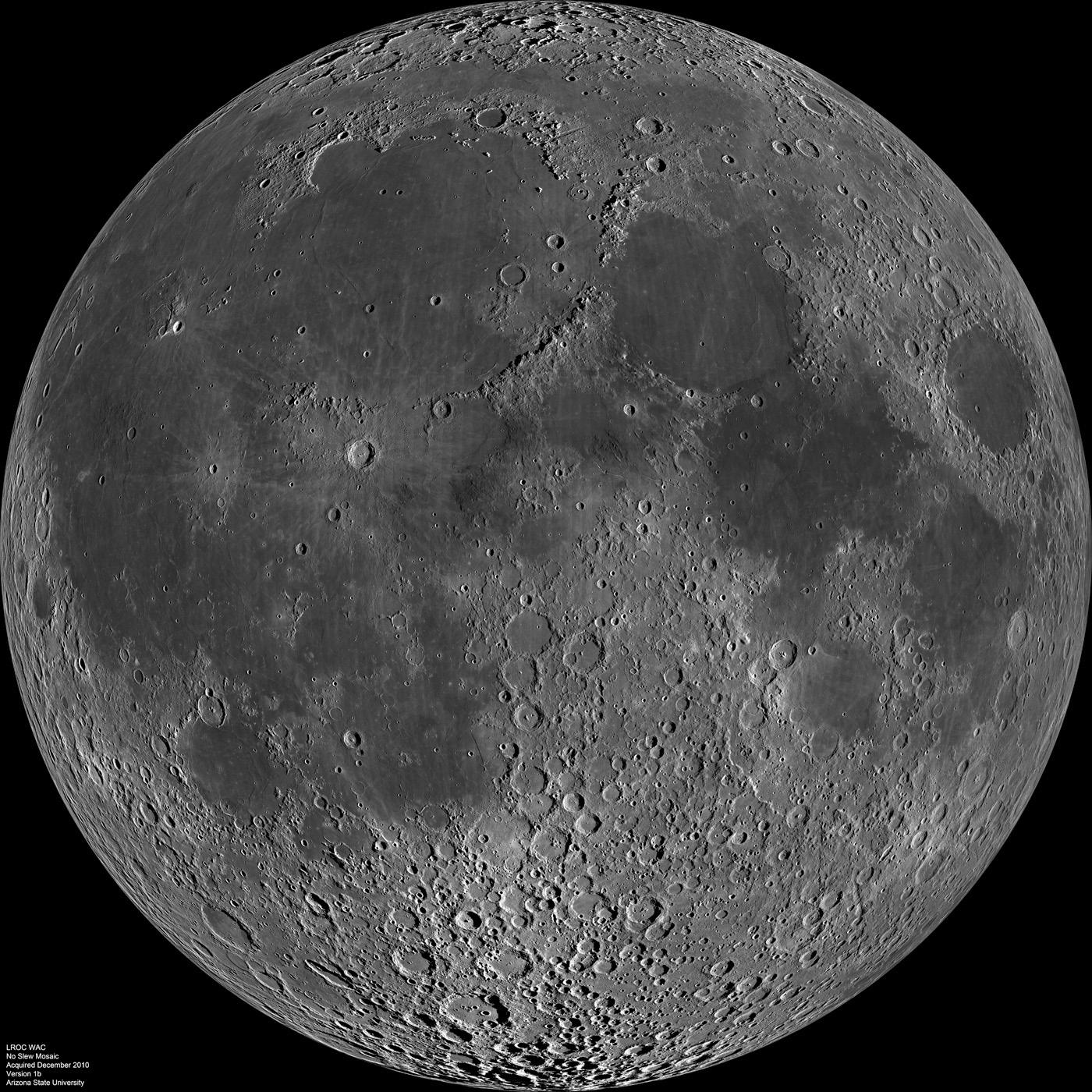
Photograph: NASA / GSFC / Arizona State University, LROC WAC nearside mosaic, public domain. The near-side plate is that photograph, clipped to the disk, under an orthographic graticule. The south pole plate is a drawing. Sites are the planned or intended target. Hard landings and flights that never arrived stay at the site they aimed for.
Program hub
A lasting presence near the south pole. NASA’s first three Moon Base landings fly in this order: Griffin-1 NET November 2026, then Endurance and Trinity in early 2027. Artemis III docks in low Earth orbit, targeted for Q3 2027.
| Mission | Who | Program | Rocket | When | Status | Cargo | Public $ |
|---|
Need a work PDF?
Pay on this page
Card stays with Stripe. You do not leave Moon Imports.
Change plan
One plan. Pick what you want next, then confirm the amount.
Inside the stack / 12
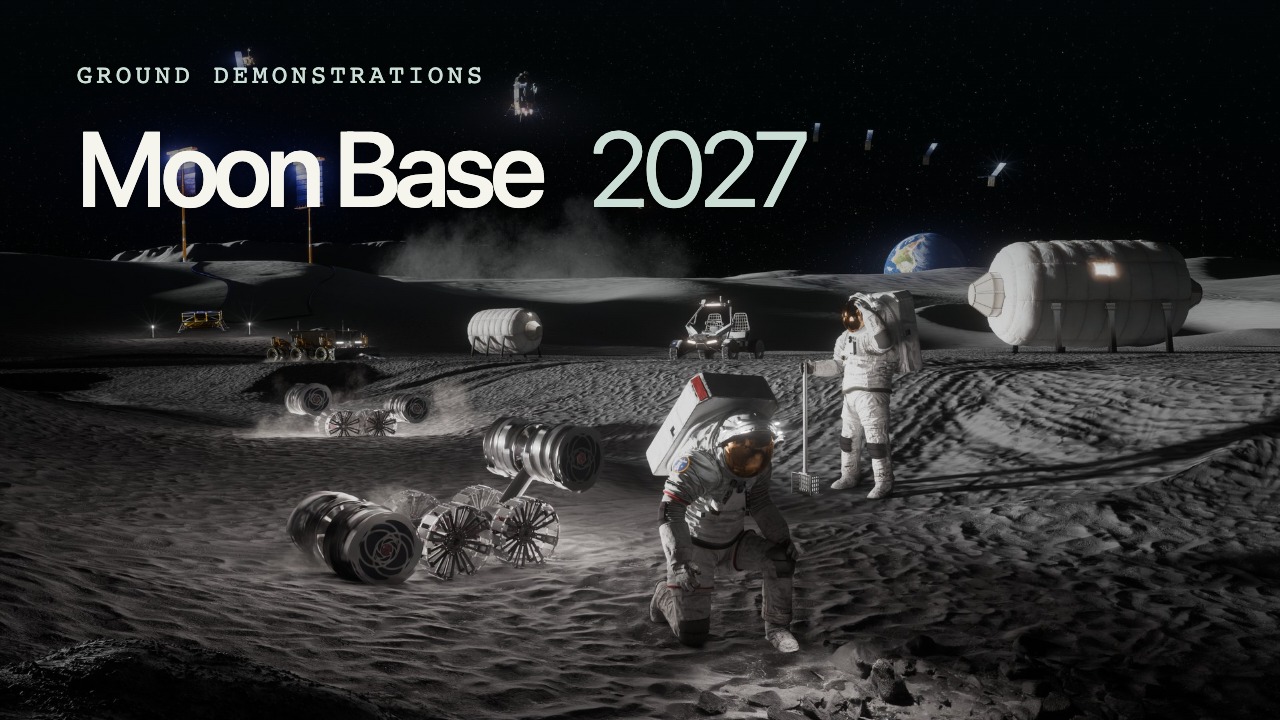
NASA’s miniCAST power proposals are due on 19 October. The surface mating call has closed its white paper round and targets a ground demonstration in September 2027. Behind those milestones is a larger ambition: equipment that can power, connect and expand a working base across successive lunar missions.
The calls and the hardware ↓
Programme update · 18 October 2026
A cargo landing brings equipment to the Moon. A base needs that equipment to support the next arrival: electricity for another payload, transport between work sites, and connections through which crew and cargo can pass. NASA’s Moon Base Demonstrations programme addresses that step from individual components to systems that can operate together.NASA’s Appendix B objectives ↗
This October, the two opening calls are at different stages. Initial Surface Power is taking full proposals from invited vendors. Surface Mating System’s white papers were due on 16 October. The next decisions will identify the teams and work to develop. Alongside them, named companies are already building relevant hardware under separate agreements. Their Moon Imports records connect each build to its test, supplier and flight path.
01 / Initial Surface Power
NASA has invited selected vendors to submit full proposals for Initial Surface Power. Configuration B, miniCAST, is due on 19 October, with an award announcement scheduled for 7 November. Configuration A, outCAST, has an award announcement estimated for early 2027.NASA’s Initial Surface Power schedule ↗
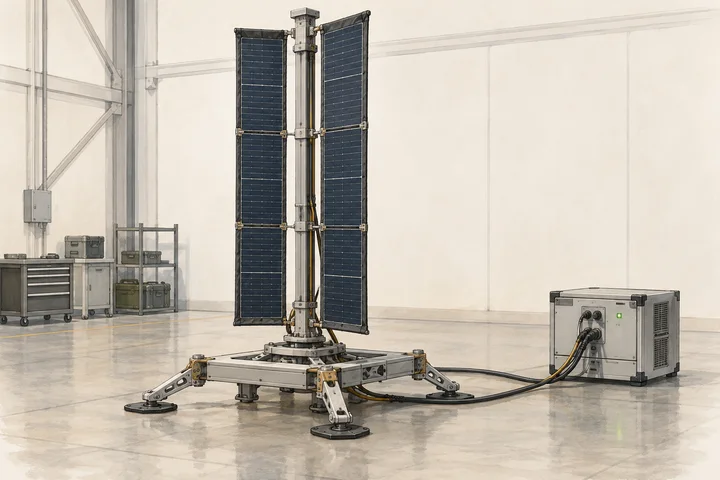
A useful power demonstration would show equipment deploying, connecting to a load and delivering electricity. For a base, that is the difference between carrying an experiment that powers itself and supplying equipment delivered by another mission. The selection will define the project; the builds below show the engineering already taking shape.
02 / Relevant builds
Blue Origin describes its Power Tower as a way for Blue Moon MK1 to deliver more than 10 kilowatts of electrical power on the surface. The company has shown a ground deployment of the vertical array.Blue Origin’s Power Tower film ↗ Height is useful near the poles, where low sunlight and local terrain make the position of an array part of its performance. A lander that supplies power to other equipment can serve as an early piece of infrastructure as well as a delivery vehicle.Blue Origin: MK1 and Power Tower ↗
Starpath Robotics and Atomic-6 are working on another vertical array. Their mast packs down for transport and deploys to raise the solar blankets above nearby shadows. The April 2026 agreement covers the Space Mast boom and deployer. Starpath describes applications including resource extraction and rover charging. Its mast and deployer record is development work, with the flight assignment still open.Starpath and Atomic-6, 20 April 2026 ↗
Getting electricity to a rover is a separate engineering job. Yank Technologies has a NASA Phase I study for modular, kilowatt class wireless power for robotic vehicles. Testing with simulated lunar soil addresses a practical interface problem: power transfer around dust and misaligned equipment. The wireless power study addresses the link between a supply and equipment that needs charging. It is a separate project from the arrays above.NASA’s 2026 SBIR Phase I selections ↗
03 / Surface Mating System
White paper submissions closed on 16 October. NASA plans to send proposal invitations on 23 October; full proposals are due on 20 November. An award announcement is estimated for 18 December. The selected work targets a ground demonstration by 30 September 2027, a test of the concept on Earth.NASA’s Surface Mating Systems directed call ↗
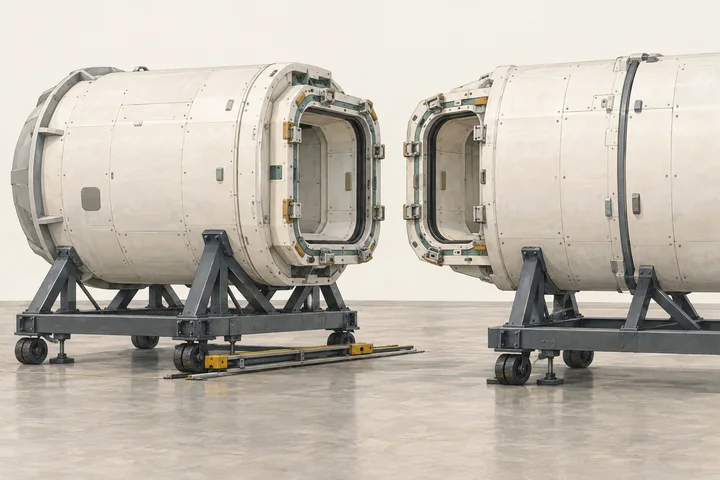
The engineering task is to bring two interfaces into position, align them and operate the mechanisms that join them. The system could travel separately or be built into a habitat or logistics module. A physical demonstration gives NASA evidence to assess the concept and its operating risks. On the Moon, the eventual capability would let a new module add usable space to a base and provide a passage for crew and cargo.
NASA’s surface version of the International Docking System Standard, IDSS-S, describes the wider interface work. Its concept includes active and passive sides and a passage 76.2 by 152.4 centimetres across. A shared interface would let separately built elements connect, an essential consideration when a base grows through deliveries from different suppliers.NASA’s surface mating technology catalog ↗
Orbital docking provides related engineering experience. NASA and SpaceX have tested the interface between Starship’s lunar lander and Orion; the catalogue also records Boeing’s docking work for Blue Moon MK2. Those builds concern crew transfer between spacecraft. The surface call brings the joining problem down to terrain, delivered modules and the equipment needed to bring them together.NASA and SpaceX’s docking system test ↗
04 / Related flight work
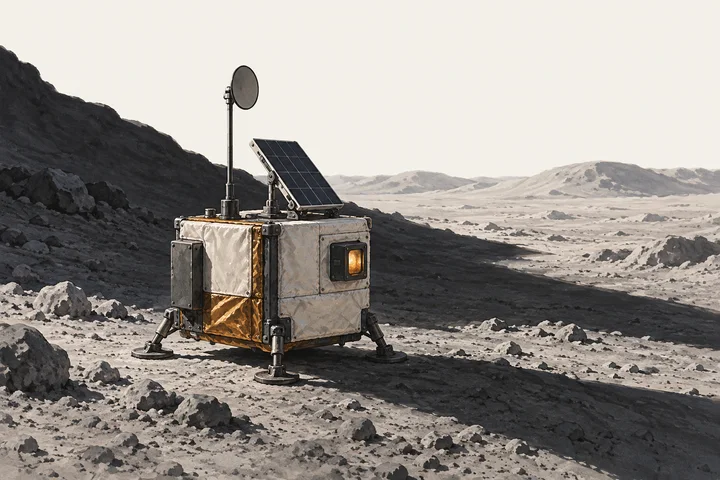
Keeping an instrument warm through darkness is one part of extending its working life. Zeno Power’s Survive-the-Night Package has a place on Firefly’s Blue Ghost Mission 5, a near side delivery targeted no earlier than 2028. Its americium-241 heater produces five watts of thermal energy. A dedicated platform supplies the package’s electrical power, communications and control. The demonstration asks whether equipment can survive the long cold night and return useful operating data.Firefly’s Zeno payload agreement ↗
At the near side site, daylight and darkness each last roughly two Earth weeks; polar illumination depends on local terrain. Zeno’s package is designed to return data from operation at night. That is a later flight step, complementary to the 2027 ground work. Heating an instrument and supplying electricity to a habitat remain different jobs, both necessary to understand before planning a longer stay.
Lunar Reactor-1 is NASA’s planned surface fission system for operation through darkness. Space Reactor-1 Freedom is the preceding flight demonstration: NASA plans to launch the nuclear electric spacecraft toward Mars in late 2028. NASA’s March 2026 fact sheet describes a Brayton conversion system delivering more than 20 kilowatts of electrical power.NASA’s March 2026 nuclear fact sheet ↗ The flight is intended to reduce nuclear flight risk and inform the later lunar system. Freedom is a technology path toward Moon Base power, rather than a lunar cargo delivery.NASA: Freedom and its connection to Lunar Reactor-1 ↗
05 / Related surface builds

Astrolab’s CLV-1 and Lunar Outpost’s Pegasus are on NASA’s awarded Lunar Terrain Vehicle program. Blue Origin’s CX-2 delivery uses the MK1 lander design to carry that class of rover to the south pole region. NASA describes duties beyond carrying astronauts: autonomous traverses, moving supplies, terrain preparation and scientific work. That work makes the site useful between crew visits. It also explains why a proposed habitat connection needs an operating plan: delivered elements must be positioned, reached and serviced, as well as joined.NASA’s rover and delivery awards ↗
MoonFall addresses the terrain before people use it. Firefly’s Elytra spacecraft will deliver four propulsive drones built by JPL, which descend independently and survey potential Artemis sites. JPL targets a landing by 2028. Their detailed imagery is intended to improve knowledge of areas that are difficult to assess from orbit. After their final hops, the drones’ surviving payloads are intended to continue operating at the landing sites.JPL’s MoonFall mission plan ↗
Habitation, communications and freight fit around these systems. Vast’s lunar programs and Max Space’s expandable habitats concern places to work and live. The lunar communications stack concerns the links between equipment and operators. The Phase 2 freight plan sets out the delivery scale. Together, these records show the needs behind the demonstration calls: places to work, power to keep equipment useful, communications to operate it, and transport to bring the next addition.
06 / The mission goals
NASA’s published plan places robotic learning and technology demonstrations in Phase One, through 2029. Phase Two, from 2029 to 2032, adds infrastructure for longer operations. Phase Three, from 2032 onward, aims to assemble an enduring outpost. The 2027 ground work belongs to that longer progression: its results can inform later hardware and operating decisions.NASA’s Moon Base development phases ↗
There is already flight hardware moving through that progression. On 13 October, NASA reported that Griffin-1 had completed environmental testing at JPL and returned to Voyager Lunar Systems for final assembly, and named Astrolab’s FLIP rover among its cargo.NASA: Griffin-1’s testing milestone, 13 October 2026 ↗ NASA’s phase plan also lists a dust sensor and a laser mapping demonstration on this flight.NASA: Griffin-1 payloads ↗ That is a completed test milestone for a named lander, with launch preparations next.
Blue Moon MK1 Endurance addresses another requirement of repeat deliveries: understanding a landing’s effect on the site. Its NASA cameras will study how engine plumes disturb the surface; its laser retroreflector supplies a reference point on the ground. IM-3 Trinity, carrying Lunar Vertex to Reiner Gamma, contributes science from another part of the Moon. The programme gathers knowledge across distinct missions before relying on it for larger infrastructure.NASA: Endurance and IM-3 mission roles ↗
The crew objective is equally concrete. NASA targets Artemis IV for an early 2028 launch. Two astronauts land, NASA targets two moonwalks of about two hours each, and SpaceX's Starship lander keeps its crew on the surface for several days. Longer stays will demand more from every supply, interface and vehicle. Ground demonstrations give engineers a way to examine part of that challenge before committing equipment to a lunar flight.NASA’s current Artemis IV plan ↗
07 / The next possible call
NASA forecasts a possible Data Gaps directed call for the end of 2026, covering the lunar environment, initial sites and the effects of missions. It would address the conditions that shape the equipment: where it operates and how one mission affects the next. This remains a forecast, with a submission schedule to follow if the call is issued.NASA’s forecast of possible directed calls ↗
The companion Lunar Enabling Infrastructure Accelerator, Appendix A, concerns ground prototypes. Taken together, the calls make the distinction useful: component development produces hardware; demonstrations test how a system works; a named mission provides its flight assignment.
What the milestones make possible
October’s submissions are the start of a development decision. The next records to watch are the selected teams, their agreed demonstrations and the results. The surface mating ground target in 2027 is especially tangible: a mechanism that can be built, operated and assessed before it becomes part of a future mission.
The ambition reaches much further than one test. An array can supply the next payload. A rover can support work between crew visits. A module connection can turn a later delivery into additional space. Those capabilities would allow missions to build on what is already on the surface. That is the change NASA’s Moon Base demands of its suppliers, and the reason these early build and test milestones matter.
Follow the builds, flights and surface goals in the Moon Base record →