Inside the stack · 02
Who is on Griffin-1 this year?
NASA’s Moon Base manager said Griffin is the only U.S. lander left for 2026. Follow Astrobotic, SpaceX, Frontier, Agile, Astrolab, and Venturi on the record.
Read the storyThis page did not load.

Start with a flight, a company, or the map. The record is the same in every room.
Upcoming flights. Open one for who flies it, what is on board, and the public money.
CompaniesCompanies on the next flights. Open a name for the jobs and the hardware.
NASA Moon BaseCargo I, II, III at the south pole. Crew in parallel on Artemis. A walk, not a list.
Open a flight for who flies it, what is on board, and the public money.
Open a company for the jobs, the hardware, and the flights they sit on.
Inside the stack · 02
NASA’s Moon Base manager said Griffin is the only U.S. lander left for 2026. Follow Astrobotic, SpaceX, Frontier, Agile, Astrolab, and Venturi on the record.
Read the story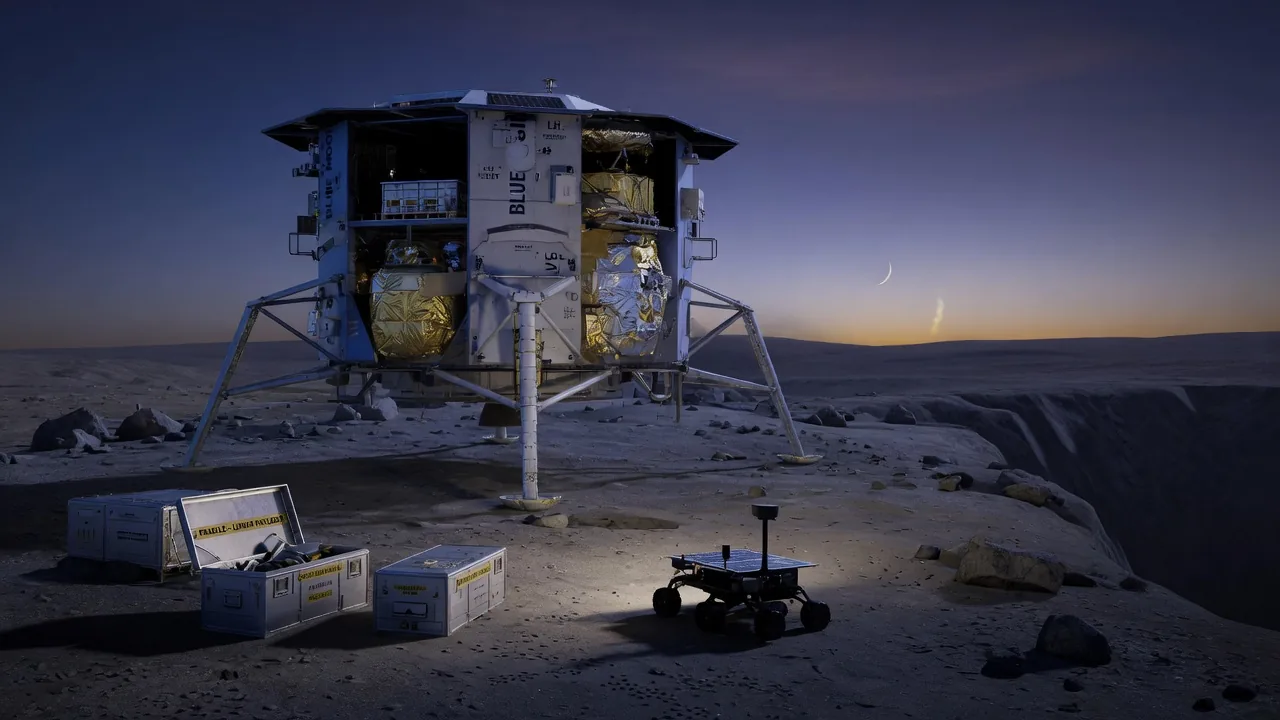
This is NASA's cargo-first Moon Base: landers put hardware on the land, then crew arrives. I, II, and III are NASA names, not fly order. Griffin-1 (II) is first on the clock.
 Landing map
Every public flight on the site it headed for. A globe of records, not a game map.
Open the mapLetters, flight files, and packs. Same named facts as the site. The price is for the PDF, not a ride.
Lunar site selection · modern era
Each flight sits on the site it headed for: landed, tipped, hard landing, or planned. Crew and orbit flights stay off the plate. One photograph of the near side, and a plotted chart of the south pole. Click a flight to open its Moon Imports record.
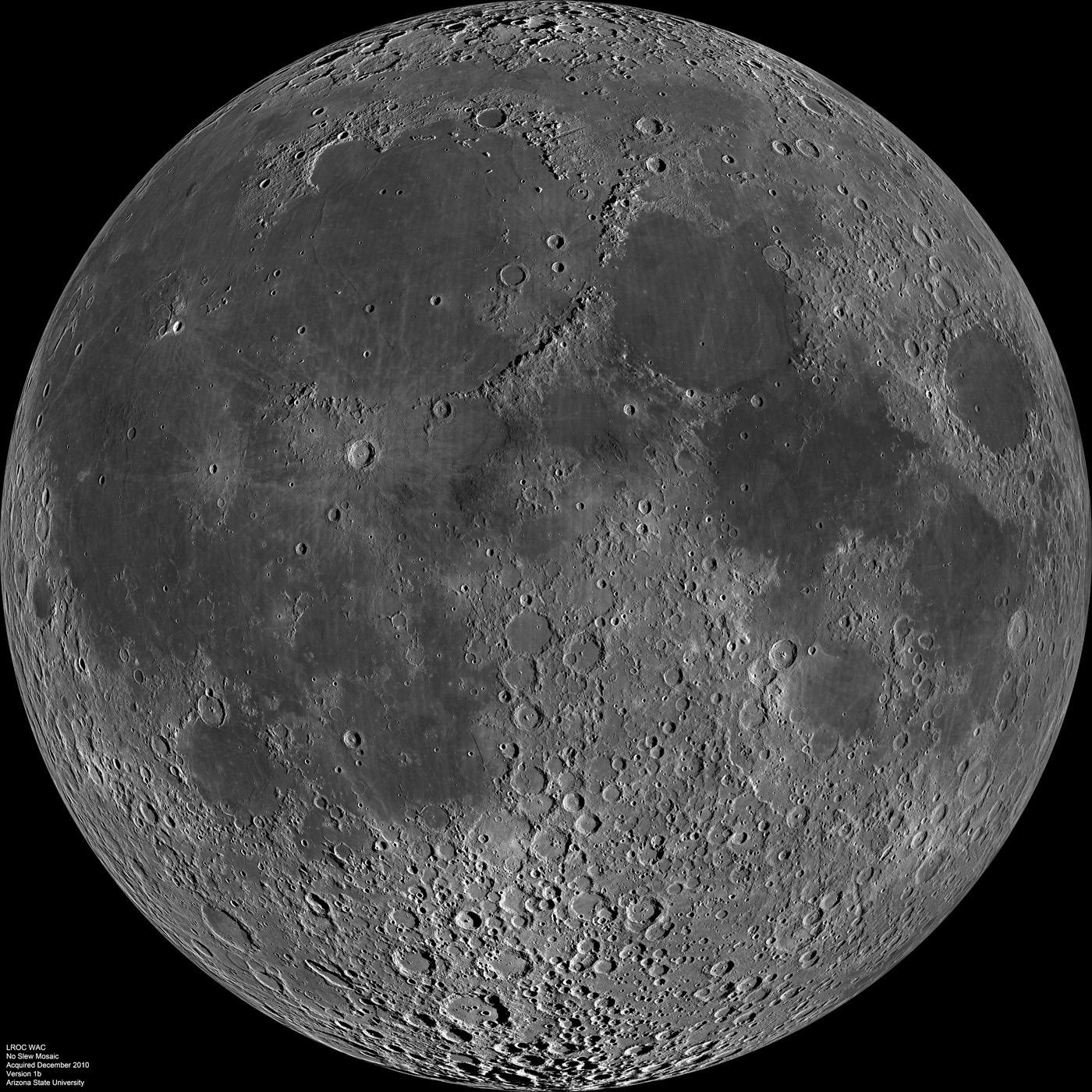
Photograph: NASA / GSFC / Arizona State University, LROC WAC nearside mosaic, public domain. The near-side plate is that photograph, clipped to the disk, under an orthographic graticule. The south pole plate is drawn, not photographed. Sites are the planned or intended target. Hard landings and flights that never arrived stay at the site they aimed for.
Program hub
A lasting presence at the south pole. NASA’s I, II, and III are names, not the order they fly. Cargo first. Crew in parallel.
| Mission | Who | Program | Rocket | When | Status | Cargo | Public $ |
|---|
Need a work PDF?
Pay on this page
Card stays with Stripe. You do not leave Moon Imports.
Change plan
One plan. Pick what you want next, then confirm the amount.
Inside the stack / 02
Meet six companies on Astrobotic’s Moon Base II lander, see what FLIP is meant to prove at Mons Mouton, and follow the September schedule remarks that leave Griffin as the only U.S. lander still aimed at 2026.
Why revisit this flight now? ↓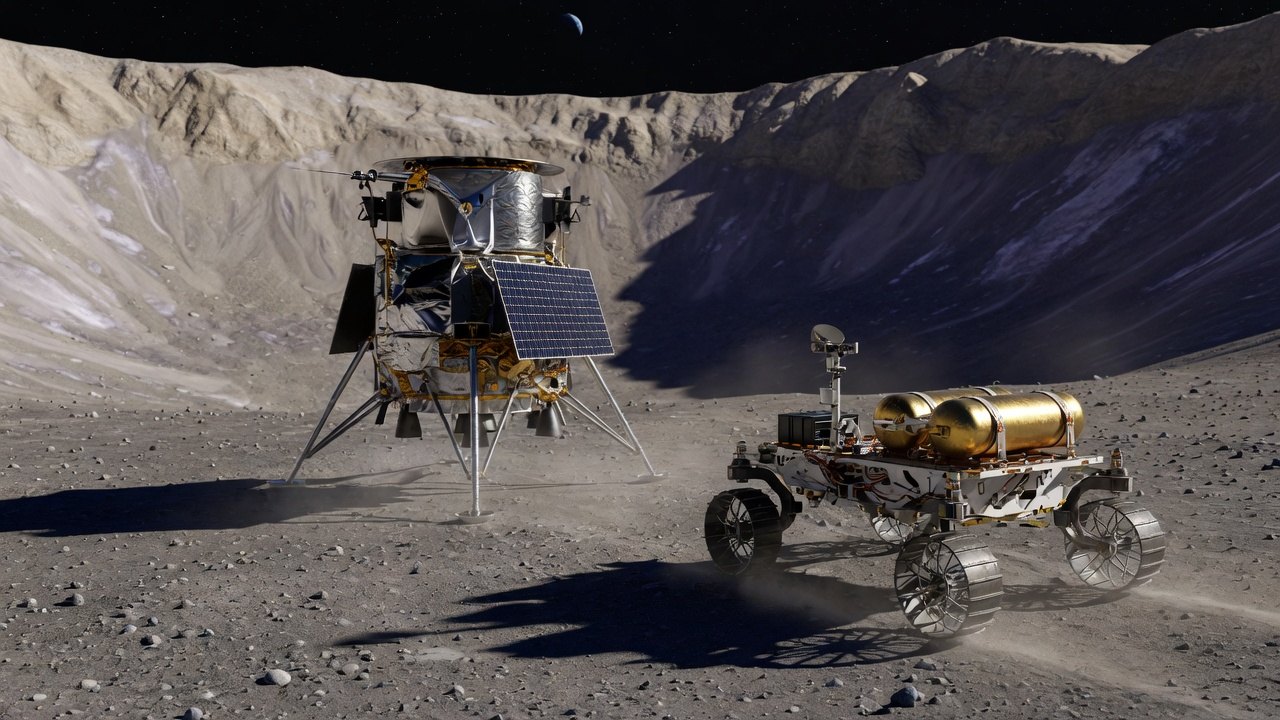
What the flight carries / Mobility
On September 15, Carlos García-Galán said Griffin is to touch down at Mons Mouton, a high point near the lunar south pole, carrying Astrolab’s robotic FLIP rover. FLIP is short for FLEX Lunar Innovation Platform. He described the rover as a way to test hardware for a future crewed rover, show reliable access from that landing site, and gather ground truth data from the lander.
On Moon Imports, FLIP is Venturi Astrolab’s rover on Griffin-1. It is the wheeled cargo named with this year’s remaining U.S. lander window.
Aerospace America: Mons Mouton, FLIP, and ground truth, September 15, 2026 ↗ Astrobotic: Astrolab’s FLIP rover joins Griffin-1 ↗This week / 15 September 2026
At the Glenn Space Technology Symposium in Ohio, García-Galán, NASA’s Moon Base program manager, said Voyager Technologies’ Griffin lander from Astrobotic is on track to launch no earlier than November. He said Blue Origin’s Mark 1 Endurance and Intuitive Machines’ Nova-C Trinity are now slated for the first part of 2027, and Firefly’s Blue Ghost Mission 2 for later in 2027.
Aerospace America: García-Galán remarks, September 15, 2026 ↗Moon Base II cargo path. Mons Mouton landing with FLIP aboard.
Read the Griffin stack ↓Three other Phase 1 landers now sit in 2027 on the same public remarks.
First part of 2027 for MK1 and Trinity · later 2027 for Blue Ghost M2The companies are familiar, but the calendar has moved. Revisiting Griffin now means reading the stack that still holds the 2026 window, then looking ahead to the flights set for 2027.
To see how the flight comes together, start with Astrobotic’s lander and follow the contributions below.
01 / The lander
Astrobotic builds and operates Griffin, the medium-class lander on NASA’s Moon Base II cargo path. From its Pittsburgh headquarters, the team designs the structure, integrates the payloads, and runs assembly and testing for flight. Astrobotic also builds Griffin’s propulsion tubing, cabling, and harnessing in-house, and flies its own LunaRay system to help the lander navigate and spot hazards near the south pole.
Astrobotic: Griffin-1 lunar delivery manifest ↗ Astrobotic: FLIP joins Griffin-1 ↗On this flight, Griffin carries Astrolab’s FLIP rover and several NASA science payloads, including a dust sensor, a lunar LiDAR, two laser retroreflectors, and METAL helium-3 work with Interlune. NASA reported on August 4, 2026 that Griffin-1 is in JPL’s Environmental Test Lab, with mass-properties testing complete and more launch-to-landing environment tests still ahead, before the lander returns to Pittsburgh for final work and ships to the Cape. The planned landing area is the Nobile crater region near the lunar south pole. On the September 15 schedule remarks, this remains the U.S. lander aimed at 2026.
02 / The launch
Before any of the work near Mons Mouton can begin, Griffin needs a launch from Earth. On the Moon Imports record, a SpaceX Falcon Heavy is the public launch vehicle for Astrobotic Griffin-1. SpaceX’s Florida teams fly Falcon from the Cape and Kennedy. Falcon 9 has already carried other commercial lunar landers on that same kind of job.
Falcon Heavy’s part in this flight is to lift Griffin, FLIP, and the NASA payloads together. SpaceX provides the launch. Astrobotic builds and operates the lander. Seeing both names on one mission becomes more useful when each is connected to the work it actually does.
03 / The engines
Astrobotic selected Frontier Aerospace for Griffin’s main axial engines, an F500E-class thruster line. That selection continues on the Griffin cargo flight that carries FLIP. Frontier is a U.S. propulsion company. Its thrusters also appear on Astrobotic’s Peregrine path, so the team brings earlier lunar-program engine work into Griffin-1.
Astrobotic: lander engines and Griffin selections ↗During descent, those main engines do the heavy braking. Agile Space Industries supplies a separate set of thrusters for pointing and fine control. The two sets of engines handle different stages of the same approach, while Astrobotic keeps the plumbing and integration in Pittsburgh.
04 / Attitude control
In the same announcement, Astrobotic named Agile Space Industries for Griffin’s attitude-control thrusters. Those thrusters help keep the lander pointed and steady. Agile has reported selection, delivery, and hot-fire work on that thruster set, and the role continues on Griffin-1.
Astrobotic: ACS thruster selection with Griffin engines ↗This adds another piece to the descent story: Frontier’s main engines slow the approach, while Agile’s thrusters help Griffin finish the pointing and fine control near the surface. Agile’s source describes the selection and thruster work; later flight results will come after Griffin flies.
05 / The rover
FLIP is Venturi Astrolab’s tech-demo rover on Griffin-1. The Hawthorne team, led by founder Jaret Matthews, built it to try out mobility, power, and avionics that feed later Astrolab rover work, including FLEX paths and CLV 1 for NASA. Astrobotic announced FLIP joining the flight. Astrolab describes the rover as a way to run those hardware trials on the surface.
Astrobotic: FLIP joins Griffin-1 ↗ Astrolab: FLIP rover ↗García-Galán’s September remarks put that rover at the center of why this lander still matters in 2026: test hardware at the south pole, and gather ground truth from the landing. On Moon Imports, some NASA science payloads also ride with FLIP on Griffin, so Astrolab’s demo sits beside a wider cargo deck.
06 / Wheels + night power
Venturi Space in Monaco builds the flexible lunar wheels Astrolab uses on FLIP. The wheels are meant to bend over lunar soil and help prove designs for a later crewed rover. The same company builds a battery enclosure meant to help FLIP through the long lunar night on Griffin-1.
Astrolab: FLIP rover hardware path ↗This adds another piece under the same rover García-Galán named with Griffin’s 2026 window. Astrolab owns the vehicle. Venturi Space supplies the wheels and night-power enclosure. On September 9, 2026 in Paris, Venturi Space also showed ALTA LUNA, its own tracked lunar utility rover, so the same shop is pushing lunar mobility hardware on more than one path.
Follow the work
Griffin gives us a practical way to explore the companies behind a lunar mission, and to read this week’s schedule news through their work. Start with Astrobotic’s lander, follow a component to its supplier, then look at that company’s other flights and hardware. SpaceX provides the Falcon Heavy launch. Frontier and Agile share the engines. Astrolab flies FLIP. Venturi Space puts wheels and night power under that rover. From there, look ahead to Blue Moon MK1, IM-3 Trinity, and Blue Ghost Mission 2, the flights now set for 2027.
Open the News kit · flight card for Griffin-1